The price of indifference: Why ocean action is needed now to protect both livelihoods and planetary health
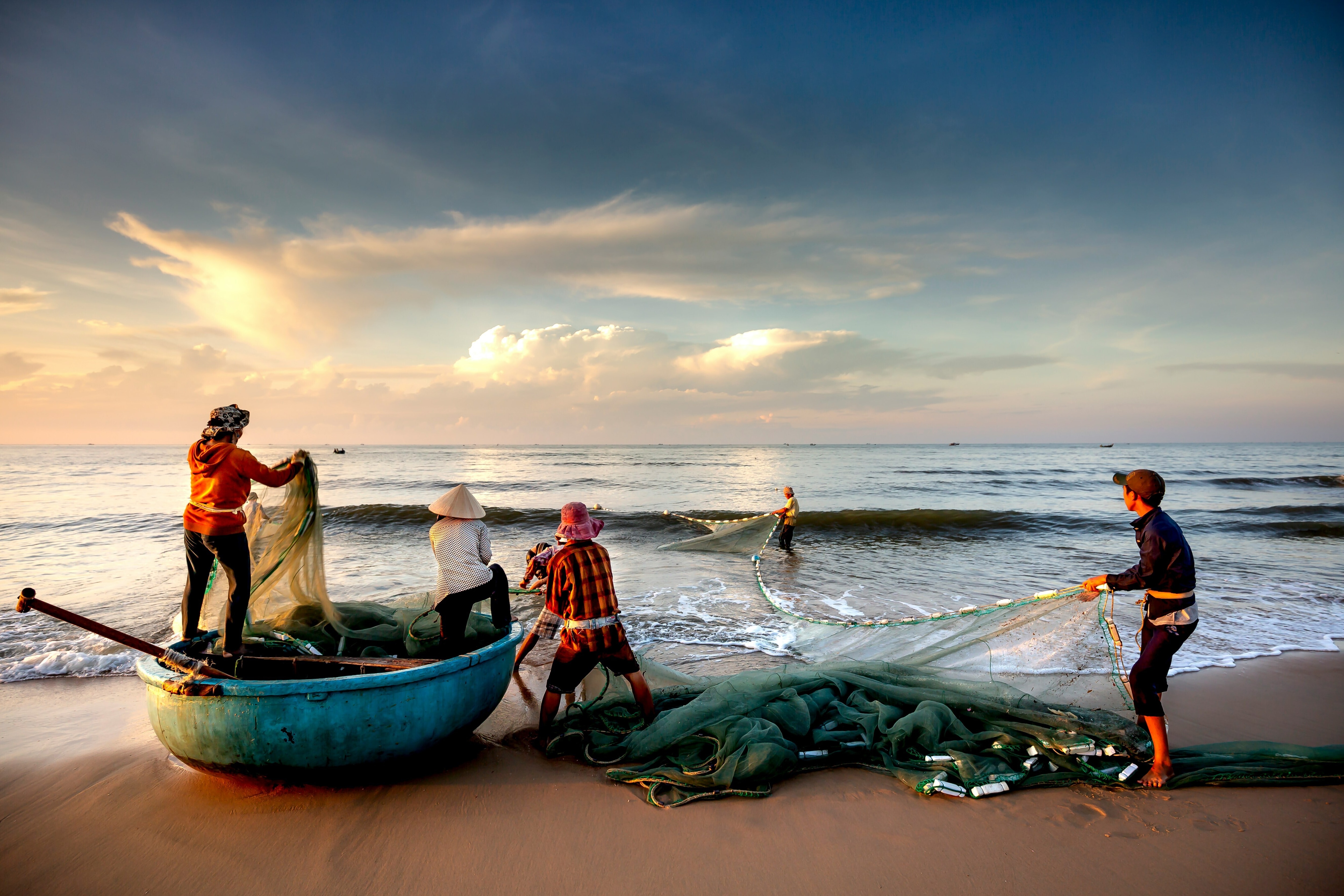
Protecting the ocean is both a moral imperative and an economic necessity. Image: Quang Nguyen Vinh/Unsplash
- The ocean acts as part of the basic infrastructure of human life, with many of our systems and traditions based on nature.
- Protecting natural ecosystems like the ocean is therefore both a moral imperative and an economic necessity.
- The World Economic Forum’s ACT Ocean initiative aims to share knowledge and scale effective solutions on the ocean economy.
A version of this article first appeared in The Threshold, a newsletter by the No.17 Foundation, the integrated not-for-profit pillar of the TPC (Tsao Pao Chee) Group.
Nature and the ocean form the infrastructure of our lives and societies. Our cultures, traditions and livelihoods are influenced by weather patterns, seasons, even species.
Yet we have long ignored the link between such ecosystems and our economic and political systems — an indifference that comes with a heavy price tag to the global economy.
The ocean is one of the clearest examples of this today. Protecting natural ecosystems to safeguard biodiversity and human life is a moral imperative. But it is also an economic necessity to protect the global economy and food security, as well as build climate resilience for communities across the world.
The value of the ocean economy
The ocean economy is experiencing exponential growth. Since 1995, its economic activities doubled in real terms from $1.3 trillion to $2.6 trillion in 2020. By 2050, it is projected to reach $5.1 trillion, and just last year, the Blue Economy Index climbed to about 38% – outpacing the S&P 500 twofold – capturing the attention of investors as a powerful engine that will shape future business opportunities.
Still, a widespread disconnect remains between the ocean economy and how much it underpins the global one. In reality, a healthy ocean acts as a baseline to some of the largest sectors around the globe spanning trade, fisheries, energy, coastal real estate and tourism.
Maritime shipping carries around 90% of global trade by volume, half of global tourism is coastal and 95% of our global communications travels through under-sea cables. Meanwhile, billions rely on seafood as a key source of protein and nutrition, and the demand for fisheries and aquaculture continue to rise. These are all ocean industries, even if some are not traditionally considered as such.
How indifference can cost billions
The risk in this disconnection fuels the price of indifference. When we don’t account for nature and the ocean’s contribution to economic value, it can cost us billions.
We can already see this today with intense impacts of cyclical weather phenomena like the El Niño-Southern Oscillation (ENSO). Arising from El Niño and La Niña – weather patterns that impact oceanic temperature, and the Southern Oscillation – an interannual fluctuation of atmospheric pressure over the tropical Indo-Pacific region, ENSO can impact global rainfall patterns, driving extreme heat and drought.
Severe storms and flooding increasingly cause port downtime, disrupting supply chains, while overfishing and marine heatwaves harm coral reefs and fish populations – affecting food security and the livelihoods of fishers and tourism operators that depend on them.
Take the Panama Canal as an example. An El Niño-driven drought in 2023–24 cut daily crossings from 38 to 22, and transits by 29% for the year. El Niño is now recurring and the canal is restricting vessel draft again due to drought, while ocean carriers are adding surcharges that pass straight through to the price of goods.
Elsewhere, cascading effects of climate shock on the global economy are also already making real estate locations prone to storms and coastal erosion become insurance deserts, while rising sea levels are projected to drive displacement of entire countries.
And these risks for communities, global operations, supply chains, finance and regulations will only continue to grow unless the ocean economy adopts regenerative practices and anticipatory frameworks.
Gaps impacting ocean action
The first gap impacting is that while the ocean brings enormous economic benefits, its economic value has never been properly quantified. As a result, investors have systematically underinvested in its protection and in the mitigation of negative impacts.
Achieving United Nations Sustainable Development Goal 14: Life below water (SDG14) will require $175 billion annually, yet it is currently the least funded of the SDGs, largely supported by official development assistance and philanthropy and not by commercial entities.
At the same time, investments in harmful practices remain high. The UN Environment Programme this year reported $7.3 trillion flowing into human activities harmful to nature, such as subsidies that promote the production and consumption of fossil fuels; and some two-thirds of government fisheries subsidies that encourage overfishing. In contrast, just $220 billion has been invested in nature-based solutions – of which only $23 billion was provided by private finance.
Have you read?
The second gap is more of a failure to build systems and tools that count what matters. Half of global GDP is moderately or highly dependent on nature, yet traditional measures of gross domestic product (GDP) and economic growth tend to reward extraction of resources, while failing to acknowledge or miscalculating the impact that the depletion of such natural infrastructure can have.
Fortunately, some models have attempted to account for nature’s value to help minimize its destruction. China, for example, piloted a “gross ecosystem product (GEP)” that assigns a monetary value to the services nature provides, such as water regulation and carbon storage, in an attempt to make these losses more visible.
One result of this was increased investment in nature. In 2023, China has spent twice the amount on a green transition than any other country, largely in clean energy production, battery technology, solar and wind projects, and much more.
Examples of success in ocean action
Addressing these challenges requires cumulative work from leaders and societies, backed by an understanding of ocean dependencies and impacts. The good news is that the solutions exist, and we already have seen successful cases of this happening.
The clearest signal is in offshore renewables. Initiatives like the World Economic Forum’s Responsible Renewables Infrastructure have made ocean health a commercial discipline, where ecological performance shapes competitiveness.
In 2022, the Netherlands scored up to 90% of offshore-wind tenders on qualitative criteria, the EU up to 30% and France 25%, rewarding biodiversity and community engagement. Meanwhile, developers like Ørsted and Iberdrola are helping to shape shared standards by moving ahead of regulation in the offshore wind sector.
Ports are also implementing more nature- and ocean-positive practices to mitigate climate impacting their businesses. At Ecuador’s Port of Guayaquil, dredged sediment that was a disposal cost has become a 50-hectare mangrove island, while the ports of Dunkirk and Antwerp-Bruges share industrial-water systems that lower port ecosystem costs.
Coastal tourism is also seeing the impact of climate shocks on the ocean and its decline hits revenue directly: severely degraded reefs can lose 80-90% of their visitors, for instance. To address this, Iberostar, whose Caribbean resorts sit on the reefs they sell, now runs coral nurseries to protect the coastline its business depends on.
Finally, we must focus on the leaders who are shaping the future of the ocean. Through the World Economic Forum’s Accelerating Critical Transitions for the Ocean (ACT Ocean) initiative, we are bringing together business leaders and investors with governments and stakeholders from science and civil society to share knowledge and scale effective solutions on the ocean economy through innovation, investment and enabling policy frameworks.
Why nature and the ocean need to be valued as infrastructure
Planetary health has been ignored for long enough and we are feeling the consequences. The ocean is a good example of a wider failure: or a century we built economic models that left nature out.
The ocean economy’s future will be shaped by climate change, technology, the energy transition and geopolitics, meaning that protecting ecosystems is an economic, as well a moral, imperative.
By understanding the links between healthy ecosystems and the economy, companies can integrate ocean-related risks and opportunities into business strategy – those that do it now will be better placed to build resilience, attract investment and capture long-term value.
Humanity is already feeling the consequences of ignoring planetary health. But there is hope, by working on innovation, collaboration and bringing new ideas to scale, we can help reshape its future and reimagine the global economic model to the benefit of all – starting with the ocean.
Don't miss any update on this topic
Create a free account and access your personalized content collection with our latest publications and analyses.
License and Republishing
World Economic Forum articles may be republished in accordance with the Creative Commons Attribution-NonCommercial-NoDerivatives 4.0 International Public License, and in accordance with our Terms of Use.
The views expressed in this article are those of the author alone and not the World Economic Forum.
Stay up to date:
Ocean


Forum Stories newsletter
Bringing you weekly curated insights and analysis on the global issues that matter.
More on Nature and BiodiversitySee all

Santiago Gowland
September 23, 2026


