Multilateralism at a 'critical juncture', says WTO, and other trade news to know
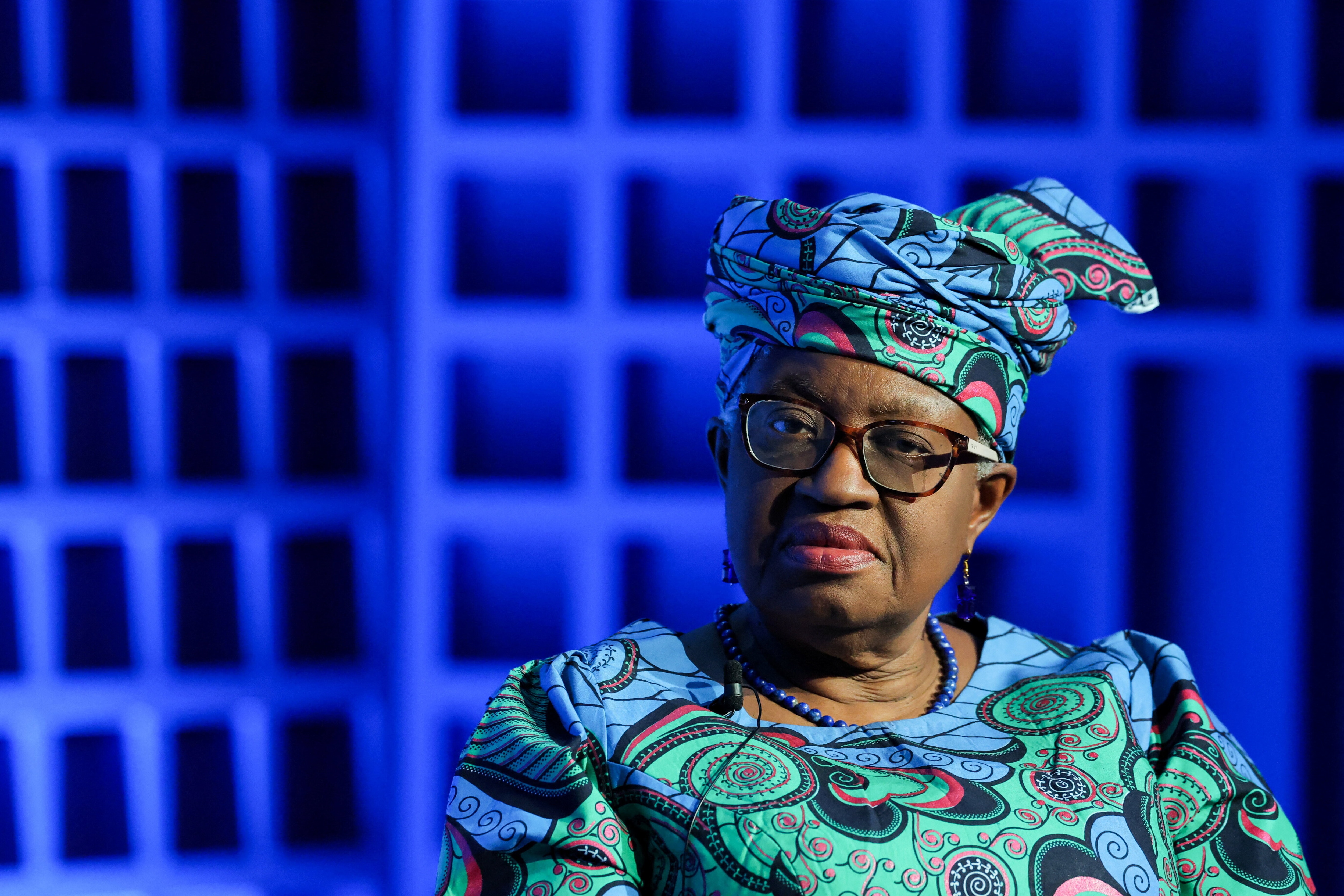
WTO Director-General Ngozi Okonjo-Iweala says the 'status quo is not an option' on adapting to a multipolar world. Image: REUTERS/Denis Balibouse
- This monthly round-up brings you a selection of the latest news and updates on global trade.
- Top international trade stories: WTO chief warns inaction on reform 'not an option'; Services and digital trade surge, finds UNCTAD; US threatens EU with 'very heavy' tariffs over Canada association.
1. WTO warns inaction on trade could cost up to 10% of global GDP
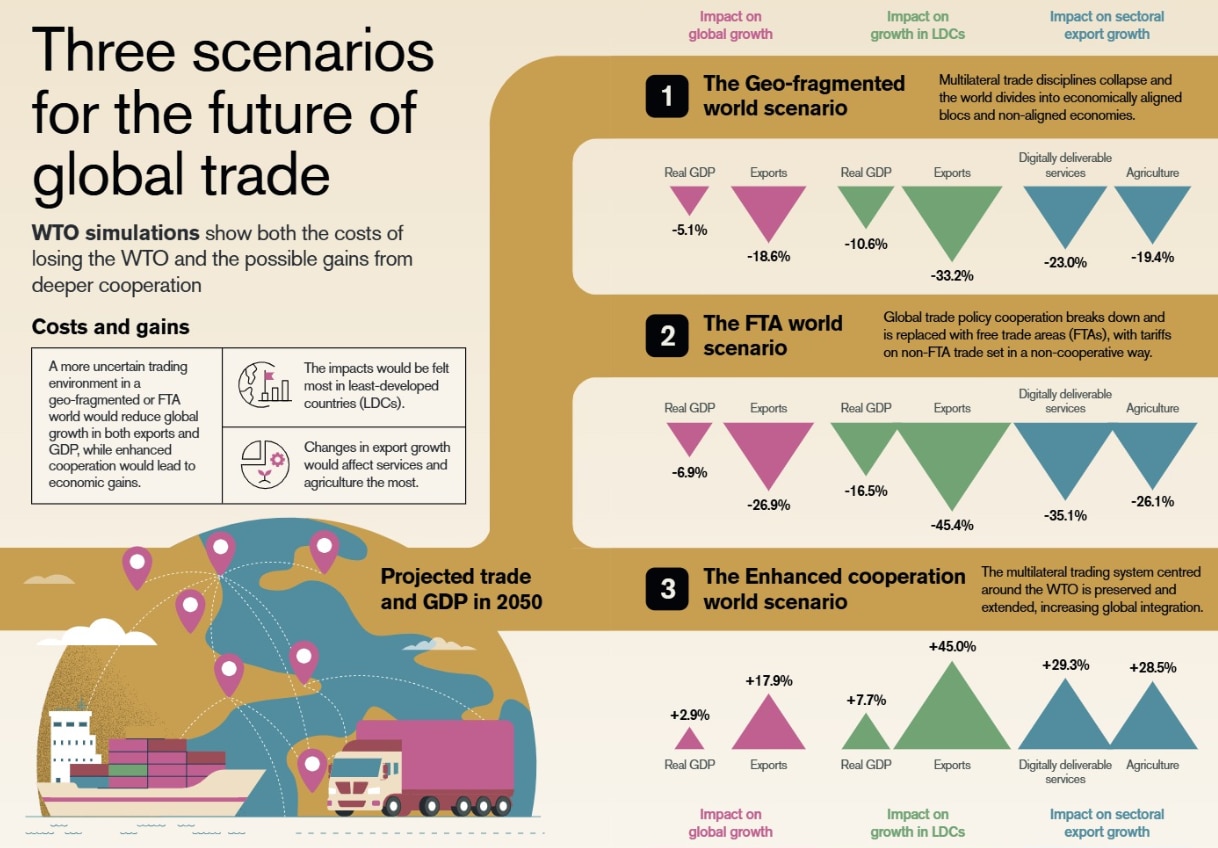
The future direction of trade policy could carry a heavy price tag, according to the World Trade Organization. In its latest World Trade Report, the WTO estimates that the choice between strengthening the multilateral trading system and allowing its rules to erode could ultimately cost 5-10% of global real GDP.
Its analysis of three possible paths to 2050 comes against a backdrop of rising geopolitical tension, more interventionist industrial policy, supply-chain realignment and rapid change in the digital and low-carbon economy.
- Strengthened multilateralism: Modernized WTO rules could add around $3 trillion (+2.9%) to global GDP and lift exports by 17.9% by 2050, driven by wider market access, updated digital and services rules, broader participation, and a calibrated balance between openness and security.
- Geo-fragmented world: If trade increasingly centres on competing geopolitical blocs, global GDP would be 5.1% lower and exports 18.6% lower than baseline projections by 2050.
- FTA-led world: If a patchwork of regional free-trade agreements displaces multilateral rules entirely, global GDP would fall 6.9%, and exports would drop 26.9%.
Despite growing strain from shifting economic power and industrial policy, around 72% of global merchandise trade still takes place on non-discriminatory WTO most-favoured-nation terms.
Under a strengthened cooperation scenario, least-developed countries (LDCs), which account for less than 1% of world trade, could see GDP rise by 7.7% as tariffs and non-tariff trade costs fall.
"The global trading landscape has changed significantly but the founding logic of the system, that all economies are better off cooperating rather than acting unilaterally, remains as relevant today as ever," said WTO Director-General Ngozi Okonjo-Iweala. "WTO members are now engaging actively on reform in full recognition that the status quo is not an option. The multilateral trading system has been repaired and renewed before, and I believe it can be again."
How the Forum helps leaders make sense of regional, trade and geopolitical shifts
2. Services and digital trade surge, but LDCs face widening divide
Building on the WTO’s focus on modernizing digital trade rules, UN Trade and Development's (UNCTAD) latest Global Trade Update reveals that services are increasingly becoming the primary engine of global value chains. Services accounted for 71% of global intermediate inputs in recent years, with their share of total global exports rising to 27%.
However, the report highlights that the gains from digitally deliverable services are overwhelmingly concentrated in advanced economies, creating a growing digital divide that threatens vulnerable partners in LDCs:
- Rise of digital delivery: Digitally deliverable services (DDS) - such as software, financial services and remote business support - grew at an average annual rate of 7.1% over the past decade, now representing 56% of all global service exports.
- Severe LDC digital gap: While LDCs could gain significantly under a modernized trading system, their share of global services exports fell to just 0.6% in 2025, and digitally deliverable services make up only 16% of their service exports (compared to 61% in developed economies).
- Embedded services in goods: Services contribute 33% of intermediate inputs in industrial exports for developed economies, compared to 27% in developing nations and just 13% in LDCs, underscoring how services feed into broader manufacturing competitiveness.
- AI and regulatory risks: UNCTAD warns that rapid AI deployment and diverging regional or bilateral digital trade rules threaten to deepen existing economic divides without targeted international policy action, digital skill development, and infrastructure support.
3. News in brief: Trade stories from around the world
US President Donald Trump threatened “very heavy” tariffs on the European Union (EU) or trade curbs if he deems the EU’s proposed associate membership for Canada hostile. The warning follows his 50% tariff on Canadian goods and planned restrictions on dairy, alcohol and vehicle imports that came into effect on 8 September.
In a speech to the European Parliament in Strasbourg, Canadian Prime Minister Mark Carney said Canada and Europe should deepen trade ties to protect prosperity and strengthen resilience. He called for seamless digital trade in non-agricultural goods and services, alongside cooperation on critical minerals, energy and technology, arguing that tariffs were increasingly being used as leverage.
Saudi Arabia’s East-West Pipeline, a crucial route bypassing the war-disrupted Strait of Hormuz, has been shut following drone attacks. It had carried around 4% of global oil supply to the Red Sea port of Yanbu, which only had stocks to cover days, raising export and price risks. Saudi output had already fallen to a three-decade low amid conflict and shipping disruption across the region.
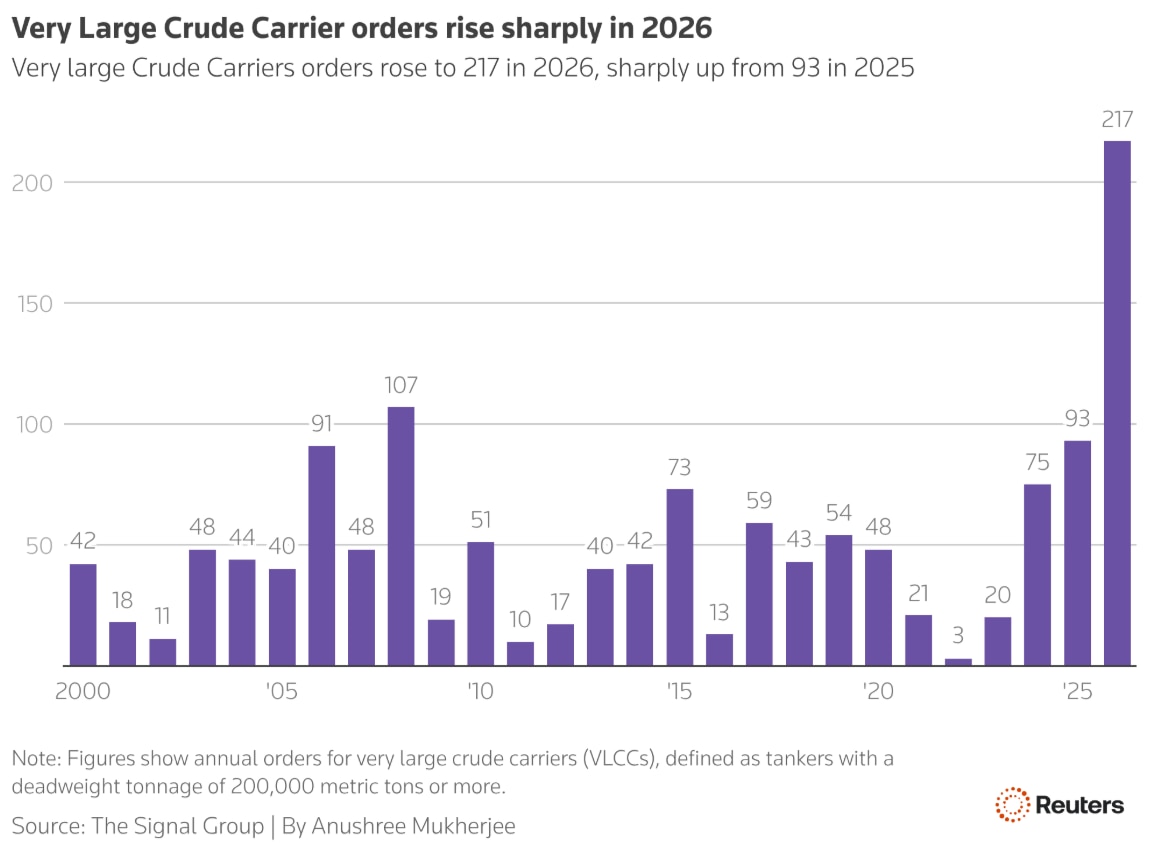
Shipowners have ordered more than twice as many supertankers in 2026 as in all of 2025, in a buying spree worth over $20 billion, according to shipping analytics platform Signal Group. The US-Iran conflict has disrupted Middle Eastern supplies and redrawn trade routes, driving longer Atlantic-to-Asia shipments.
India has warned that proposed US tariffs of up to 100% on countries buying Russian energy could damage bilateral ties and disrupt global markets. New Delhi vowed to safeguard energy security and trade interests while continuing market-based sourcing. The measure could also complicate already-stalled negotiations over an India-US trade agreement.
South Korea and five Central Asian states agreed to deepen cooperation on critical minerals, energy and supply chains at the first multilateral Central Asia summit. More than 70 agreements covered mining, infrastructure, technology and investment. Seoul wants partnerships spanning exploration, refining and manufacturing, while diversifying supplies of oil, uranium and strategic minerals.
Japan’s imports rose 28% year-on-year in August, their fastest growth in nearly four years, as soaring oil prices increased energy costs. Exports climbed 19.3%, supported by semiconductor demand, but the country recorded a $7.12 billion (1.106 trillion yen) trade deficit. Rising inflation strengthened expectations of an imminent Bank of Japan rate rise.
4. More on trade on Forum Stories
ASEAN's digital economy is at a decisive point in its journey. In the past five years, a range of initiatives have put in place the foundations of a secure and connected regional digital economy. However, the data shows that there is still a significant gap between ASEAN's overall digital readiness and real-world participation for many businesses operating there. A new report from the World Economic Forum explores the challenges and identifies what must be prioritized to accelerate digital integration. Read it here.
Global trade is accelerating, at least partly due to the deployment of new digital technologies. However, legal systems are often unable to keep pace with an increasingly connected world. This can result in friction, impacting the accessibility, predictability and inclusivity of trade. Christophe Bernasconi, Secretary General of the Hague Conference on Private International Law, has considered the steps that must be taken to ensure digital and legal interoperability work at the same pace and unlock trade opportunities in this article.
License and Republishing
World Economic Forum articles may be republished in accordance with the Creative Commons Attribution-NonCommercial-NoDerivatives 4.0 International Public License, and in accordance with our Terms of Use.
The views expressed in this article are those of the author alone and not the World Economic Forum.

Forum Stories newsletter
Bringing you weekly curated insights and analysis on the global issues that matter.
More on Trade and InvestmentSee all

Derek Baraldi, Priyanka Ramchurn and Anastasiia Rudkovska
September 22, 2026