What is electrotech and what will it mean for geopolitics and energy security?
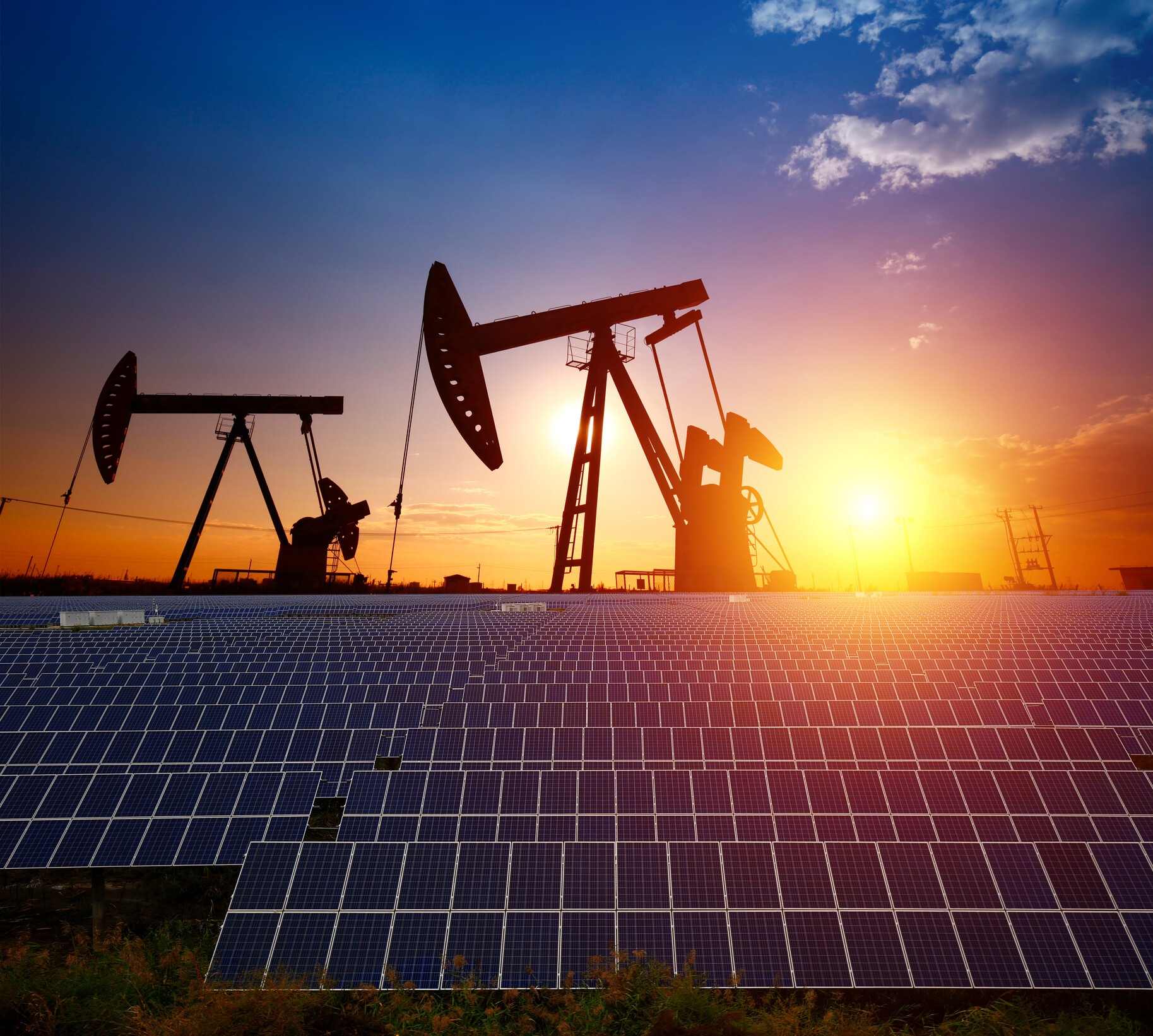
New drivers, beyond climate action, are pushing the global energy transition. Image: Getty Images/pandemin
- Renewables, electric vehicles and heat pumps and batteries are revolutionizing how the world generates, uses and transports electricity.
- This “electrotech” revolution focusses on energy transition solutions driven by physics, economics and geopolitics, not just climate action.
- China has already taken up a leading position in the electrotech era, but other countries and regions still have time to grasp this new energy opportunity.
The debate over the future of energy is polarized. On one side, fossil fuel gradualists insist the energy transition – to the extent they even acknowledge one – will be slow and painful. They call for realism, pointing out that today's fossil-fuel-dominated energy system is the backbone of modernity, the apex of human engineering, a marvel of scale and complexity that few appreciate.
On the other side, net-zero champions emphasize the planetary damage from burning fossil fuels and invoke moral imperatives for action. They call for courageous leadership and international diplomacy to share the burden. They say governments must set comprehensive mitigation pathways, working backwards from mid-century climate targets.
Both sides cover part of the picture, but neither can explain the rapid rise and strategic significance of electrotech such as renewables, electric vehicles and heat pumps, and batteries. These three groups of energy technologies are revolutionizing how the world generates, uses and moves electricity.
Further, neither side anticipated China's rise as an "electrostate" or foresaw emerging markets adopting solar and wind faster than developed nations. Nor did they foresee the dramatic price declines electrotech has achieved in recent decades.
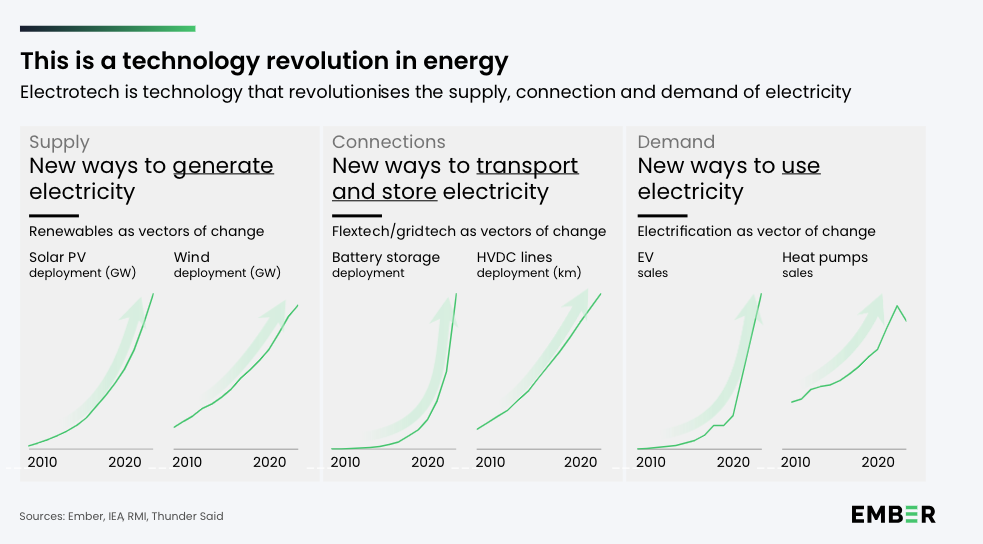
Humanity is graduating from burning exhaustible commodities to manufacturing advanced technologies, from hunting for fossils to farming the sun and from consuming Earth's resources to borrowing them. This is a technology revolution, not marginal substitution. At its core, it's about simultaneously revolutionizing how electricity is produced, used and connected.
Solar and wind are taking over electricity supply. Electric vehicles, heat pumps and artificial intelligence (AI) are electrifying new uses. Batteries and digitalization are making once-variable supply stable and once-static demand flexible. Together, these three shifts form the electrotech revolution. China has already taken a leading position in this electrotech revolution, but other countries including the US and Europe must act quickly to recognize the full benefits of this new era for energy.
What’s driving the electrotech revolution?
To the extent that energy history has an arc, it bends towards solutions that are leaner, cheaper and more secure. Electrotech continues that arc. It focuses on solutions driven by forces beyond climate action alone. The electrotech revolution is driven by physics, economics and geopolitics.
Physics is the primary driver. Electrotech makes a thermodynamic mockery of burning fossil fuels. Combustion wastes more than two-thirds of input energy as unwanted heat. Electrotech bypasses this entirely. Solar, wind, electric vehicles and heat pumps are roughly three times as efficient as their fossil-fired competitors.
The second force is economics. Advanced manufactured technologies and fossil fuels operate under different economic logic. Technologies enjoy increasing returns – the more you make, the cheaper they get. But commodities face diminishing returns because the more you extract, the deeper you have to dig. Since 1980, solar prices have fallen by 99% while oil prices have seen no structural decline.
Then there is geopolitics. The sun cannot be turned off by foreign actors. Sovereign energy matters, especially in a fracturing world. In the fossil fuel system, geographical luck gave a few countries massive resources. In the electrotech world, almost every country can become its own Saudi Arabia. While 92% of countries have renewable potential of over 10 times their current demand, Saudi fossil fuel production is about two times its current demand.
How is electrotech affecting the energy transition?
Thanks to these three advantages, electrotech has been exponentially growing and falling in price for decades. Since 2010, solar capacity has gone from near-irrelevance to overtake every other source, from bioenergy, nuclear, hydropower and natural gas to coal, most recently. Solar is booming in sunny emerging markets, with 63% overtaking America in solar uptake. Pakistan, for example, has imported more solar in a few years than it has installed from all other sources over many decades.
Batteries are following a similarly dramatic storyline. Sales have doubled every two to three years since 1991 and costs have fallen by 99%, enabling them to leap from one use to the next. Electric vehicles now account for half of car sales in China, the world's largest car market. Solar-plus-storage is now cost-competitive in most of the world. In 2025, investment in battery storage is set to match investment in gas-power generation.
Zoom out further. The global economy has been steadily electrifying for over a century. In 2007, electricity overtook oil as the largest source of useful energy. In 2025, investment in electrotech is set to reach twice that in fossil fuels, as solar attracts more capital than upstream oil. Electricity is pushing fossil fuels into decline in one sector after another and in one country after another. The rise of electricity has resulted in peak final fossil fuel demand in two-thirds of the world, and a global plateau in demand from buildings, industry and road transport.
Which countries will lead in the electrotech age?
The age of electrotech has been a long time coming. Decades of evolutionary change in this area – from electric motors to solar and batteries – are culminating in a revolutionary wave of change. The difference today is that these technologies are now too cheap to contain and too big to ignore. If solar, wind, batteries and electricity continue their growth trajectory of the past 30 years for just five more years, they will push global fossil fuel demand off its plateau into terminal decline.
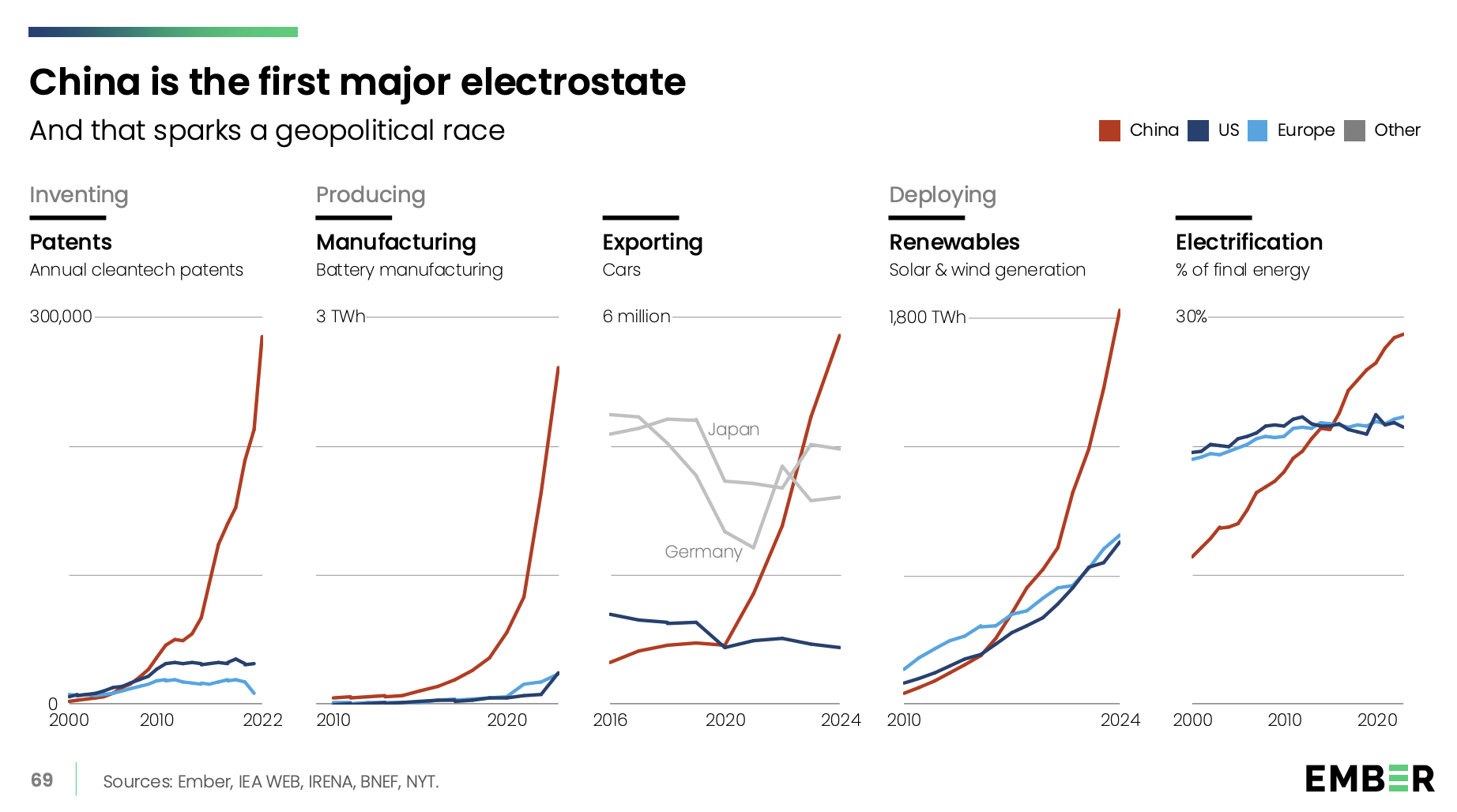
As for geopolitics, China recognized the efficiency, manufacturing economics and security advantages of electrotech early, and is now racing ahead. As the first electrostate, China derives strategic leverage from its leadership across renewables and electrification, manufacturing and innovation, domestic deployment and global exports. China is not merely manufacturing electrotech hardware, it is manufacturing an energy future in which it holds a commanding position.
If any country stands to gain from embracing this third way in the polarized energy debate, it’s America. Electrotech is an extension of the digital revolution in which manufactured hardware – solar panels, batteries, inverters – runs on software and follows the same scaling laws as other digital technologies. A solar panel is closer to a laptop than to a gas plant.
This plays to American strengths – even if more to San Francisco's than to Houston's. America has the software expertise, innovation culture and capital to compete. The question is whether the US recognizes what’s actually happening before the opportunity slips away.
The next decade will prove decisive. As electrotech S-curves steepen and costs fall further, fossil fuel demand will shift from plateau to decline. New winners and losers will emerge. Companies and nations that wish to thrive in this era must rethink their strategies as fundamentally as the energy system itself is changing.
Kingsmill Bond also contributed to this article. All of the authors work at Ember, an international energy think tank.
Don't miss any update on this topic
Create a free account and access your personalized content collection with our latest publications and analyses.
License and Republishing
World Economic Forum articles may be republished in accordance with the Creative Commons Attribution-NonCommercial-NoDerivatives 4.0 International Public License, and in accordance with our Terms of Use.
The views expressed in this article are those of the author alone and not the World Economic Forum.
Stay up to date:
Energy Transition Index
Related topics:


Forum Stories newsletter
Bringing you weekly curated insights and analysis on the global issues that matter.


