Opinion
The AI race is shifting to power — and Europe faces a new test
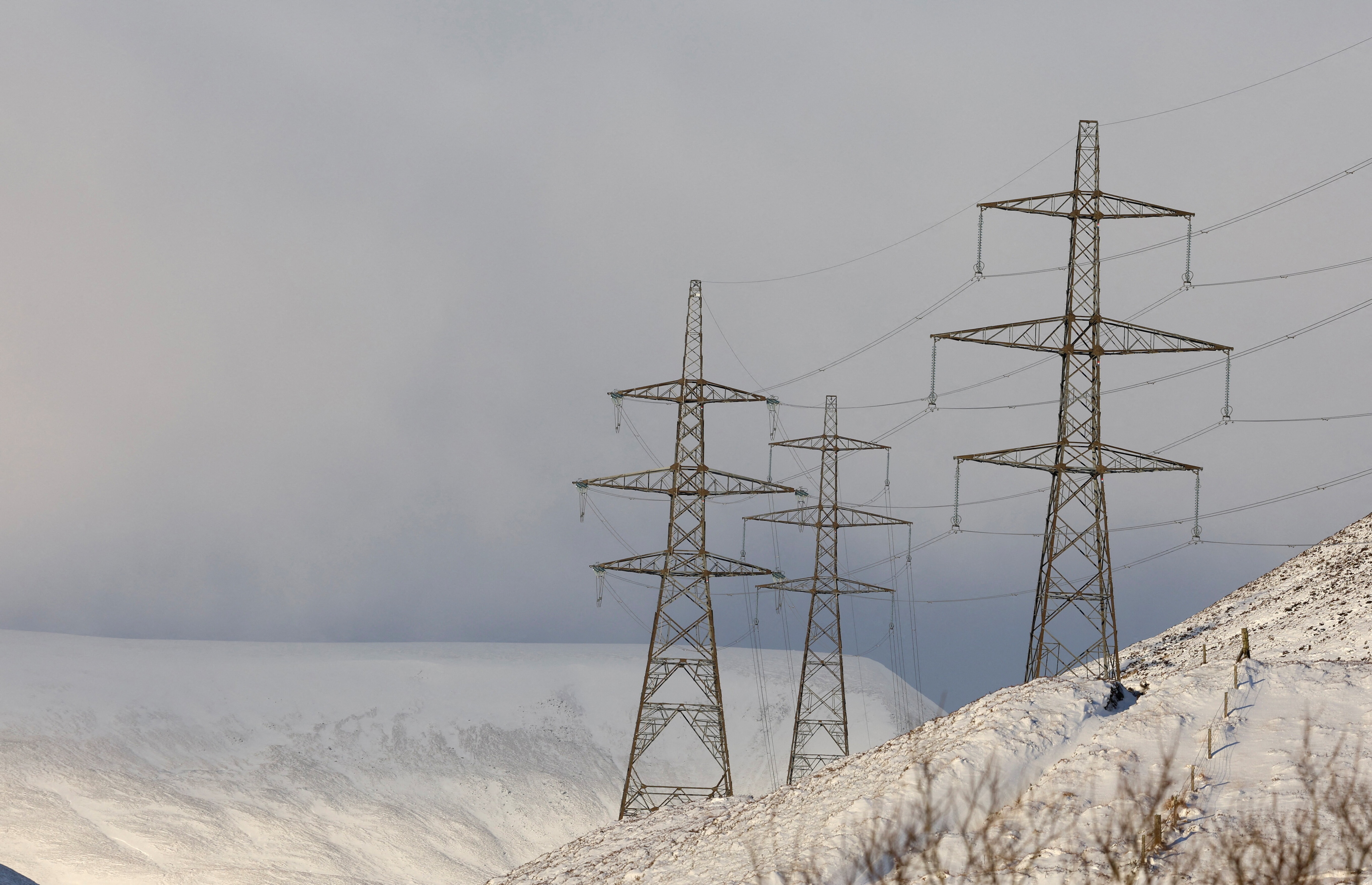
Europe is seen as a slow mover on power projects – but the reality is more complicated. Image: REUTERS/Russell Cheyne
- AI leadership is increasingly shaped by access to power, not just data and talent.
- Europe has clean energy resources but struggles to align supply, infrastructure and demand at speed.
- Without reform, AI investment risks shifting to regions where power and compute scale faster.
The US and China have dominated the first decade of modern AI development. Their significant scale of investment and infrastructure means that both have developed advanced general-purpose models, leaving Europe trailing behind.
US hyperscalers control nearly 70% of the European cloud market, whilst China leads in AI patents. Europe, by comparison, has produced just three foundation AI models against the US's 40 and China's 15.
But the terms of the race are shifting. Modern AI development is fundamentally driven by access to compute - clusters of specialized chips running in data centres, powered by electricity. The ability to build better models is therefore inseparable from the ability to power them. According to the International Energy Agency, data centre capacity increased by 20% last year, unsurprisingly mostly in the US and China. By 2030, electricity consumption is projected to more than double.
As geopolitical tensions rise, Europe’s dependence on externally controlled digital infrastructure is emerging as a strategic vulnerability. Sovereign compute capacity, backed by sovereign clean power, offers a way to address both digital and energy security. But doing so will require confronting a deeper challenge: not a lack of clean power, but a failure to align supply, demand and infrastructure at speed.
Europe’s constraint: speed to power
Europe remains a complex environment for building data centres at speed. Electricity prices are higher than the US, land is more scarce and grid connections can take up to a decade in some European markets. These challenges are particularly acute in grid-constrained and carbon-intensive legacy locations for data centres like Frankfurt, London and Dublin.
The consequences are already visible. Rather than wait, some facilities are circumventing grid queues altogether and hooking up directly to gas-fired power plants, clearly in tension with the region's net-zero ambitions. Others are simply hitting pause. Decisions such as OpenAI's move to step back from a major UK data centre project are a signal that rapid deployment of AI infrastructure remains extremely difficult.
Anchoring AI infrastructure to gas carries its own risks, including baking fossil fuel price volatility into the foundations of the digital economy. Alternative solutions such as nuclear Small Modular Reactors (SMRs) are frequently cited, but remain slower and more expensive to deploy than renewable alternatives. Modelling by Centre for Net Zero found that powering a 120MW data centre with a renewable hybrid microgrid - combining offshore wind, solar, battery storage and minimal gas backup - can deliver power at significantly lower cost and in roughly half the time.
The challenge is not supply, but how power is coordinated
Europe has the resources to make this work, but the system is not currently set up for it. The continent’s resources are abundant and geographically diverse: offshore wind in the North Sea, solar in Southern Europe and hydro in Scandinavia. Yet, it is failing to align where and when power is generated with where and when it is needed.
Building supply is only half the story. At the same time as expanding clean generation, electricity demand has been in decline. In Germany and Britain, for example, consumption has fallen by 15–30% since 2005. This creates a structural imbalance where the fixed costs of the system are spread across a shrinking volume of demand, leading to higher per-unit electricity costs. That in turn slows electrification and weakens demand further.
In this context, data centre growth presents a potential solution to Europe’s high energy cost dilemma. Large, predictable loads can improve utilization of existing infrastructure, spreading fixed costs across more consumption and lowering system-wide prices.
Whether they play that role depends on how demand interacts with the system, particularly at peak times. Inflexible, poorly located loads drive costly grid reinforcement. Flexible, well-sited loads can avoid it.
A new model for infrastructure
What is emerging is a different model for this new class of infrastructure.
In the most straightforward cases, infrastructure can follow power. Siting data centres close to clean generation can unlock a dual benefit, accessing cheaper electricity while relieving pressure on congested networks. But this will not be possible everywhere. Latency requirements and existing digital ecosystems mean that many facilities will remain tied to urban centres, where networks are already under strain.
In those cases, we must explore shifting their demand in response to system conditions. This flexibility is not hypothetical: a study with National Grid and EmeraldAI indicates that modern AI data centres can modulate demand without compromising performance.
Where direct flexibility is limited, on-site generation and storage can reduce reliance on the grid. And beyond the data centre itself, distributed energy resources across surrounding homes and businesses can unlock additional capacity on constrained networks. Google and Xcel Energy have explored a version of this in Minnesota, investing in distributed energy resources that turn local communities into part of the solution and improve local support for development.
This shift is being enabled by better ways of managing complexity in energy systems which are increasingly powered by AI. The same technologies driving data centre growth can optimize energy systems in real time, improving forecasting, balancing supply and demand, and reducing system costs. As grids become more complex and dominated by variable renewable generation, this kind of intelligence is essential. In this sense, AI is becoming part of how power systems are run.
A moment to act
The AI race is transitioning to one of power. Solving the clean electricity question will shape which economies lead the next decade of AI development, and attract the investment, innovation and growth that come with it.
Across Europe, from EU-level sustainability standards to national strategies from Germany and others, the direction of travel is clear. But the speed of execution will determine whether this opportunity is captured.
Without reform, Europe’s constraints will continue to push investment elsewhere. With it, including through mechanisms like the forthcoming Cloud and AI Development Act, Europe can build a different model where AI infrastructure and clean energy systems evolve together.
The countries that solve the power question first will play a defining role in the next phase of AI development. Europe may still have a chance to lead but the window is limited.
Don't miss any update on this topic
Create a free account and access your personalized content collection with our latest publications and analyses.
License and Republishing
World Economic Forum articles may be republished in accordance with the Creative Commons Attribution-NonCommercial-NoDerivatives 4.0 International Public License, and in accordance with our Terms of Use.
The views expressed in this article are those of the author alone and not the World Economic Forum.
Related topics:

Forum Stories newsletter
Bringing you weekly curated insights and analysis on the global issues that matter.
More on Artificial IntelligenceSee all

Rakesh Kumar Murugan
September 27, 2026


