India’s cooking fuel crisis needs a multi-fuel clean energy strategy
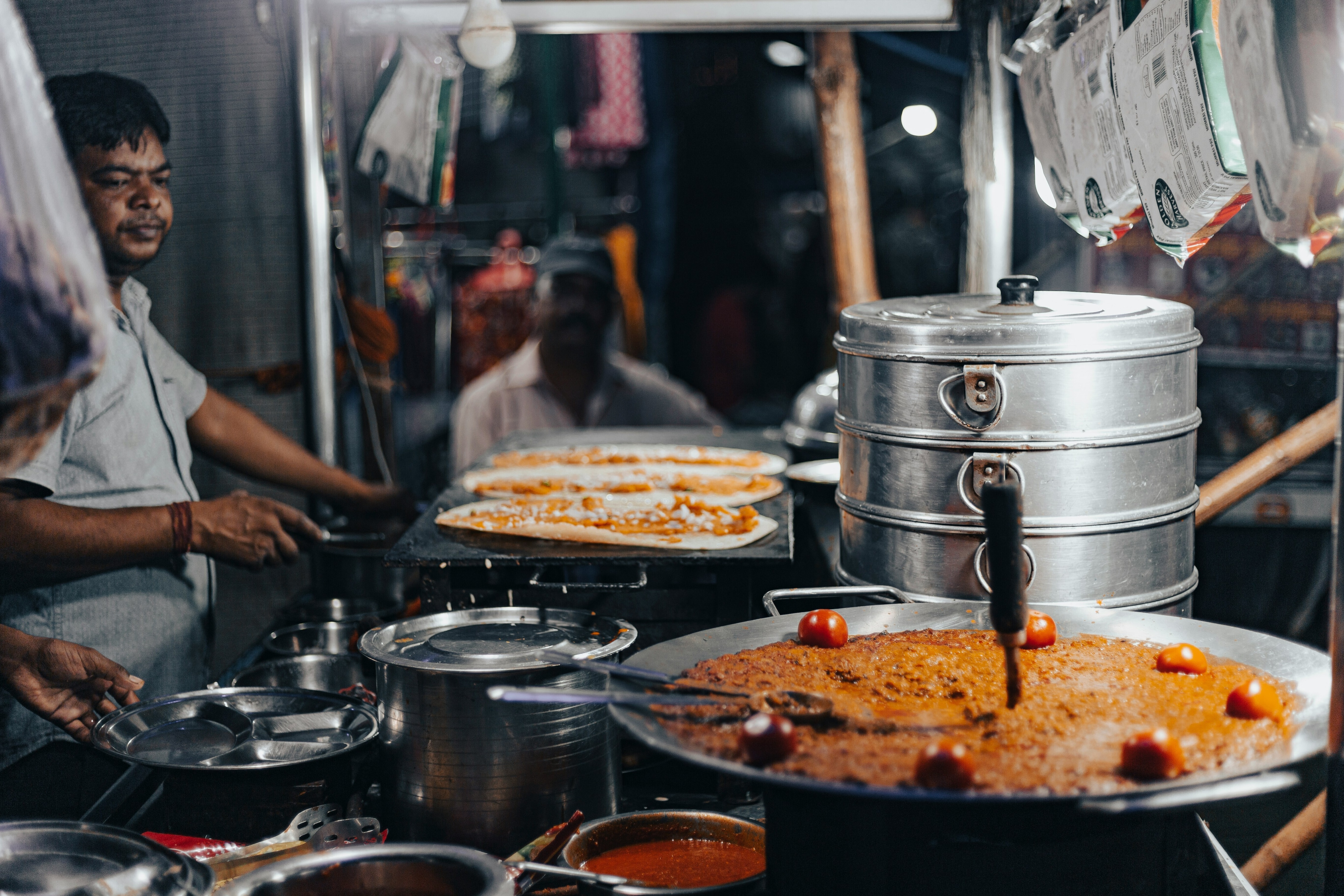
India’s cooking fuel vulnerability can be addressed through a transition to e-cooking methods Image: Anirudh/Unsplash
Purva Jain
Energy Specialist (Gas & International Advocacy), Institute for Energy Economics and Financial Analysis (IEEFA)- The fallout of the US-Iran conflict on global energy supply has laid bare the fiscal and strategic costs of India’s dependence on imported cooking fuels.
- There is a strong fiscal argument for redirecting subsidies to non-fossil-fuel-based cooking alternatives.
- A multi-fuel strategy built around electrification, biogas and solar can offer energy security, affordability and fiscal relief to India.
India’s oil marketing companies are facing significant losses, largely on account of cooking fuels. Despite an INR60 ($0.64) per cylinder price increase on domestic liquefied petroleum gas (LPG), these companies are incurring a loss of INR380 per cylinder ($4.08), leading to cumulative losses to the tune of INR40,500 crore ($4.4 billion) by May 2026.
The subsidy for liquefied petroleum gas (LPG) alone for FY2026-2027 is budgeted at INR11,000 crore ($1.19 billion) and the ongoing US-Iran conflict is likely to push this fiscal outgo even higher as international prices continue to rise. Commercial kitchens have faced LPG rationing and a price increase of INR195 ($2.11) per cylinder since the onset of the crisis.
This outcome reflects a cooking fuel strategy that has relied heavily on imported fossil fuels. For decades, India promoted LPG as the primary clean cooking fuel, backing it with refining capacity, last-mile distribution and fiscal subsidies. The result was over 100% connection coverage.
A persistent affordability gap, however, means nearly 40% of households still rely on polluting solid fuels. The introduction of piped natural gas (PNG) was meant to diversify the fuel mix, but high connection costs, slow infrastructure rollout and affordability concerns have limited PNG to about 15 million household connections. LPG, in turn, has over 330 million connections.
The PNG shift is encouraging but insufficient
The government’s recent mandate encouraging households in PNG-connected areas to transition from LPG has shown results. Roughly 6,000 PNG households have surrendered their LPG connections and nearly 300,000 new PNG connections have been added since the onset of the crisis. This is a welcome step.
The mistake made for decades of promoting a single imported fossil fuel as the backbone of clean cooking, however, should not be repeated by simply replacing LPG with a two-fuel LPG-PNG model.
Switching from LPG to PNG and promoting these as the two primary fuels for the medium term does not shield India from import dependence, fuel price volatility or energy security concerns. Both are fossil fuels. Both are imported.
India needs a genuine multi-fuel strategy that leverages domestically available resources, lowers import exposure and ensures that households do not revert to polluting traditional fuels in times of crisis.
Electric cooking: cheaper, cleaner and domestically sourced
Electricity-based cooking (e-cooking) is already more affordable than both LPG and PNG for urban households.
A 2025 IEEFA report found that the annual cost of using e-cooking for a family of four in Delhi was INR5,844 ($60). This was 10% cheaper than LPG, even with the universal subsidy of INR200 ($2.16) per cylinder. Since then, LPG prices have risen further, making e-cooking roughly 25% cheaper despite the subsidy. PNG-based cooking was found to be 14% more expensive than e-cooking, but could become costlier still if high international gas prices are passed to consumers.
Transitioning to e-cooking should not add an unmanageable burden on the grid, especially if load management techniques such as time-of-day incentives and two-way smart meters are in place.
At the current commercial LPG consumption of 2.6 million tonnes per annum (MTPA), full electrification of commercial kitchens (assuming 85% energy efficiency for electric appliances) would translate to roughly 1.63 billion units (BU) of electricity per month. That is approximately 1% of the country’s total monthly electricity consumption of roughly 150 billion units. The government estimates that adoption of induction-based cooking in times of crisis would require an additional 13-27 gigawatts (GW) of electricity (depending on usage).
Biogas and solar: the rural dimension
While e-cooking is the most promising option for urban areas, rural India needs complementary solutions. Concentrated solar cooking technology and biogas cookstoves for community kitchens have been successfully tested in pilot programmes across several states. Biogas offers a dual benefit: it reduces import dependence while helping to manage agricultural waste, including crop residue linked to stubble burning.
Many planned biogas projects have stalled, however, due to local resistance, limited financial support and a lack of clear policy direction. Prioritizing the commissioning of these plants would generate tangible results quickly. Solar cooking solutions, meanwhile, remain underexplored despite India’s abundant solar resources. Both technologies deserve the kind of targeted fiscal support currently concentrated on LPG and PNG.
The fiscal case for diversification
There is a strong fiscal argument for redirecting subsidies to non-fossil-fuel-based cooking alternatives. The upfront cost of induction cooktops, biogas installations and solar cooking systems is a barrier to adoption, but the same was true of LPG connections before the government intervened with subsidies under the Ujjwala scheme.
Providing similar incentives for e-cooking appliances, biogas units and community solar kitchens would offer households greater insulation from geopolitical disturbances. It would also be more fiscally prudent over the medium term, given the lower and more stable operating costs of these technologies.
Non-fossil-fuel-based cooking options have gained significant popularity and acceptance lately, driven by the crisis itself. This momentum should be leveraged with clear policy direction, demonstration programmes, awareness campaigns and targeted fiscal incentives.
What needs to happen now
The government should set explicit targets for multi-fuel clean cooking adoption by 2030, backed by a technology-specific roadmap. The immediate priorities are twofold. First, a device subsidy for induction cooktops in urban areas, modelled on the Faster Adoption and Manufacturing of EVs (FAME) scheme, coupled with large-scale consumer awareness campaigns. Second, fast-tracking the commissioning of stalled biogas plants in rural areas with clear timelines and financial support.
India’s cooking fuel vulnerability is not new, but the US-Iran conflict has made its fiscal and strategic costs impossible to ignore. A multi-fuel strategy anchored in electrification, biogas and solar is not just a cleaner option; it is a more affordable, more secure and more fiscally sustainable one. The window to act is now, while the urgency is still fresh.
Don't miss any update on this topic
Create a free account and access your personalized content collection with our latest publications and analyses.
License and Republishing
World Economic Forum articles may be republished in accordance with the Creative Commons Attribution-NonCommercial-NoDerivatives 4.0 International Public License, and in accordance with our Terms of Use.
The views expressed in this article are those of the author alone and not the World Economic Forum.
Stay up to date:
SDG 07: Affordable and Clean Energy
Related topics:


Forum Stories newsletter
Bringing you weekly curated insights and analysis on the global issues that matter.
More on Energy TransitionSee all

Roberto Bocca
October 2, 2026


