Renewables offer Pacific Island States a lifeline. How can we speed the transition?
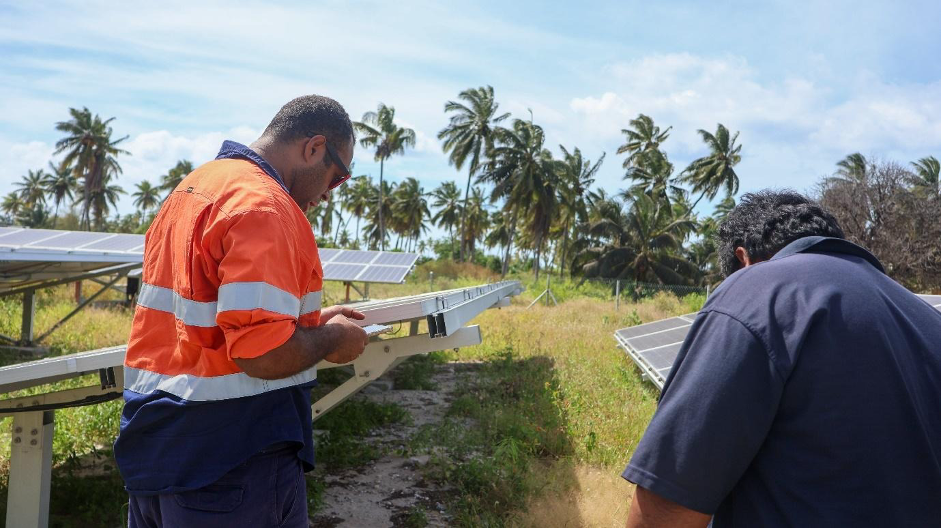
Even relatively small investments in renewables like solar could have transformative impacts on Pacific Island States. Image: Joseph Hing
- Pacific island states spend up to 12.9% of national GDP on fossil fuel imports - renewables offer a way out, but the transition remains frustratingly slow.
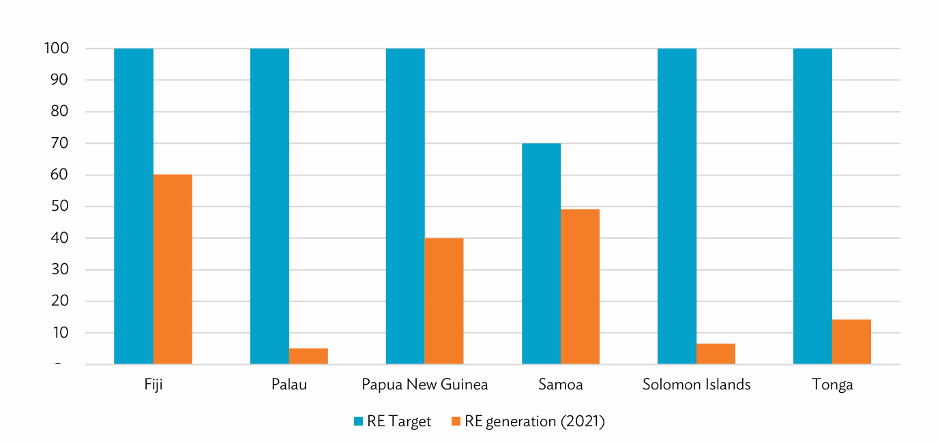
- Several Pacific small island states have set 100% renewable energy targets, yet imported fossil fuels still supply 40% of the region's electricity.
- Standard climate finance metrics systematically undervalue renewable energy projects in the Pacific, leaving the region competing on an uneven playing field.
Pacific small island developing states (PSIDS) are driving ambitious renewable energy transitions despite low emissions, aiming to reduce dependence on fossil fuel imports while confronting multiple urgent and development challenges.
The far-reaching effects of the current war in the Middle East and the energy crisis it has caused have already impacted the Pacific region. Economies have seen energy rationing. Austerity measures and potential power cuts are being considered to buffer already stretched national economies against price shocks as well as the limited availability of oil.
Pacific small island developing states continue to remain heavily reliant on fossil fuel imports. Currently, imported fossil fuels supply 40% of the region’s electricity generation. This comes at a significant cost to the region. In 2018, fossil fuel imports reached an estimated $1.1 billion, equivalent to an average of 7.8% of national GDP for countries in the region, ranging from 1.2% of GDP for Papua New Guinea to 12.9% of GDP for Palau.
Renewables could ease this reliance and the vulnerability it causes – and now, Pacific island states are laying the groundwork for a wider rollout of renewables.
During the 5th Pacific Regional Energy and Transport Ministers Meeting (PRETMM) in May 2023, the Efate Outcome Statement was adopted calling for the rapid decarbonization of transport and energy sectors and phasing out of fossil fuels. This year, the 6th PRETMM took place in Papua New Guinea amid growing concerns around the region’s continued reliance on imported fossil fuels.
The push for renewables in the Pacific
Several Pacific SIDS have set 100% renewable energy targets. However, renewable energy infrastructure in the region requires significant investment to match the targets that have been set. Due to the remoteness of PSIDS, the cost of shipping, limitations in terms of economies of scale and other challenges, mitigation initiatives in the Pacific face an additional hurdle: the challenge of competitiveness and profitability, especially compared to similarly sized projects in other regions.
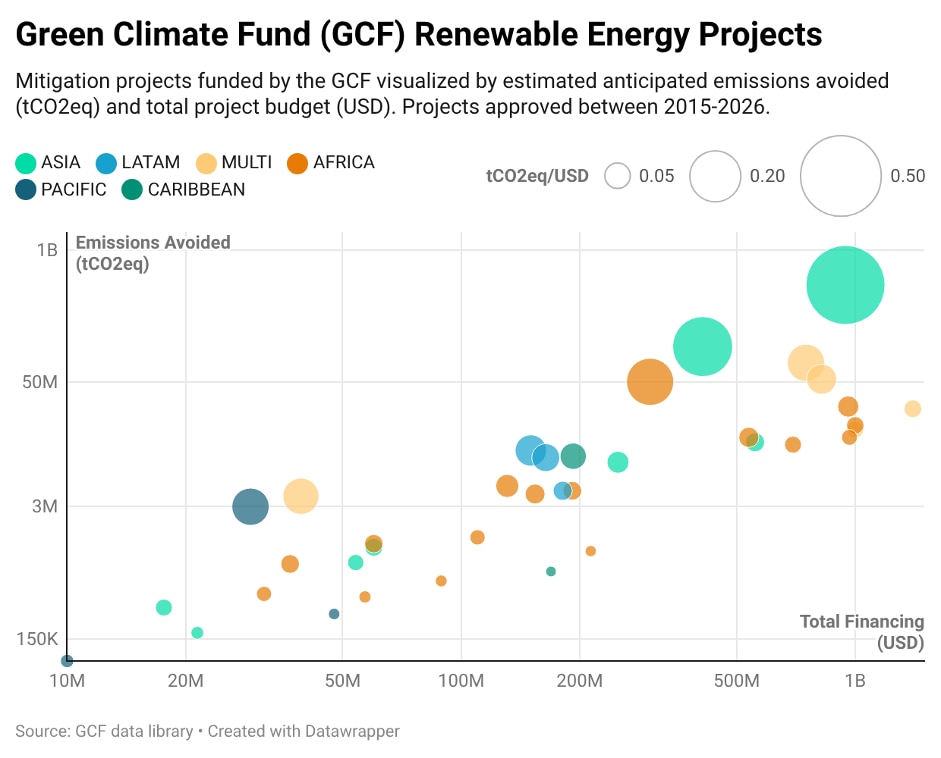
PSIDS renewable energy projects struggle to demonstrate the level of impact based on metrics such as tonnes of CO2 equivalent per US dollar (tCO2eq/USD) spent for evaluating cost-effectiveness, absolute emission reduction for evaluating impact, return on investment (ROI) for profitability or number of beneficiaries. Nevertheless, these metrics undervalue the transformative effects of utility scale renewable energy installations that have the potential to reshape the national economies of PSIDS.
On paper, renewable energy projects in the Pacific are costly, do not result in a high GHG emission reduction (compared to other regions) and have a lower number of beneficiaries compared to other regions due to their geographic spread. These are structural disadvantages that make PSIDS less competitive for attracting renewable energy climate finance.
However, energy transitions in the Pacific should not be viewed only through the lens of cost-effectiveness or ROI, but through the transformative impact utility scale installations can have for national consequences. Something as small as 2-4 MW would have a tremendous impact in that community. This is the case for a 6 MW solar farm in Tongatapu, which is expected to meet 15% of Tonga’s current energy needs.
The cost of SIDS renewable energy transitions
Renewable energy installations in PSIDS face several challenges that result in a higher cost of doing business. These include higher foreign currency exposure, delays due to extreme weather conditions (such as cyclones), shipping timelines to remote locations also carry risks and affect project costs. The installations themselves are more expensive than their mainland equivalents due to upgraded features that can withstand cyclones (up to C4), higher humidity and exposure to coastal conditions. The combination of high humidity and temperature results in an estimated 0.5%-0.7% annual degradation rate for utility-scale solar infrastructure.
For SIDS with small population sizes and for countries that cover a large distance geographically, the adoption of new technologies requires additional resources, capacity building and risk mitigation measures, rendering these projects less competitive for both the private sector and for the multilateral climate finance funds. However, studies have shown that decarbonizing electricity generation is not only technically feasible in SIDS (such as Vanuatu), but would result in 60% lower cost for renewables versus the base case.
The merits of emission reduction in SIDS outweigh the metrics. In terms of energy independence, reduced reliance on fuel imports, the environmental toll of transporting fossil fuel imports and overall reduced long-term costs, renewable energy is transformative for the region. For example, the Levelized Cost of Energy (LCOE) for renewables has steadily decreased in recent years (utility solar PV has reached 0.043 USD per kWh for example) with indications that solar installations can reach cost parity with diesel in SIDS (based on data from Trinidad and Tobago). In addition, the cost of importing fossil fuels is equivalent to a significant proportion of the GDP of SIDS.
Energy transitions in SIDS are feasible, with adequate technical and financial support. Recent fuel shortages have demonstrated the precariousness of being dependent and vulnerable to the unpredictability of fossil fuel imports. As a solution, donors should take into consideration the challenges – cost of equipment, freight, shipping and other factors – to allocate specific funding windows designed to facilitate low-carbon transitions of the energy sector in SIDS.
This would align with UNFCCC recognition of the special circumstances of SIDS and unlock the co-benefits of renewable energy transitions in economies that are both highly vulnerable to climate shocks and dependent on the importation of fossil fuels.
Don't miss any update on this topic
Create a free account and access your personalized content collection with our latest publications and analyses.
License and Republishing
World Economic Forum articles may be republished in accordance with the Creative Commons Attribution-NonCommercial-NoDerivatives 4.0 International Public License, and in accordance with our Terms of Use.
The views expressed in this article are those of the author alone and not the World Economic Forum.
Stay up to date:
Renewable Energy
Related topics:


Forum Stories newsletter
Bringing you weekly curated insights and analysis on the global issues that matter.


