Why AI will be key to accelerating the energy transition
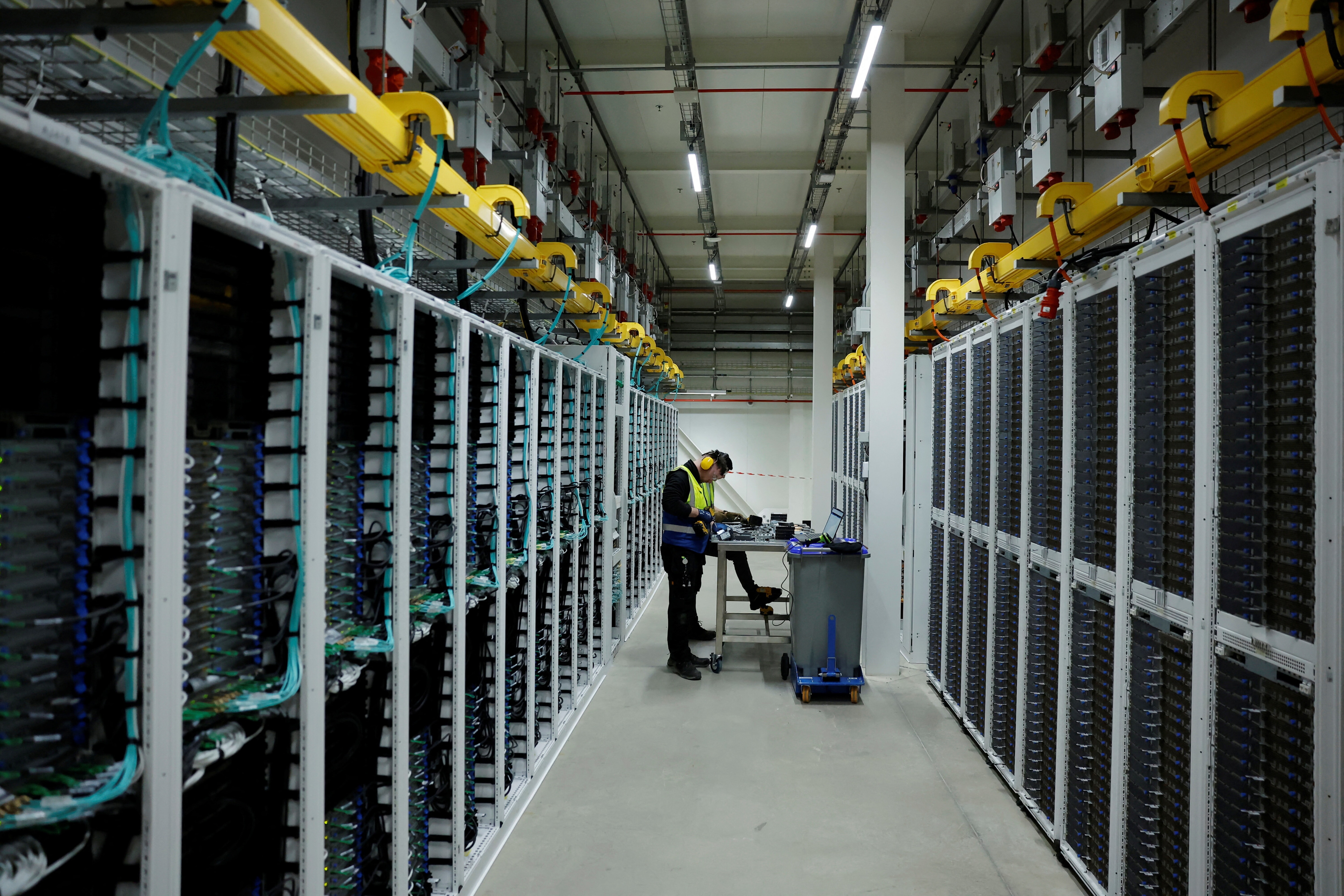
AI can help cut emissions by powering climate adaptation and renewable energy solutions. Image: Reuters/Clodagh Kilcoyne
- Artificial intelligence (AI) has become an engine of global productivity and innovation, although requires a significant amount of energy to run.
- However, AI can also support others in cutting emissions by powering adaptation solutions, biodiversity protection and circular innovation.
- The challenge ahead is how to steer the rapid advancement of AI to ensure that it becomes an engine of a cleaner, more sustainable future.
Artificial intelligence (AI) is moving faster than almost any technology in history. In just a few years, it has shifted from experimentation to becoming an engine of global productivity and innovation.
Yet, as AI’s influence grows, so does the debate around its impact: can the same technology driving progress also accelerate the clean energy transition, or will it undermine climate goals?
The KPMG global study of more than 1,200 energy leaders across 20 markets offers their view that AI’s potential climate benefits far outweigh its energy footprint. This report, AI’s dual promise: Enabling positive climate outcomes and powering the energy transition, explores how organizations are leveraging AI to help drive sustainability and where action should accelerate.
AI as a climate enabler and energy transition accelerator
AI is expanding its "climate handprint," which is the positive impact of helping others reduce emissions, while powering adaptation solutions, biodiversity protection and circular innovation.
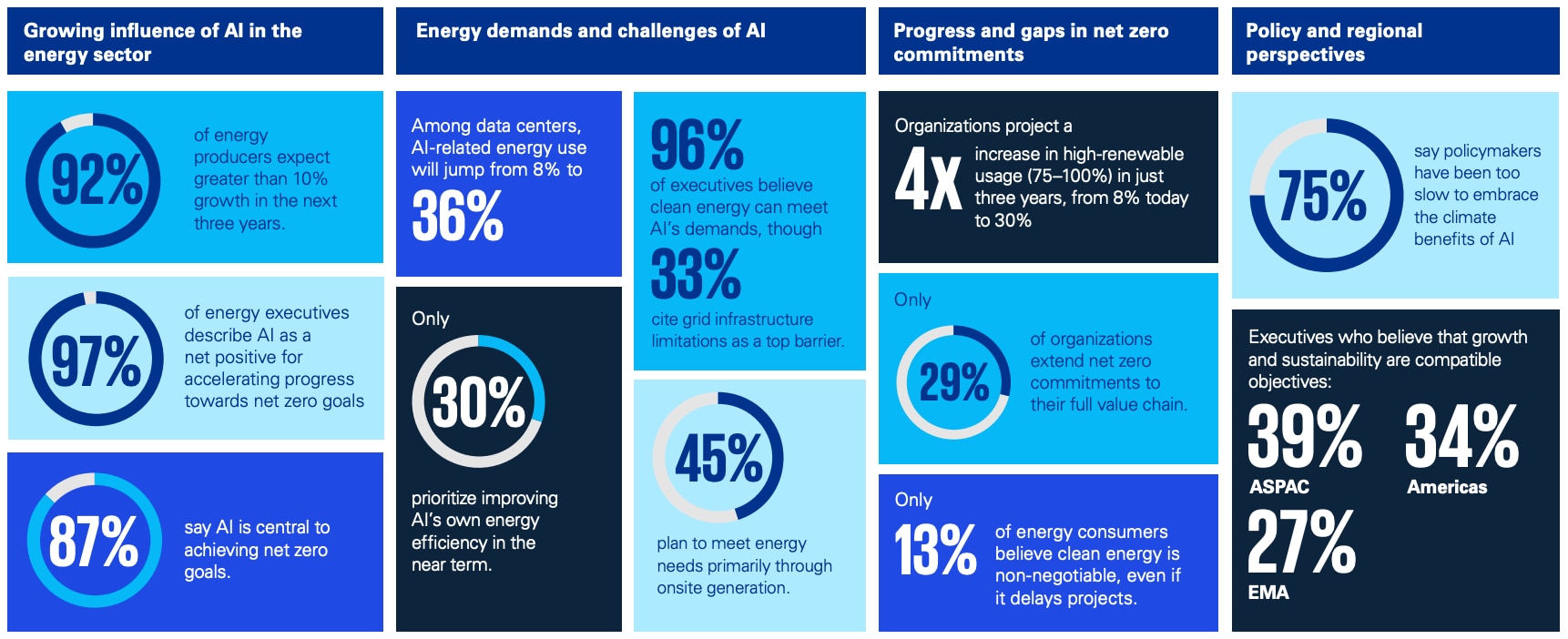
The KPMG study indicates that by 2027, 62% of respondents believe major data and AI operators expect to self-generate clean energy, investing directly in renewables. System-wide, AI is enabling real progress on sustainability across value chains; from manufacturing and transport to agriculture and buildings, it is helping companies address climate risk exposures and create positive value.
But progress is uneven. Infrastructure bottlenecks, policy delays and financing barriers risk slowing down momentum. The next 24 months, through 2027, are likely to be decisive in closing this gap.
With the urgent push to phase out coal-fired power plants, particularly in emerging economies, AI is stepping up as a key player in shaping the future of energy. Coal remains a dominant source of electricity globally, accounting for over one-third of total power generation and an even greater share in emerging economies, according to the International Energy Agency (IEA).
This heavy reliance on coal poses a significant threat to climate goals, as coal power generation is set to consume half the remaining carbon budget to 1.5ºC. Retiring and transforming coal-fired power plants, while securing funding for cleaner energy options, is a challenging process that demands creative approaches and active collaboration across a wide range of stakeholders.
Initiatives such as the World Economic Forum’s Coal to Clean platform, supported by Growald Climate Fund and KPMG in Singapore, exemplify how collaboration across energy, finance and civil society can help drive transformative change.
By bringing industry leaders together, developing innovative financing approaches for clean energy, and shaping smart investment opportunities, these efforts are helping to drive change. They are unlocking capital and building a pipeline of deals to support the transition from coal to cleaner energy sources. In this process, AI is essential, helping grid operators improve efficiency, anticipate energy demand and integrate renewables as coal plants are retired.
AI energy market set to reshape global energy production
Most executives surveyed expect major structural change within three years and are accelerating planning cycles towards 2027, according to the KPMG study. By then, the AI-related energy market should have reached a pivotal point, where rising demand, new supply models and evolving infrastructure should have reshaped global energy production and usage.
After 2027, scarcity is likely to define the market: constrained grid capacity, congested permitting systems and escalating competition for renewable assets can be expected to drive costs sharply upward.
Organizations that act quickly to embrace the transition should benefit from increased flexibility and more predictable costs, while those that wait may encounter higher prices and fewer opportunities.
AI’s energy footprint is real, but its climate handprint is far larger. It is helping grid operators predict demand and balance renewable supply in real time, optimizing industrial efficiency, advancing climate modelling, cutting waste and speeding up clean energy deployment.
For the first time in three decades of energy transition, economics and ethics are starting to align. AI’s rapid growth is creating an economic necessity that could finally make large-scale deployment of clean energy unstoppable.
Barriers to acceleration of the energy transition
Despite strong confidence in AI’s potential, the KPMG report highlights persistent barriers:
- Commitment gap: Some 96% of executives surveyed believe renewable energy can meet future AI demand, yet only 13% are willing to make clean power use non-negotiable if it slows deployment or increases cost.
- Timeline challenge: AI scales in months, but renewable infrastructure takes years. Permitting, grid connections, and construction cycles still take three to five years, risking a mismatch between AI-driven demand and clean energy supply.
- Infrastructure constraint: Outdated transmission systems and underinvestment in capacity make grid connection a new bottleneck.
- Policy stalemate: AI is racing ahead; public policy is struggling to keep up. Policy inertia can create uncertainty, delaying investment decisions.
- Financing and cost challenge: High costs and lack of funding can stall projects, even as innovators rewrite financial models for renewable energy adoption.
How key stakeholders can turn barriers into advantage
The window for integration and securing a competitive edge is quickly closing. If the world wants AI to play a meaningful role in driving the climate transition, it’s going to take bold, coordinated action across the entire energy value chain.
- Hyperscalers: Drive demand signals and invest ahead of need, accelerating the ecosystem.
- Utilities: Transform grids into intelligent, dynamic systems using AI for real-time forecasting and integrating renewables.
- Developers: Scale clean supply at speed, innovate in flexible generation and storage, and form strategic partnerships.
- Investors: Prioritize capital allocation toward integrated AI-driven clean energy solutions.
- Governments: Streamline policy frameworks, accelerate permitting and enable private investment in grid infrastructure.
AI as an accelerator for climate progress
AI’s story in the climate debate has often been told that it is a problem to be contained rather than a capability to be unleashed.
The KPMG research points to potentially a far more powerful perspective: AI is not a threat to climate progress; it is likely the greatest accelerator of it.
The challenge ahead is not to slow AI down, but to steer it wisely. If ambition, policy, and innovation can align at the speed AI is advancing, technology’s appetite for energy can become the engine of a cleaner, more sustainable future.
The insights above are based on data and report findings from November 2025.
Don't miss any update on this topic
Create a free account and access your personalized content collection with our latest publications and analyses.
License and Republishing
World Economic Forum articles may be republished in accordance with the Creative Commons Attribution-NonCommercial-NoDerivatives 4.0 International Public License, and in accordance with our Terms of Use.
The views expressed in this article are those of the author alone and not the World Economic Forum.
Stay up to date:
Artificial Intelligence


Forum Stories newsletter
Bringing you weekly curated insights and analysis on the global issues that matter.
More on Energy TransitionSee all

Prajeev Rasiah
September 23, 2026


