Why emerging markets will be the testing ground for decarbonization
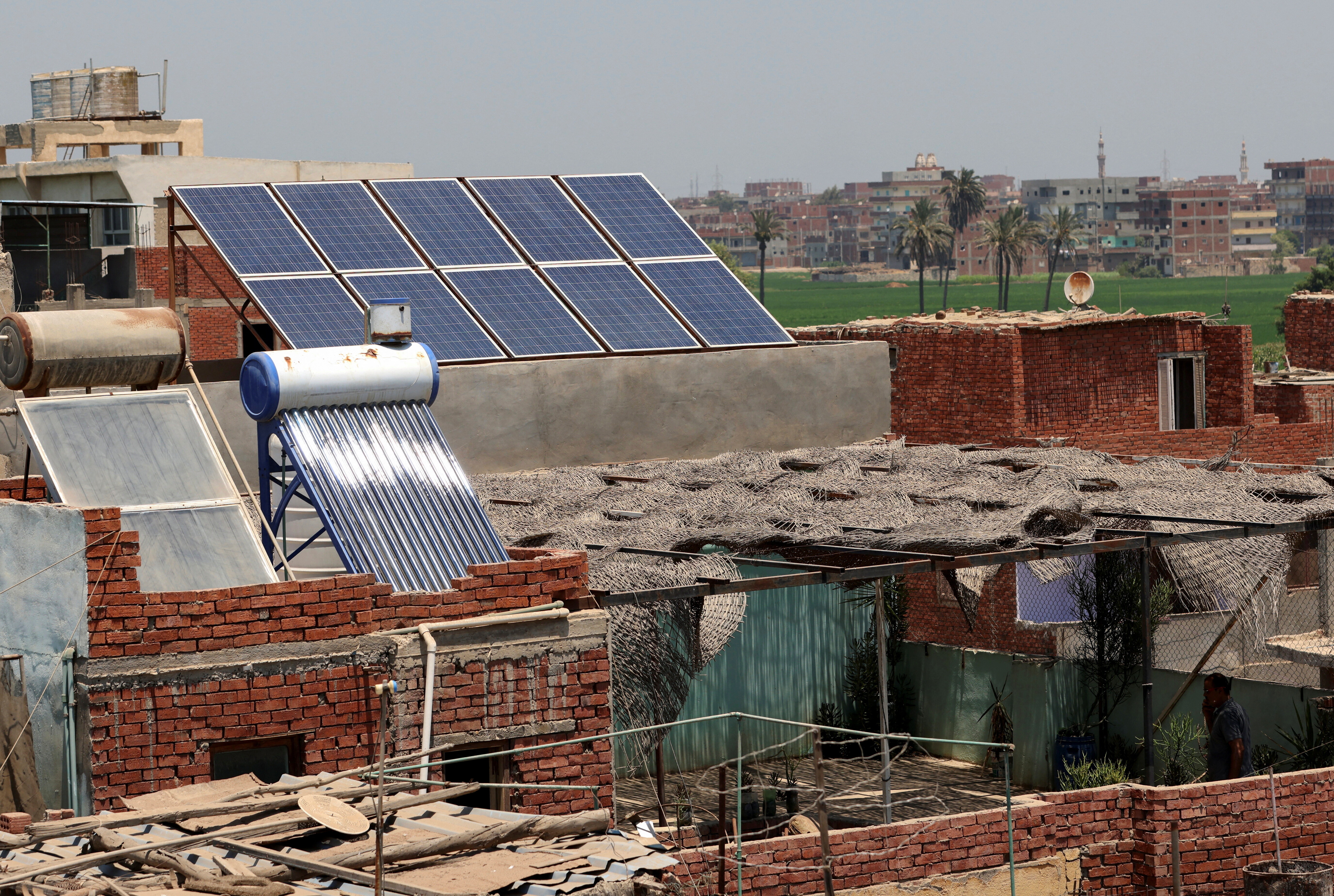
Successful climate solutions in emerging markets are those built and tailored to their context. Image: Reuters/Mohamed Abd El Ghany
- Emerging markets will become a testing ground for climate solutions as they drive population growth, infrastructure expansion and economic activity.
- These and developing economies (other than China) contribute about 25% of global GDP but attract just 14% of international climate finance flows.
- The most scalable climate solutions in emerging markets are not those that simply transplant global technologies, they are those built within their context.
Emerging markets will drive the bulk of global population growth, infrastructure expansion and economic activity over the coming decades – making them a critical testing ground for climate solutions.
Accordingly, investors who focus solely on decarbonizing developed markets may be overlooking some of the most compelling opportunities – those offering better margins, broader reach and faster adoption curves.
Emerging markets and developing economies (excluding China) contribute roughly a quarter of global GDP but to date attract just 14% of global climate finance flows.
To remain on a net-zero trajectory, these economies will require an additional $450–$550 billion annually in external finance by 2030 – an increase of as much as 18 times.
Climate-friendly business models gaining momentum worldwide
This historic underinvestment overlooks a core fact: that viable, emissions-reducing and/or adaptation-ready business models are already gaining momentum across emerging markets worldwide.
These markets reward cost efficiency, financing sensitivity and product-market fit. A distinct class of innovation is emerging – solutions built under constraint, from the ground up, for long-term viability. We call this grounded innovation.
A key driver is the falling cost of clean technologies. Increasingly, the once-assumed “green premium” – the notion that low-carbon options are inherently more expensive – has shifted be a "green discount".
Renewable energy already outcompetes fossil-fuel based power tariffs in India while solar mini-grids offer more reliable power than diesel generators at lower lifecycle costs across Sub Saharan Africa.
These on-ground adoptions are a function of global technology improvements but also region-specific tailwinds including high fuel import costs, weak grid reliability and the absence of legacy infrastructure that often slows the transition in developed markets.
These conditions create cleaner alternatives but also those that are structurally better, and aligned with user needs and system costs. In this context, business fundamentals particularly unit economics, customer acquisition cost and payback period are key filters for scalability.
India’s transport sector offers a clear example. Unlike many developed markets, India’s roads are dominated by two- and three-wheelers, which account for more than 80% of vehicle sales.
These vehicles are essential income-generating assets for millions of informal and gig workers. Here, battery-as-a-service platforms have uncoupled the cost, maintenance and upgradability of batteries from the vehicle cost, making electric vehicle (EV) ownership more affordable than petrol vehicles. This model addresses range anxiety and tech ambiguity, increasing accessibility, while accelerating adoption of zero carbon last mile mobility.
Meanwhile in Africa, almost $400 billion in investment is required annually by 2030 to execute low-carbon, climate-resilient development. Three key areas are vital for this shift:
- Energy transition and sustainable infrastructure
- Adaptation and resilience
- Restoration of natural capital
Decentralized energy and mobility solutions stand out as proof points of how grounded innovation in Africa can reconcile climate ambition with immediate livelihood needs. Solar-charged battery rentals, for example, are turning electrification into predictable operating expenditure rather than unaffordable capital expenditures.
Success requires localized models which are built to fit the continent’s realities, from the fuel needs of last-mile transport providers to rural households’ irregular incomes.
In Southeast Asia, one of the most climate-vulnerable regions in the world, the case is equally strong. The levelized cost of electricity from new-build solar is already below that of new coal and gas in several ASEAN economies. Yet adoption remains slow due to financing barriers and grid instability.
Energy-as-a-service models are eliminating large upfront capital requirements and derisking system performance, while mobility companies are reducing costs and improving quality by building local supply chains.
Most scalable climate solutions tailored to their context
These examples reflect an important pattern. The most scalable climate solutions in emerging markets are not those that simply transplant global technologies. They are built for and within their context – serving a fast-growing base of four billion emerging consumers.
They are also grounded in business fundamentals, not novelty, and shaped to withstand price shocks, policy shifts and informal market dynamics. When they succeed here, they’re often stronger, faster and more adaptable elsewhere.
Emerging markets, long viewed as high-risk recipients of climate capital, are fast becoming the world’s most vigorous testing ground for decarbonization economics. Constraints sharpen execution. Demand signals are clear. The upside for investors is a pipeline of solutions that are leaner, faster-scaling and more aligned with the future energy system.
What these markets need is not one-size-fits-all solutions, but thoughtful capital, long-term orientation and operational patience. This is where the next generation of climate leaders will emerge and investors who overlook it risk missing the defining growth story of the global transition.
Don't miss any update on this topic
Create a free account and access your personalized content collection with our latest publications and analyses.
License and Republishing
World Economic Forum articles may be republished in accordance with the Creative Commons Attribution-NonCommercial-NoDerivatives 4.0 International Public License, and in accordance with our Terms of Use.
The views expressed in this article are those of the author alone and not the World Economic Forum.
Stay up to date:
SDG 13: Climate Action
Related topics:


Forum Stories newsletter
Bringing you weekly curated insights and analysis on the global issues that matter.
More on Economic GrowthSee all

E. Richard Gold
September 30, 2026


