The top nature and climate stories of 2025
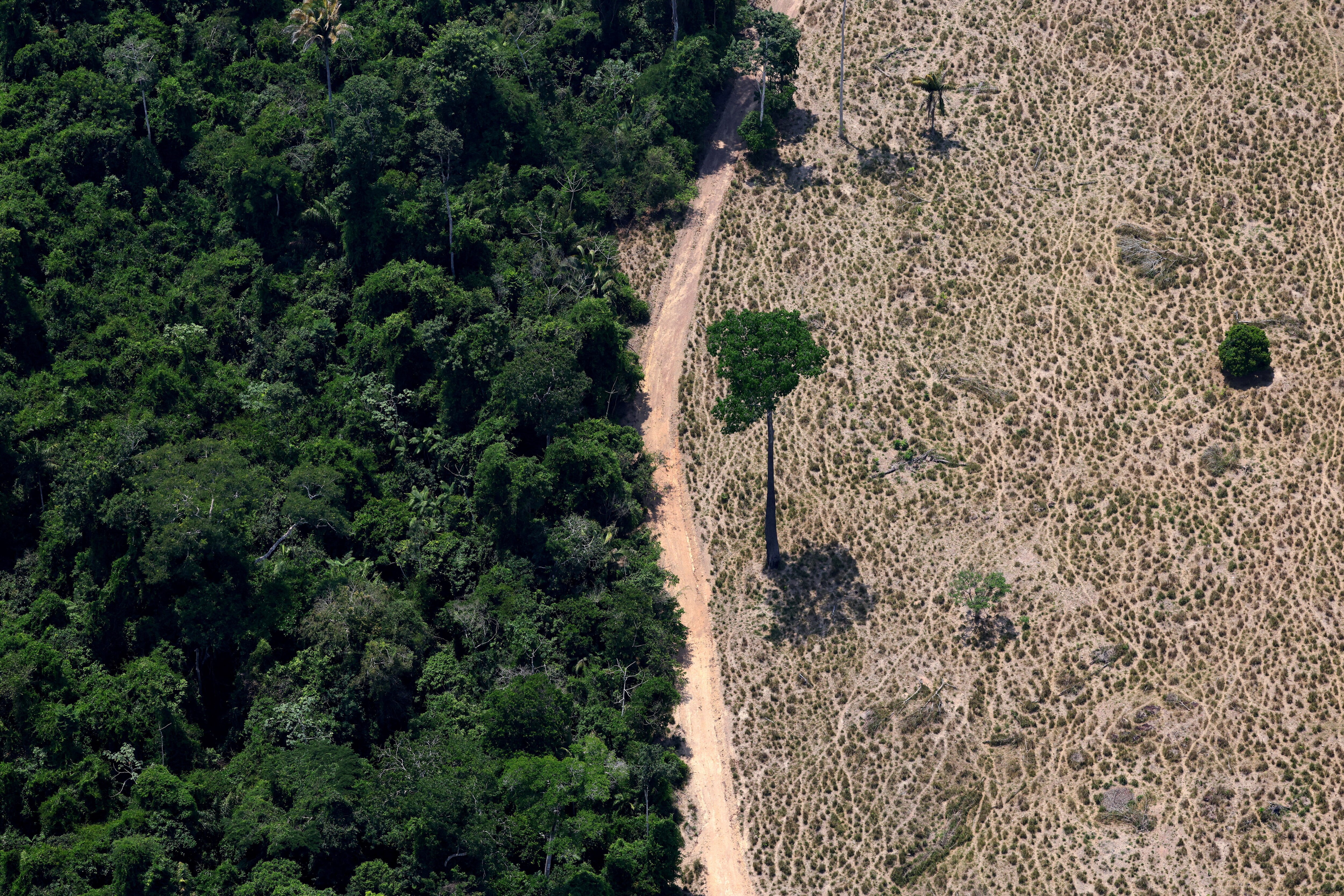
What nature and climate stories have captured our attention this year? Image: REUTERS/Amanda Perobelli
- 2025 has brought both challenges and breakthroughs for nature and climate around the world.
- From 'no deal' on a global plastics treaty to renewables overtaking coal in power production, here are some of our must-read stories from the past 12 months.
1. Humanity breaches seven of nine planetary boundaries
Seven of Earth’s nine planetary boundaries – the natural systems that keep our planet stable – have now been breached. This year witnessed ocean acidity crossing a critical threshold, as the video below explores.
This is based on the Planetary Health Check 2025 by the Potsdam Institute for Climate Impact Research (PIK). Planetary boundaries set the scientific limits within which our natural systems must operate to function fully.
“We have very strong signs that we're moving closer to tipping points which can lead to irreversible changes that would undermine more or less permanently the basis upon which economic development depends,” Johan Rockström, PIK’s director, told the World Economic Forum at the Sustainable Impact Development Meetings 2025 in September.
An insight report from the Forum, 10 Emerging Technology Solutions for Planetary Health, examines the technologies that may help address the declining health of our planet’s fundamental processes. From green ammonia production to geothermal energy, explore the solutions in the report below.


2. Extreme weather impacts communities and economies
In May, Swiss Re estimated that the world could face $145 billion in insured losses in 2025 from extreme weather events, which would be a 6% rise on the 2024 figures.
Since then, we've seen a variety of major weather events, from Pakistan's floods to Hurricane Melissa, which made its most powerful landfall in Jamaica.
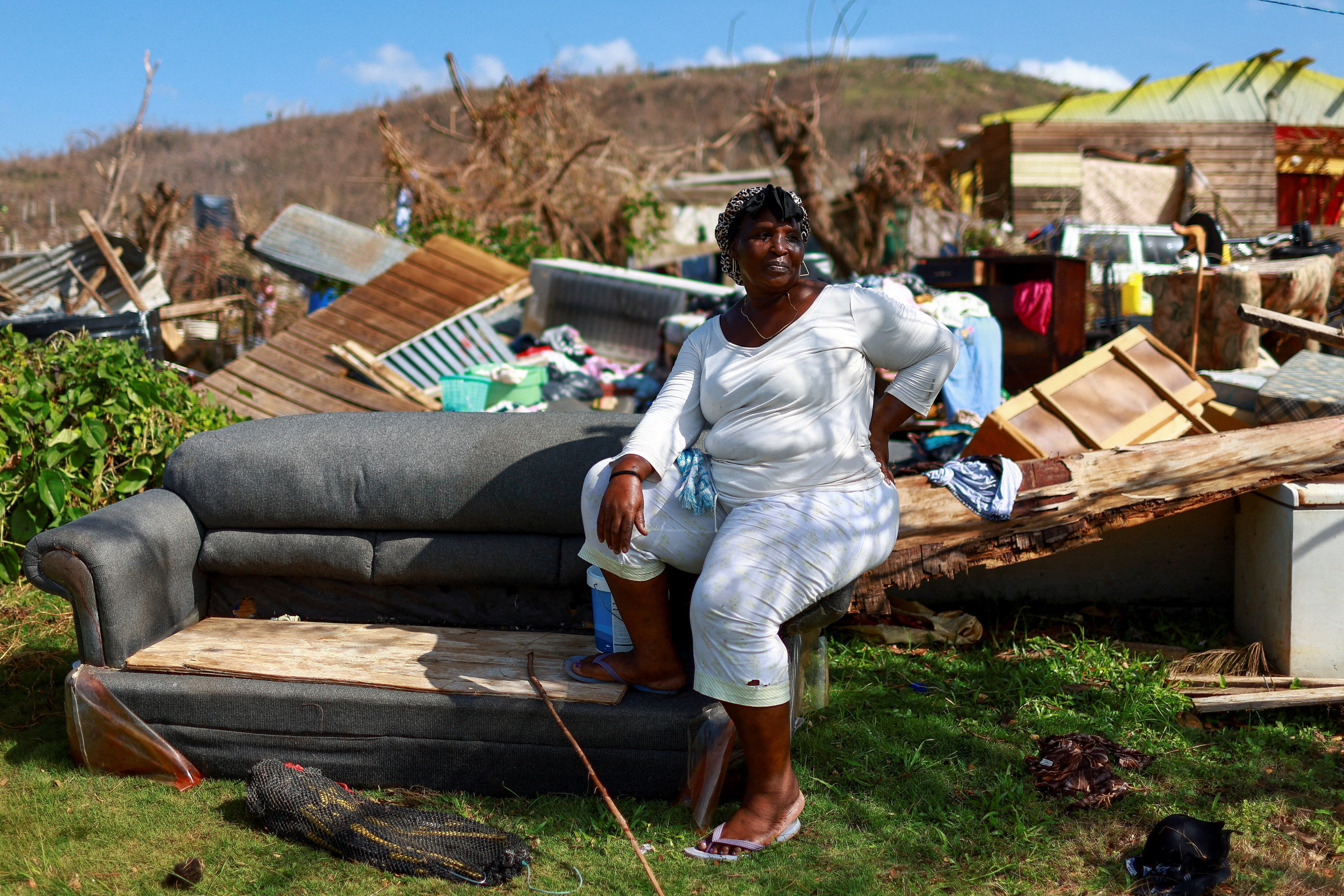
A Forum report, in collaboration with Boston Consulting Group, estimates that the combined global impact of climate health effects across the food and agriculture, built environment, and healthcare sectors could amount to at least $1.5 trillion in lost productivity by 2050.
Take a look at some of the potential impacts on not only businesses and economies, but also everyday people, in the video below.


3. Progress on early warning systems
Some 60% of countries now have early warning systems (EWS), a 113% increase over the past 10 years, according to a report from the World Meteorological Organization (WMO).
Coverage gaps persist, however, especially among small island developing states, with only 43% of them reporting having systems in place.
While great strides continue to be made in the development and implementation of EWS, there are still areas that need to be addressed. Better collaboration between governments, institutions and businesses in particular will be required if these systems are to succeed.
A white paper from the Forum, produced in partnership with the WMO and the Australian National University, tackles this challenge. Catalysing Business Engagement in Early Warning Systems – a priority highlighted at the World Economic Forum Annual Meeting 2025, where experts called on businesses to accelerate information sharing. Follow the discussion below:
4. ‘No deal’ on a global plastics treaty
No agreement to reach stricter, enforceable rules to reduce plastic pollution was achieved after 10 days of negotiations by nations at the second part of the fifth session of the Intergovernmental Negotiating Committee on plastic pollution, including in the marine environment (INC-5.2).
Talks will resume in the future, though no date has been set. Despite the disappointment of all involved, INC Chair Ambassador Luis Vayas Valdivieso expressed optimism in a statement: "It should not lead to discouragement. On the contrary, it should spur us to regain our energy, renew our commitments, and unite our aspirations.”
Viet Nam accounts for 1.8 million tonnes of plastic waste annually, with about 27% of that recycled. But the country is also emerging as a potential leader in tackling the problem.
The stories of two of the country's informal waste workers feature in a short documentary from the Forum called Invisible Warriors: The Force Behind Viet Nam’s Plastic Action, which you can watch below.
5. Renewables eclipsed coal for the first time
Renewable energy produced more electricity than coal for the first time this year, according to a report from energy think tank Ember, as the chart below illustrates.
Global electricity demand grew by 2.6% in the first half of 2025 – a rise that was more than met by increases in solar (+31%) and wind generation (+7.7%), the report says. With growth of 306 TWh – about the same amount of electricity that a country like Italy uses in a year – solar alone covered 83% of the increase in demand.
Coal generation, meanwhile, fell by 0.6%, leading to renewables’ share of global electricity rising 1.6 percentage points to 34.3%. Coal’s share fell by just over 1 percentage point to 33.1%.
6. COP30 delivered a negotiated outcome, but fell short of unlocking major progress
The 30th UN Climate Change Conference, COP30, was held this year in Belém, Brazil – a decade after the Paris agreement and against a turbulent geopolitical landscape.
COP30 was billed as the ‘Implementation COP’, with the overarching goal of putting existing commitments into action. So how did it do?
While this year's conference fell short in many areas, there were some glimpses of light emerging from the negotiations and the voluntary action agenda:
- Incremental progress on resilience and adaptation: COP30 concluded with an agreement to triple adaptation finance. The new target increases adaptation finance to $120 billion per year, as part of the broader $300 billion per year in climate finance.
- Decision on a just transition mechanism: Parties agreed to enhance technical assistance, capacity-building and knowledge sharing, via a new mechanism: the Belém Action Mechanism (BAM) for a Global Just Transition. The mechanism includes unprecedented references to labour, human and environmental rights.
- International trade enters the negotiations: For the first time, trade – including carbon trade measures such as the EU's Carbon Border Adjustment Mechanism (CBAM) – were discussed as part of formal negotiations. A first-ever workstream on trade was launched, signalling the growing importance of trade for the climate agenda.
Learn more by reading two of our explainers below.


7. Carbon capture technologies make waves
University of Houston researchers unveiled dual breakthroughs in carbon capture technology. These include a membraneless electrochemical process that achieves over 90% carbon removal at approximately $70 per metric ton, and a vanadium redox flow system capable of both capturing carbon and storing renewable energy.
Massachusetts Institute of Technology researchers also announced nanofiltration membranes, making carbon capture six times more efficient and 30% cheaper.
A Forum report, produced in collaboration with Wood Mackenzie this year, explored the state of carbon capture and utilization (CCU).
It said that CCU could open up new markets, enhance industrial resilience and provide climate benefits – if given strong public sector support, clear demand signals and innovative finance models.
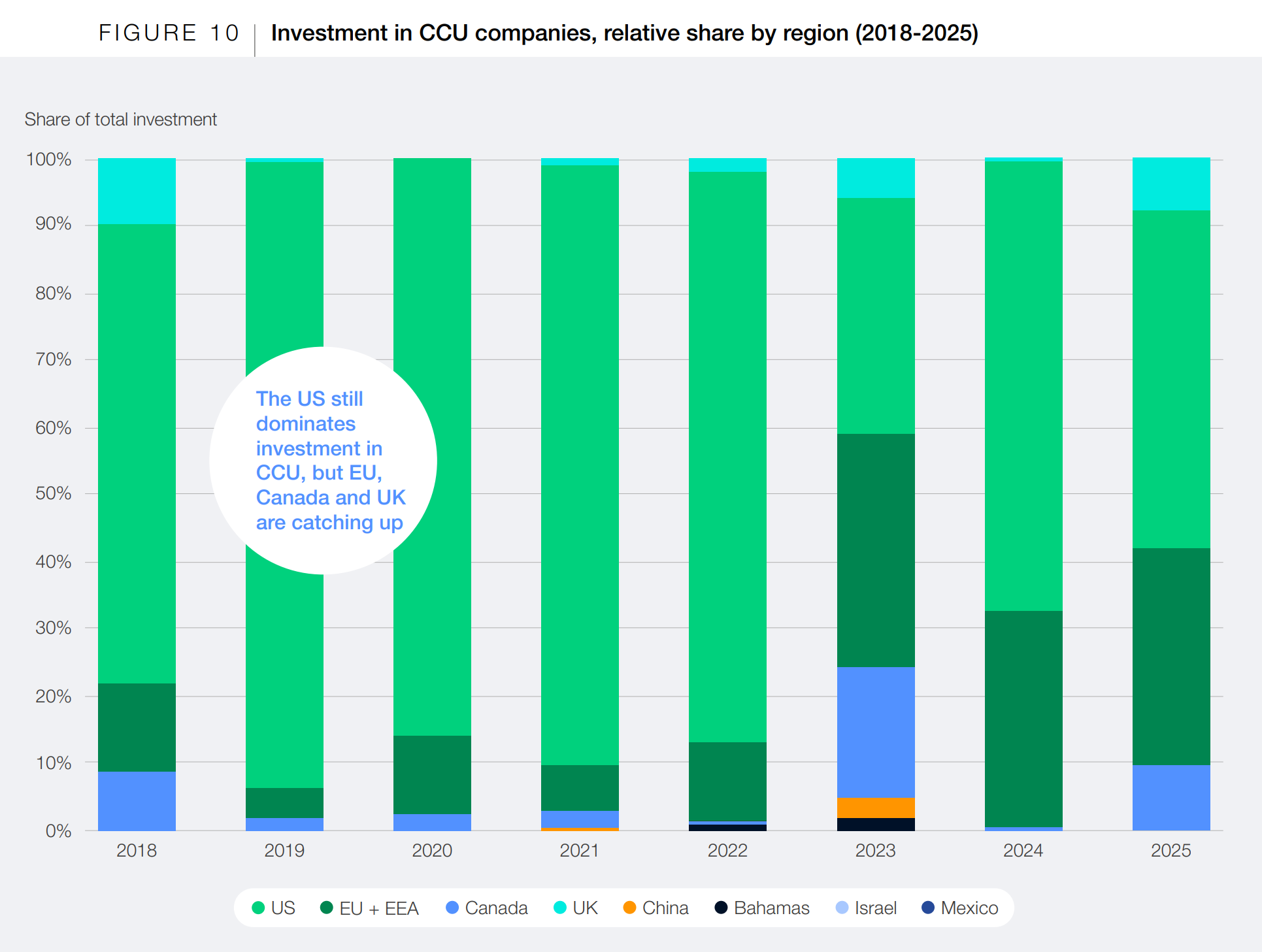
The pipeline of investments in CCU is extremely low, due to systemic market barriers currently facing the sector. The US dominates overall investment, but other nations are closing the gap, as shown in the graph below.
Read the full report to explore some of the solutions to these barriers: from de-risking innovation and R&D to creating predictable market environments. Additionally, here's an explainer article on CCU.


8. Nature-based solutions at the forefront of climate progress
At COP30, the Tropical Forest Forever Facility was announced to protect tropical forests, along with pledges supporting Indigenous peoples, local communities and land rights.
This new investment mechanism is designed to deliver predictable, large-scale, long-term funding to countries that conserve and restore tropical forests.
The importance of investing in nature is being recognized around the world. A Forum report, Investing in Mangroves: The Corporate Playbook, highlights the critical role mangroves play in carbon storage and protecting coastal communities from the effects of climate change. The playbook acts as a guide for corporations looking to take action and support innovative projects.
Successful rewilding projects took place around the globe this year, too, including the return of beavers to England, captured in the video below.
9. Jane Goodall, the renowned primatologist, dies at the age of 91
Dame Jane Goodall, the pioneering primatologist and conservationist, died in October at the age of 91. A UN Messenger of Peace, she inspired millions through her tireless advocacy for a more compassionate world.
She was renowned for her groundbreaking research in the 1960s at what is now Tanzania's Gombe Stream National Park.
Her patient observation led to the transformative discovery that chimpanzees make and use tools – a finding that challenged the scientific definition of humanity itself.
To continue her mission, Dr Goodall founded organizations including the Jane Goodall Institute, the Jane Goodall Legacy Foundation and her beloved Roots and Shoots, a programme that encourages young people to take action for animals, people and the environment.
Learn more about Dr Goodall's remarkable life and teachings in this article from the World Economic Forum's Gill Einhorn, or listen to her Meet The Leader episode below.
10. Signs of promise
Despite tough headlines in 2025, there were signs of progress. Two ocean treaties decades in the making reached key milestones:
WTO Agreement on Fisheries Subsidies: This first-ever set of binding global rules was designed to curb subsidies that fuel overfishing, threatening the health of the ocean. While subsidies, used responsibly, can support livelihoods and encourage sustainable practices, governments still spend around $22 billion each year on harmful subsidies that enable illegal fishing and deplete overfished stocks.
High Seas treaty: This historic agreement earned the needed ratifications this fall, securing a first-ever legally binding framework for the international community to conserve and sustainably use marine biodiversity in the high seas (largely unregulated areas that cover nearly half the planet). Also referred to as the BBNJ Agreement, it goes into force in 2026.
License and Republishing
World Economic Forum articles may be republished in accordance with the Creative Commons Attribution-NonCommercial-NoDerivatives 4.0 International Public License, and in accordance with our Terms of Use.
The views expressed in this article are those of the author alone and not the World Economic Forum.
Related topics:
Contents
1. Humanity breaches seven of nine planetary boundaries2. Extreme weather impacts communities and economies3. Progress on early warning systems4. ‘No deal’ on a global plastics treaty5. Renewables eclipsed coal for the first time6. COP30 delivered a negotiated outcome, but fell short of unlocking major progress7. Carbon capture technologies make waves8. Nature-based solutions at the forefront of climate progress9. Jane Goodall, the renowned primatologist, dies at the age of 9110. Signs of promise
Forum Stories newsletter
Bringing you weekly curated insights and analysis on the global issues that matter.
More on Climate Action and Waste Reduction See all

Lucas Gobatti
September 4, 2026


