This monthly round-up brings you a selection of the latest news and updates on global trade.
Top international trade stories: Middle East ceasefire impacts oil and shipping; EU-US trade deal a step closer; UNCTAD says global trade hit a record $35tn in 2025.
1. Middle East ceasefire shifts oil prices, but not ships
International trade and markets reacted swiftly to the two-week ceasefire agreed by the US and Iran on 7 April.
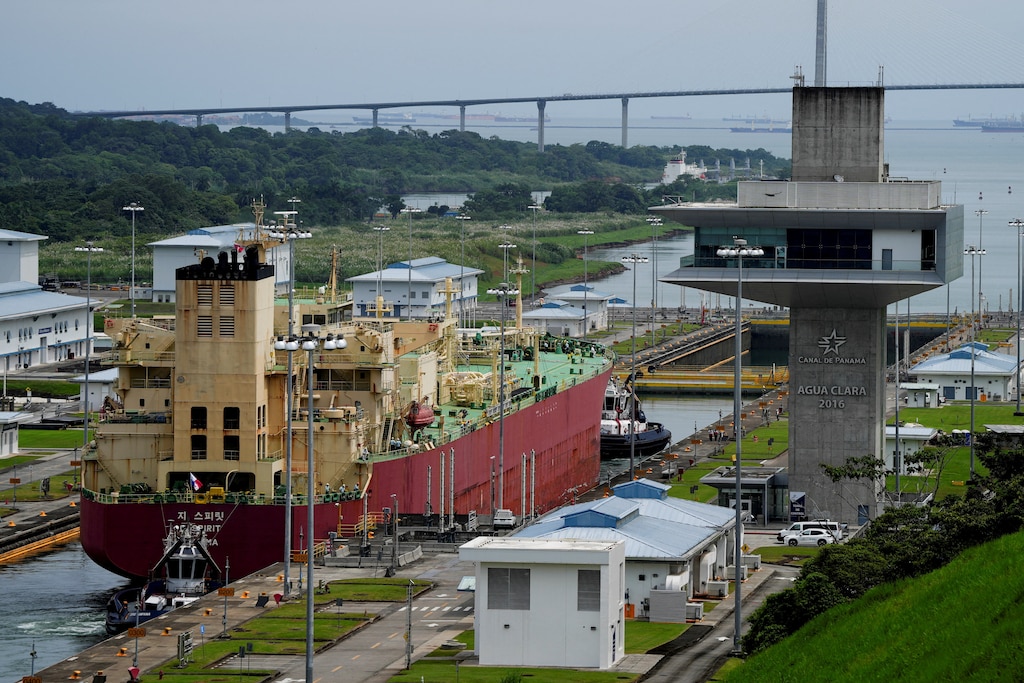
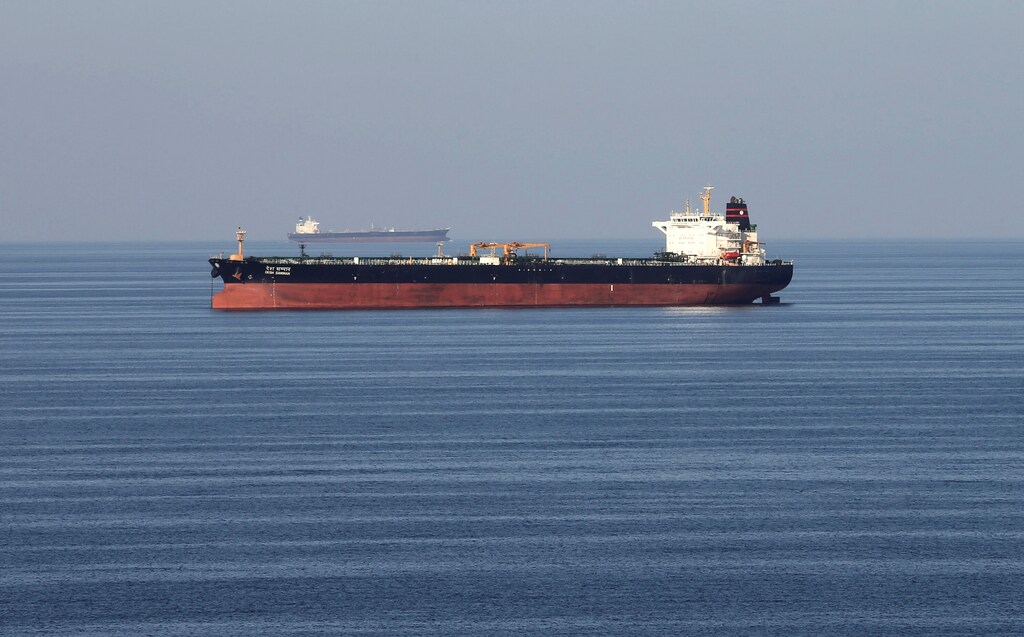
In anticipation of the Strait of Hormuz reopening and energy supplies being able to pass through the shipping route once more, oil fell below $100 a barrel and backlogged ships carrying oil and other essential exports prepared to depart. But only a small number of ships have so far passed through and with the ceasefire already undermined with further attacks the strait remains essentially shut.
"Overall, the market is hopeful more oil is going to reach the market... but it is still concerned that it is a very fragile ceasefire and it may not last," Andrew Lipow, founder of Lipow Oil Associates, told Reuters.
Following the ceasefire announcement, negotiations for lasting peace between the US and Iran broke down. In response, the US imposed a naval blockade of Iranian ports.
Slower global growth is expected as a result of the war in the Middle East, according to Kristalina Georgieva, Managing Director of the International Monetary Fund. The conflict has already shrunk global oil supply by 13%, she told Reuters, and impacted related supply chains like helium and fertilizers. “Even if the war is to stop today, there would be a lingering negative impact to the rest of the world," she said.
2. EU-US trade deal gets a conditional green light
The European Parliament moved the EU one step closer to a trade deal with the US at the end of March.
A majority voted in favour of legislation that protects EU interests in the face of continued tariff threats and uncertainty.
The framework agreement was made in July 2025, but the parliament voted to only accept zero tariffs on US goods if steel and aluminium goods from the EU are excluded from the 50% tariff the US had previously said it would impose.
Lawmakers also agreed to suspend the deal if the US imposes additional tariffs above 15%, or introduces new duties on EU goods, reports the BBC.
The EU’s 27 member states will now need to sign off on the legislation, with a final vote expected by May.
In the meantime, US carmakers have accused the EU of breaching the spirit of the trade deal with its plans to change safety rules that would prevent certain US vehicles from being sold in Europe, reports the Financial Times. The vehicles in question are large pick-up trucks that have “far lower safety and air pollution standards,” according to an energy advocacy group. But the American Automotive Policy Council, representing General Motors, Ford and Stellantis, points out that the deal made in summer 2025 included “mutual recognition of vehicle standards”.
3. Global trade hits a record $35tn, but fragility is rising
Global trade grew to a record $35 trillion in 2025, but UNCTAD warns that the outlook is becoming more fragile for 2026.
Trade expanded by about $2.5 trillion last year, or roughly 7.5%, showing that global commerce remained resilient despite ongoing geopolitical pressures. Trade in goods drove most of the expansion, according to UNCTAD’s latest update, adding around $1.8 trillion to global growth. Notably, South-South trade in regions like East Asia and Africa outpaced the global average, “underscoring the growing weight of developing economies on world trade,” it said.

But “persistent trade tensions” and the ongoing conflict in the Middle East are expected to slow growth later in the year. “Rising energy prices, together with higher trade costs linked to tariffs, regulatory changes and the erosion of trade rules, further cloud the outlook,” says UNCTAD.
4. News in brief: Trade stories from around the world
Certain patented medicines will face a 100% tariff to enter the US, the White House announced at the beginning of April. It is a long-anticipated move by the US administration, but is seen as "largely symbolic", according to the BBC, because it does not apply to the most commonly used medicines in the US. What's more, many of the biggest drug-makers have already struck agreements to avoid the tariffs.
Australia and the EU have agreed to a free trade deal following eight years of negotiations. Described as a mutual "win-win" by Australia's Prime Minister, Anthony Albanese, and European Commission President, Ursula von der Leyen, the deal is worth around $7 billion. While European carmakers were said to have welcomed the deal, farmers in both Australia and Europe were opposed to the agreed export quotas.
The Federation of European Business in India, whose members include Pernod Ricard, Heineken and Carlsberg, has asked the government for an exemption from a 10% import duty on glass bottles and aluminium cans, amid shortage fears caused by the Middle East crisis, Reuters reports.
British food and drink exports to the US slumped in the second half of 2025, according to the UK's Food and Drink Federation. The value of products like whisky and infant formula fell 8.6% from the previous year, largely as a result of the tariffs imposed by the US administration, reports Bloomberg.
The World Trade Organization's (WTO) 14th Ministerial Conference concluded in Cameroon at the end of March without any headline agreements, but with small gains for fisheries subsidies and small economies.
How the Forum helps leaders make sense of regional, trade and geopolitical shifts
The Centre for Regions, Trade and Geopolitics provides a trusted space for leaders to understand evolving trade dynamics, regional developments and geopolitical fragmentation.
By fostering dialogue across sectors and regions, the Centre helps partners navigate uncertainty and explore cooperative approaches to shared challenges.
5. More on trade on Forum Stories
The shipping crisis in the Strait of Hormuz is now "the largest supply disruption in the history of the global oil market", according to the International Energy Agency. But it is not just oil that's being affected. From fertilizers to aluminium, this article outlines nine other commodities that are facing shortages as a result of the Middle East conflict.
The situation in Iran has also highlighted how modern power still runs through a surprisingly small number of vulnerable trade routes, or as Robert Muggah, Founder of Igarape Institute puts it, choke points. Muggah charts the history of these contested trade passages and explains how rare minerals, big data and the climate crisis are creating new global choke points.
Managing global supply chains amid geopolitical tensions and nature risks is further explored in this article, which suggests that new forms of international cooperation are needed to help build resilience. A poll of business leaders showed that 80% are willing to deepen engagement in international partnerships to shore up supply chains and protect materials trade.