Is women’s health finally getting the attention it deserves?
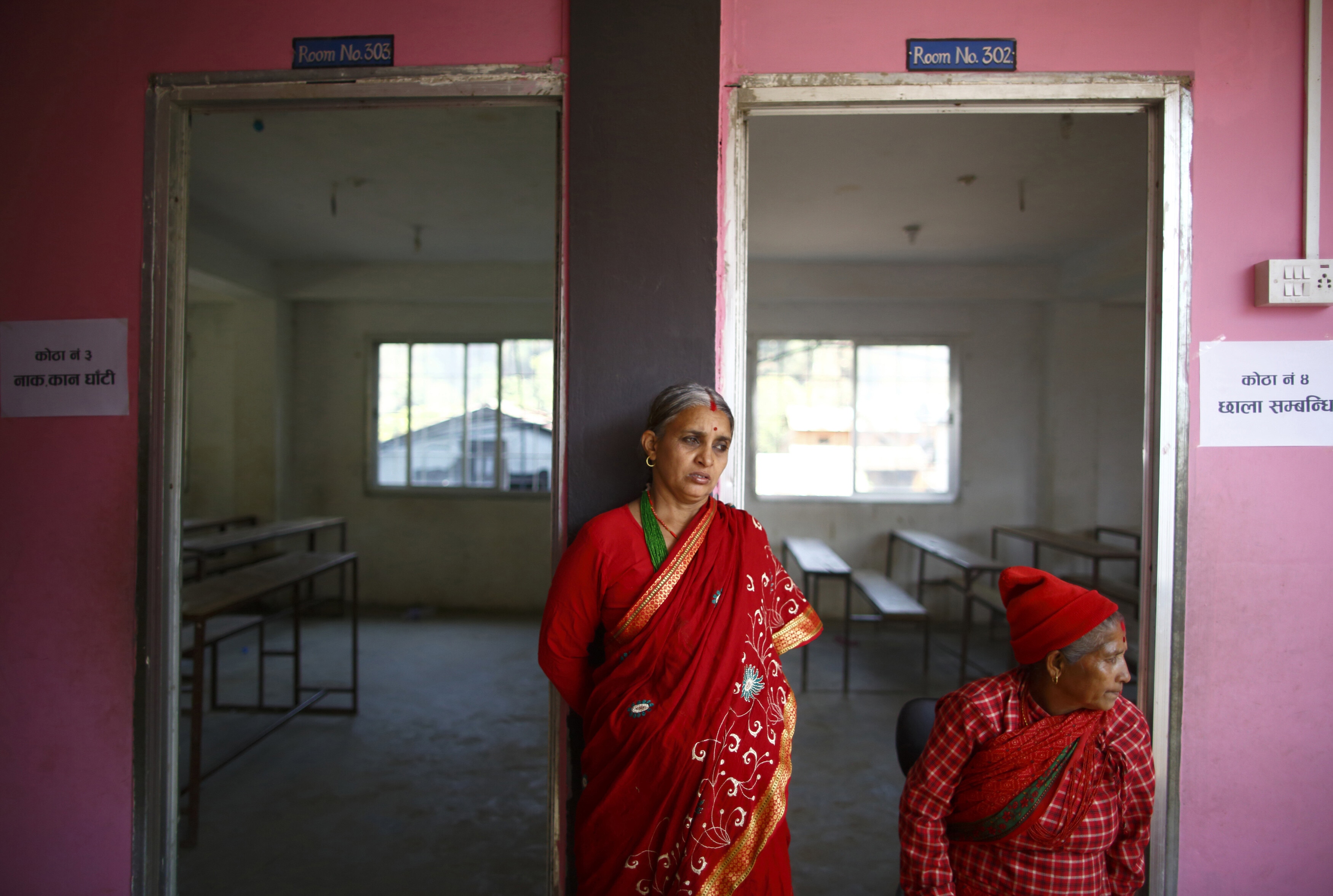
Women’s health is having a moment of momentum Image: REUTERS/Navesh Chitrakar
- Despite decades of progress, research and investment still fail to reflect women’s needs, leaving major gaps in understanding, diagnosis and treatment.
- New commitments from philanthropies, governments and global organizations signal a turning point, with unprecedented funding and attention flowing into women’s health.
- By mapping innovation gaps and accelerating the path from discovery to delivery, a new partnership seeks to transform how women’s health solutions are developed, funded and scaled.
Women’s health has been sidelined for decades but a new wave of global investment and collaboration is finally moving it to the centre of science and innovation.
How women’s health is underserved
Women’s health has long been under-researched, underfunded and often misunderstood. Despite making up half of the world’s population, women’s unique biology and experiences remain a blind spot in medicine and innovation.
Between 2013 and 2023, only 8.8% of the US National Institutes of Health's spending was allocated to women’s health research, according to the National Academies of Sciences, Engineering and Medicine.
Further, the World Economic Forum’s Prescription for Change white paper on policy recommendations for women’s health research shows that only 7% of pharma research focuses on conditions that exclusively affect women and less than 1% addresses those beyond cancer.
The result is a limited innovation pipeline and persistent knowledge gaps for conditions that affect women uniquely, disproportionately or differently. Behind those numbers are millions of women navigating pain, delayed diagnoses and conditions science has yet to fully understand. For women in low-and middle-income countries, the disparity is even starker.
The story is one of neglect and untapped potential. When women’s health advances, so does society – improving outcomes for families, strengthening economies and transforming how we think about human health.
How multi-sector collaboration is tackling women’s health
The Forum’s Global Alliance for Women’s Health has embarked on a new collaboration with Kearney, the Gates Foundation and Wellcome Leap to accelerate innovation in women’s health.
Its aim is to reverse decades of underinvestment by transforming how women’s health research is funded, conducted and translated into real-world impact, by combining collective strengths in women’s health strategy, data-driven analysis, operations, innovation and catalytic funding.
Women’s health has long been underrepresented in research and investment, and the consequences extend far beyond gender – affecting societies and economies globally.
Through the Global Alliance for Women’s Health, leaders across sectors are coming together to reimagine how innovation can better serve women’s unique health needs, demonstrating the potential of collective action to close the evidence gap and advance more equitable health outcomes.
How women’s health is having a moment of momentum
The collaboration is being launched amid unprecedented momentum for women’s health, with philanthropies, investors and governments tackling this long-overlooked area of medicine worldwide.
The Gates Foundation, for example, recently committed $2.5 billion to advance global health innovation, signalling the scale of investment now flowing into transformative science.
Meanwhile, Wellcome Leap and Pivotal have pledged $100 million to women’s health research, bringing Leap’s total investment in women’s health now to $250 million, focused on delivering breakthroughs in years rather than decades.
The Milken Institute has also launched the Women’s Health Network, a global collaborative effort to advance research, innovation and investment in women’s health, chaired by Jill Biden, signalling a high‑profile commitment to mobilizing participation and action across sectors.
The Global Alliance for Women’s Health serves as a platform to align stakeholders, coordinate priorities, and reduce duplication across research, funding, and implementation, helping ensure that investments translate into tangible impact.
The Gates Foundation approaches this collaboration with the belief that advancing innovation in women’s health is one of the most powerful ways to improve global health outcomes, especially for women in low- and middle-income countries who have long been underserved.
A different model for turning science into impact
Models being used to achieve this include backing breakthrough science, convening cross-sector partners and aligning priorities around translation and scale.
For example, Wellcome Leap’s new model for research is milestone-driven, agile and built to operate across disciplines, organizations and countries. Its three-year programmes are designed to tackle urgent health challenges with clear goals and measurable progress, modelled on the US Defense Advanced Research Projects Agency (DARPA) approach whose legacy encompasses the internet and global positioning system (GPS).
The Gates Foundation Global Grand Challenges programme also shows how increased funding and resources for women’s health research and development (R&D) and investing in women’s health innovation has brought value.
By providing more than 30 Women’s Health grant awards to early-stage, scalable innovation projects, they helped accelerate the women’s health innovation pipeline and have since launched follow-on calls for proposals on women’s health topics such as heavy menstrual bleeding and fetal growth restriction in pregnancy.
These collaborative efforts show how targeted philanthropy can unlock broader momentum and the lessons learned will provide an important foundation for the new collaboration.
The 2 workstreams working to 1 ambition
The collaboration will unfold over the next year into two complementary workstreams, each designed to address a different barrier to progress in women’s health innovation.
Disclosing the gaps in women’s health
The first workstream focuses on developing a Women’s Health Innovation Radar, which will map activity across the science-to-patient journey, bringing new transparency across research funding, scientific publications, clinical trials, product development and commercialisation.
Anchored in priority conditions that carry significant consequences for women’s health and broader economic outcomes, it is designed to show where innovation is gaining momentum, where important gaps remain and where promising science is not yet translating into solutions that reach women at scale.
By making this landscape more visible, the Radar can help researchers, funders, industry leaders and policymakers align around a clearer picture of progress and unmet need.
In the months ahead, the initiative will begin sharing insights from this work more broadly through reports, scientific engagement and public platforms to help elevate the conversation and spotlight where action is most needed.
Closing the gaps in women’s health
The second workstream focuses on translating innovation into scalable solutions through the Women’s Health Innovation Blueprint, designed to help close the gaps in women’s health and research.
Here, industry leaders, regulators, payers, providers and policymakers will define the conditions required for discoveries in women’s health to move from the lab into everyday care.
That includes examining co-development models between academia and industry, identifying regulatory and financial incentives that can support progress and outlining what must be true for innovation to become scientifically credible, regulated, reimbursed, accessible and sustainable at scale.
Catalyzing women’s health
Women’s health may have been relegated to the margins of science, investment and policy at one point and while the consequences of this have been far-reaching, they are not irreversible.
By building a stronger evidence base, accelerating the path from discovery to delivery and ensuring that women everywhere receive care designed and proven to work for them, we could demonstrate, in concrete and measurable terms, what aligned investment and collaboration can achieve for women's health, and set a new standard for how global health innovation gets done.
Don't miss any update on this topic
Create a free account and access your personalized content collection with our latest publications and analyses.
License and Republishing
World Economic Forum articles may be republished in accordance with the Creative Commons Attribution-NonCommercial-NoDerivatives 4.0 International Public License, and in accordance with our Terms of Use.
The views expressed in this article are those of the author alone and not the World Economic Forum.
Stay up to date:
Gender Equality
Related topics:


Forum Stories newsletter
Bringing you weekly curated insights and analysis on the global issues that matter.
More on Health and Healthcare SystemsSee all

Shyam Bishen
August 7, 2026


