How next-gen inverters are helping to reinvent electricity and what industry must do to prepare
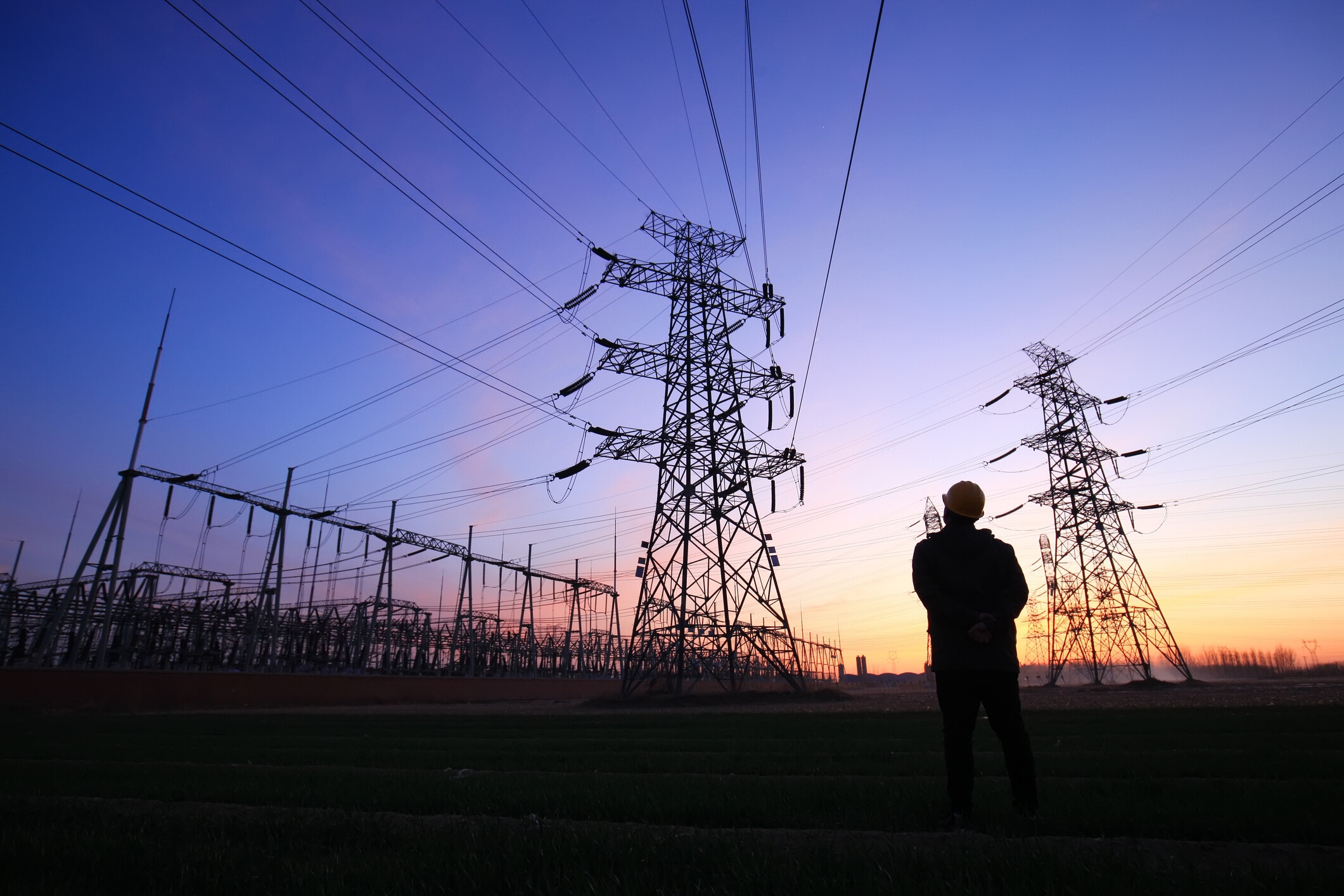
The energy transaction within the electricity grid is shifting. Image: Getty Images/iStockphoto
- As grids decentralize and demand on them grows, advanced inverter controls help keep modular systems stable.
- Their grid-forming capacity, maintaining the frequency signal, is particularly vital as energy supply becomes increasingly hybrid and fragmented.
- Adoption at scale of grid-forming inverters depends on interoperable standards, supporting energy markets who provide them, and demonstrating their economic viability.
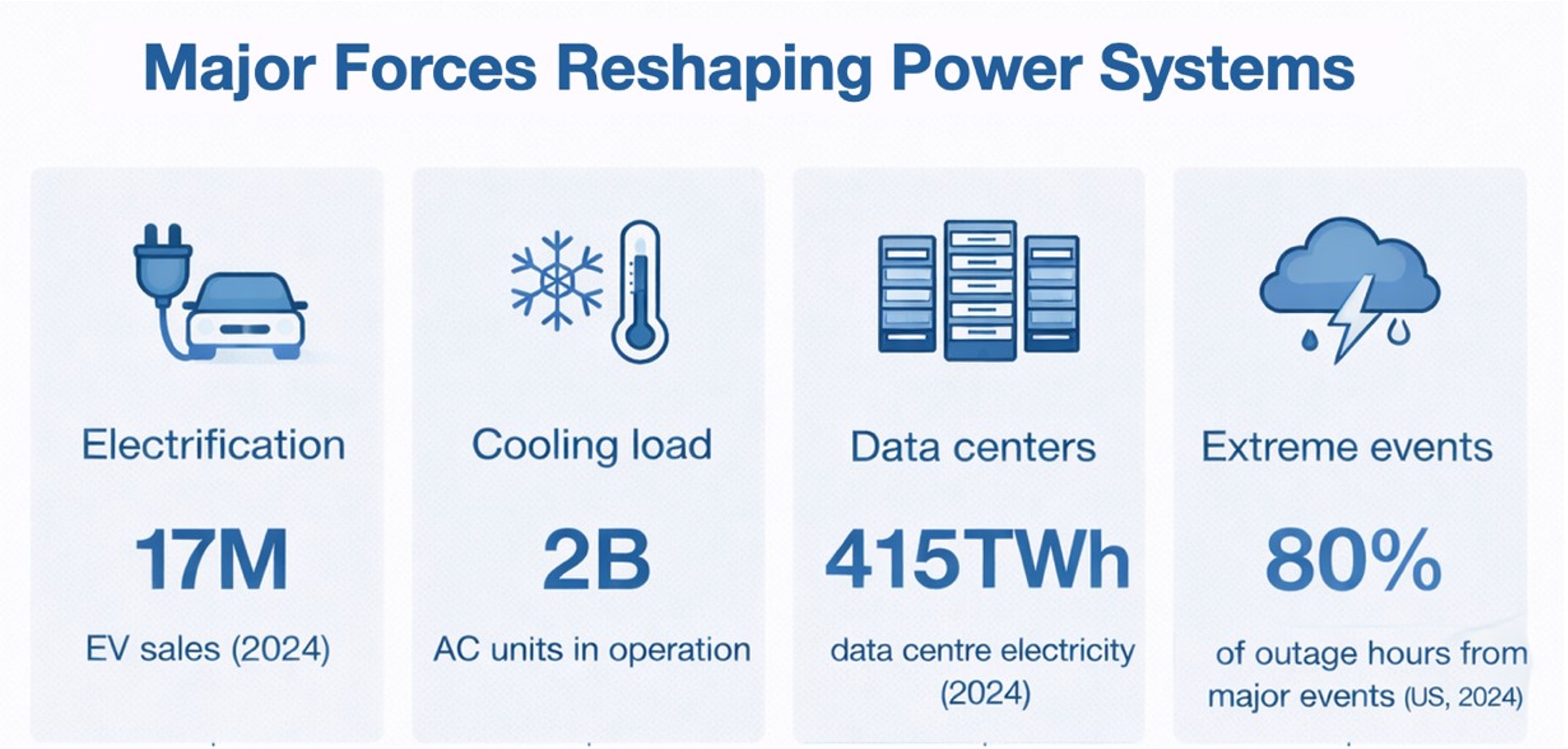
Imagine a normal weekday a few years from now: a logistics depot charges hundreds of vehicles overnight, a hospital runs full cooling through a heatwave, a data centre adds new servers by the rack. What changes when compared to today is the energy transaction happening. These sites are no longer passive consumers of power, but active nodes that can supply others, help coordinate the wider network, and reconnect faster when something breaks.
That shift is the consequence of a broader transformation already underway under the name of "electrification". It means that transport, heating, industry and computing are all drawing more of their energy from the grid, while solar panels and batteries are spreading across rooftops, industrial sites and utility-scale projects worldwide.
Understanding what holds that system together, and what can cause it to fail, starts with the inverter, a device most people never think about. It works like this: the grid runs on alternating current, electricity that reverses direction many times per second, while solar panels and batteries produce direct current, which flows one way only; an inverter in turn converts between the two, acting as the gateway through which almost every modern energy resource connects to the grid.
Why the grid is becoming less stable in the era of ‘inverter-dominance’
Solar has been the largest source of new electricity generation globally for several years running, and every solar installation depends entirely on inverters. Global battery storage capacity roughly doubled between 2022 and 2024, and batteries equally connect to the grid through inverters. As these resources grow, they displace an older generation of power plants, including gas turbines, steam plants and large hydro facilities, that provided something inverters have not traditionally offered: physical mass.
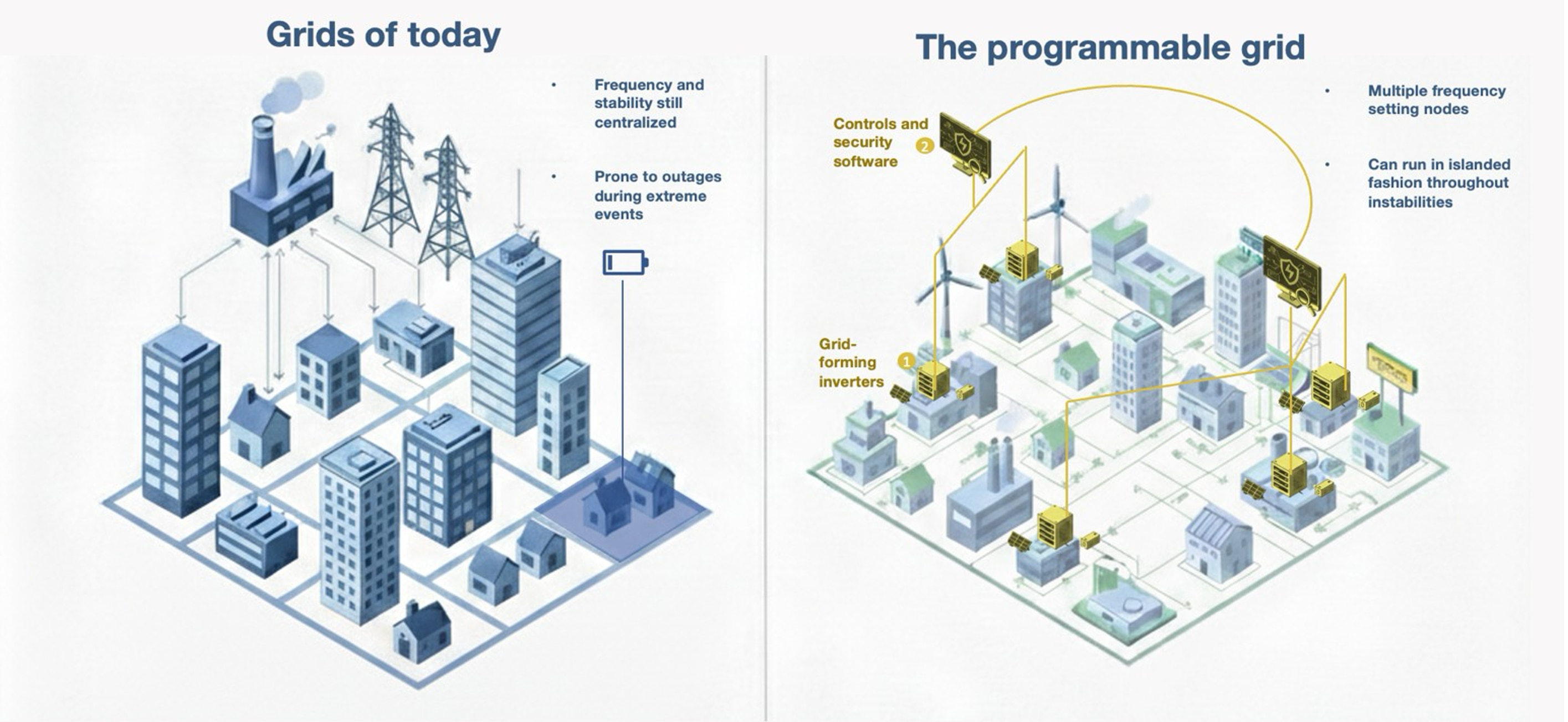
That mass, which engineers call inertia, acts like a flywheel, resisting sudden changes in the grid’s operating frequency and giving operators time to respond when something goes wrong. Most inverters deployed today are designed to track the grid’s existing frequency rather than help sustain it, which works well when the surrounding system is stable but offers little support when it is not. As inverter-based generation displaces conventional plants, the grid loses that natural buffer and grows more vulnerable to cascading failure. The April 2025 blackout across Spain and Portugal cut power to around 55 million people and is estimated to have cost the Iberian economy several billion euros, offering a large-scale illustration of what grids with high inverter penetration and inadequate stability controls look like under stress.
Enter grid-forming, a different kind of inverter
The response to this problem lies in changing how inverters themselves behave. Grid-forming inverters do not merely track the grid’s frequency signal; they help generate and sustain it, actively supporting the network during periods of stress rather than disconnecting from it, a behaviour that in conventional inverters can accelerate rather than arrest a cascade.
This is proven at scale. The Dalrymple battery in South Australia demonstrated grid-forming behaviour in a live grid environment, delivering the rapid frequency support that spinning turbines once provided automatically, and Australian and Californian regulators have since moved to define formal performance standards for the technology, establishing a replicable template rather than treating each project as a special case. Major manufacturers including ABB, Siemens Energy, GE Vernova, and Schneider Electric are all building commercial grid-forming products, which means the central challenge has shifted from proving the concept to making deployment routine.
Three things that will determine whether new inverters are deployed everywhere
Good hardware is a necessary condition, but not a sufficient one. Three further things need to happen:
1. Inverters from different manufacturers need to work together. A typical energy installation today draws on equipment from multiple vendors, and grid-forming behaviour that only functions within a single manufacturer’s ecosystem will remain a niche solution. The path forward resembles what happened with electric vehicle charging, where the industry converged not on a single manufacturer but on a shared communication protocol that any compliant device could implement. The US Department of Energy’s UNIFI Consortium is applying that same logic to inverters, developing vendor-neutral technical specifications so that grid-forming devices from competing manufacturers can operate together reliably on the same grid, but that is still far from universal.
2. Energy markets need to pay for stability as a service. Grid-forming inverters cost 10 to 30% more than conventional equivalents, and operators who install them must also share performance data for network modelling, a real cost with no guaranteed return under most current market rules. The UK’s stability pathfinder programme and comparable pilots in Germany have begun to address this by paying operators directly for the stabilizing effect their inverters provide, creating a commercial case for the upgrade that does not depend on goodwill alone.
3. The economics need to be demonstrated where they are already compelling. In remote communities and island grids, diesel generation can cost three to five times more per unit of electricity than renewables on a main grid, and grid-forming inverters make it possible to run those systems on solar and batteries without a diesel backup, combining lower costs with lower emissions. Each well-documented project of this kind builds the evidence base and operational know-how that larger grid applications will eventually draw on.
The technology exists and has been validated at scale, and the economics are moving in the right direction. What remains is whether industry and regulators can agree on the standards, market rules and deployment playbooks needed to make grid-forming inverters the default rather than the exception, before the growing frequency of major outage events makes the decision for them. The World Economic Forum’s Innovation Playbook for Future Power Systems sets out the technical, commercial and regulatory steps needed to get there.
Don't miss any update on this topic
Create a free account and access your personalized content collection with our latest publications and analyses.
License and Republishing
World Economic Forum articles may be republished in accordance with the Creative Commons Attribution-NonCommercial-NoDerivatives 4.0 International Public License, and in accordance with our Terms of Use.
The views expressed in this article are those of the author alone and not the World Economic Forum.
Stay up to date:
Energy Transition Index
Related topics:


Forum Stories newsletter
Bringing you weekly curated insights and analysis on the global issues that matter.
More on Energy TransitionSee all

Cheukai Makari
September 16, 2026


