Is AI the energy technology the world has been waiting for?
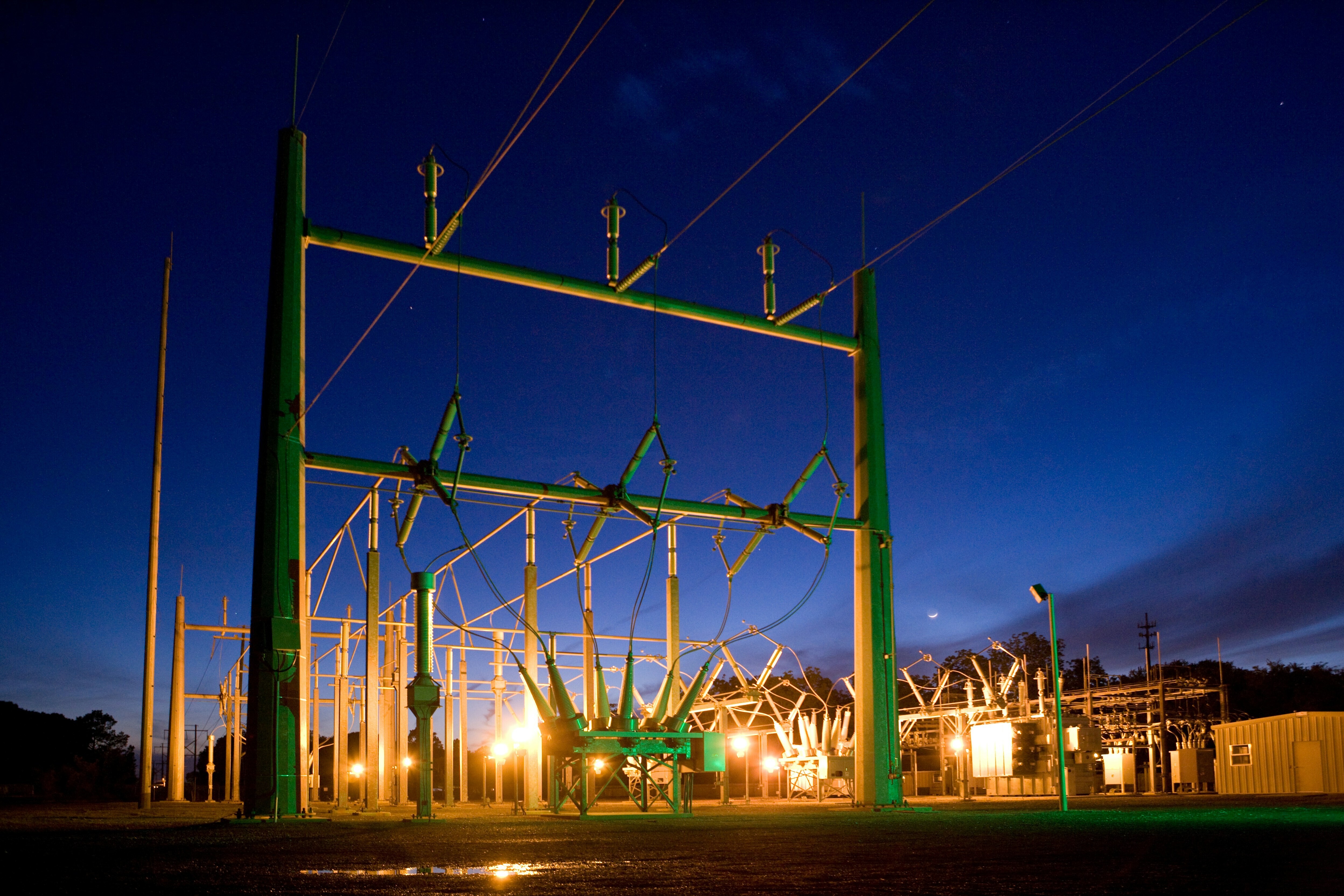
Could AI better manage our energy use? Image: Photo by American Public Power Association on Unsplash
- AI has a voracious appetite for energy and represents a looming crisis that could break the grid and raise everyone’s power bills.
- AI is also the most software-defined, the most controllable and the most spatially mobile workload ever to consume electricity on an industrial scale.
- AI could become the technology that finally makes the grid work the way it always should have.
The most consequential energy technology of the coming decade may not look like a power plant at all. It may look like an 'AI factory' or what NVIDIA's CEO, Jensen Huang, calls the new generation of computing campuses that specialize in producing tokens of artificial intelligence.
Calling AI a revolutionary energy technology sounds strange. The dominant narrative about AI and energy is the opposite: AI has a voracious appetite for energy and represents a looming crisis that could break the grid and raise everyone’s power bills. Data centres already consume roughly 6% of all electricity in the United States and the United Kingdom. The International Energy Agency projects that global AI data centre electricity demand could more than quadruple by 2030. No industrial energy load in modern history has grown like this.
But the framing of 'AI as load' is wrong. AI is not just an unusually large new load. It is the most software-defined, the most controllable and the most spatially mobile workload ever to consume electricity on an industrial scale. Orchestrated carefully, power-flexible AI factories — data centres engineered to modulate their own electricity use in real-time — become a new energy technology and could become one of the most consequential in history. They could reduce power bills, protect grid reliability and unlock massive power capacity to turbocharge the AI revolution.
How can we redefine AI as an energy asset, not a liability?
Consider what we usually mean by an 'energy technology.' Some energy technologies create new supply - solar panels, nuclear plants and the fusion reactors that are on the horizon. Others reshape how energy moves and is stored — high-voltage transmission, lithium-ion batteries. A third, quieter category transforms how energy is consumed: heat pumps replaced furnaces, variable-speed motors replaced fixed-speed ones, LED light bulbs displaced incandescents.
AI belongs in that third category, and it could have even more potential than its predecessors. Through intelligent and flexible energy management, AI factories become precise and controllable assets on the power grid. As the grid approaches peak energy demand on a hot summer day, AI factories can dynamically slow down AI jobs that are inherently flexible, whether research workloads, model fine-tuning or batchable inference jobs that can be paused and rescheduled. Even the workloads that must run in real time — a chatbot query, an autonomous agent's action — can be routed at the speed of light to a region where power is plentiful. No other large industrial load has this combination of flexibility across both time and geography. A steel mill cannot relocate from Phoenix when Texas peaks. A semiconductor fab cannot slow or pause for two hours and resume seamlessly. AI can, while meeting the performance requirements of its users.
To be sure, at first glance, the economics make this sound impossible. A one-gigawatt AI campus spends roughly $5 billion a year servicing the cost of its GPUs and another $2.6 billion on the building and network around them. Its annual electricity bill — about $590 million — is more than ten times smaller. Why would any operator ever throttle billions of dollars of accelerators to chase a discount on a comparatively cheap input?
But this objection misunderstands the scale of the opportunity for AI to serve as a revolutionary energy management technology. AI factories can unlock billions of dollars of annual value by generating tokens of artificial intelligence, far outweighing the rare cases when flexibly throttling power can ease the grid’s peak strain.
Power systems are built to peak, which means they sit underused most hours of every year. Flexible AI factories monetize that latent capacity. Independent analyses by Duke University put the unlock at roughly 100 gigawatts on the existing U.S. grid alone — enough to absorb several years of AI growth without a single new transmission line. And, by avoiding expensive new grid upgrades while better utilizing existing grid infrastructure, flexible AI factories can actually reduce power bills for local communities – curbing the powerful political backlash currently brewing against AI infrastructure that could raise local power bills.
Renewable generation is cheap and abundant but uneven and the grid needs demand that can absorb surpluses and step back during shortfalls. The flexibility tools we have today – utility-scale batteries and a thin set of legacy industrial demand-response programmes – are either expensive, slow or both. Flexible AI factories can flex faster and at greater scale than either.
There is a still deeper implication. The world's AI factories are increasingly interconnected by fibre, software and shared standards. They are starting to behave less like isolated industrial sites and more like nodes on a single, planet-spanning network — a kind of complementary grid sitting on top of the public power grid. The electric grid moves electrons. The AI grid moves computation. When those two grids are designed to talk to each other, they become more useful than either could be alone: power can be routed to where computation is and computation can be routed to where power is.
Converting theory into real-world practice
AI flexibility is not just a theory. At Emerald AI, we have demonstrated grid-responsive AI infrastructure at five commercial data centres worldwide over the past year, including on the latest NVIDIA Blackwell Ultra systems. We have shown live, on real workloads, that AI factories can cut power on command in seconds and sustain reductions for hours without losing performance on the most crucial workloads. Silicon Valley Power (SVP), the municipal utility of Santa Clara, has launched a first-of-its-kind programme in which Emerald administers flexibility for major data centres in the heart of Silicon Valley, allowing SVP to offer upsized capacity to customers it could not previously serve, while protecting rate affordability for residents. And, later in 2026, NVIDIA, Digital Realty and Emerald AI will bring online the world's first commercial-scale, power-flexible AI factory — a 96MW facility in Virginia capable of modulating its power use in response to signals from the grid.
Google has run a carbon-intelligent computing platform for several years, shifting non-urgent workloads in time and across regions to match cleaner grid hours. The Electric Power Research Institute's DCFlex initiative, launched in 2024 with more than twenty utilities and hyperscalers, is running multi-site demonstrations of data-centre flexibility on real grids.
The opportunity is most acute outside the United States. Ireland's grid operator has restricted new data-centre connections in the Dublin region. Singapore lifted its moratorium only after introducing strict efficiency standards. India is forecasting data-centre capacity to roughly triple by 2030 while simultaneously electrifying industry and transport. The countries that figure out how to make AI infrastructure flexible by default will have a structural advantage in attracting compute investment without sacrificing reliability or affordability for the rest of the grid. The Forum's Centre for Energy and Materials is already convening utilities, regulators and hyperscalers around precisely this question; that work needs to accelerate.
Taken seriously, this reframes the AI energy story. Yes, AI will require enormous quantities of electricity. But because AI is software-defined, those same workloads can be made to align with the grid, rather than fight it. Flexibility does not shrink AI's appetite for power; it reshapes it. What strains a grid — driving up bills and prompting the connection moratoria now seen from Dublin to Singapore — is not the total electricity a region consumes over a year, but the load it draws at the system's tightest and most expensive hours.
By pulling back when the grid is scarce and leaning in when power is abundant, flexible AI factories can add their enormous new demand without piling onto that peak: easing, rather than worsening, the risk of blackouts and rate increases and sparing communities the cost of generation and wires that would otherwise sit idle most of the year. In the United States, where data centres are on course to account for nearly half of all growth in electricity demand this decade, that difference is the difference between a grid that buckles and one that absorbs the boom.
More power generation, like nuclear reactors, is essential, but the largest, most controllable and most rapidly scaling new participant on the world's electricity grids today is not a power plant. It is computation itself. If we design AI infrastructure to be flexible by default — and if regulators and utilities reward that flexibility with faster interconnection and access to grid-services markets — AI will be remembered not as the crisis that overwhelmed the grid, but as the technology that finally made the grid work the way it always should have.
A new energy technology has arrived. It is made of GPUs, fibre and code. And it is just getting started.
Don't miss any update on this topic
Create a free account and access your personalized content collection with our latest publications and analyses.
License and Republishing
World Economic Forum articles may be republished in accordance with the Creative Commons Attribution-NonCommercial-NoDerivatives 4.0 International Public License, and in accordance with our Terms of Use.
The views expressed in this article are those of the author alone and not the World Economic Forum.
Stay up to date:
Artificial Intelligence
Related topics:


Forum Stories newsletter
Bringing you weekly curated insights and analysis on the global issues that matter.
More on Artificial IntelligenceSee all

Charlotte Edmond
September 16, 2026


