The rise of the power economy – from storing energy to controlling power
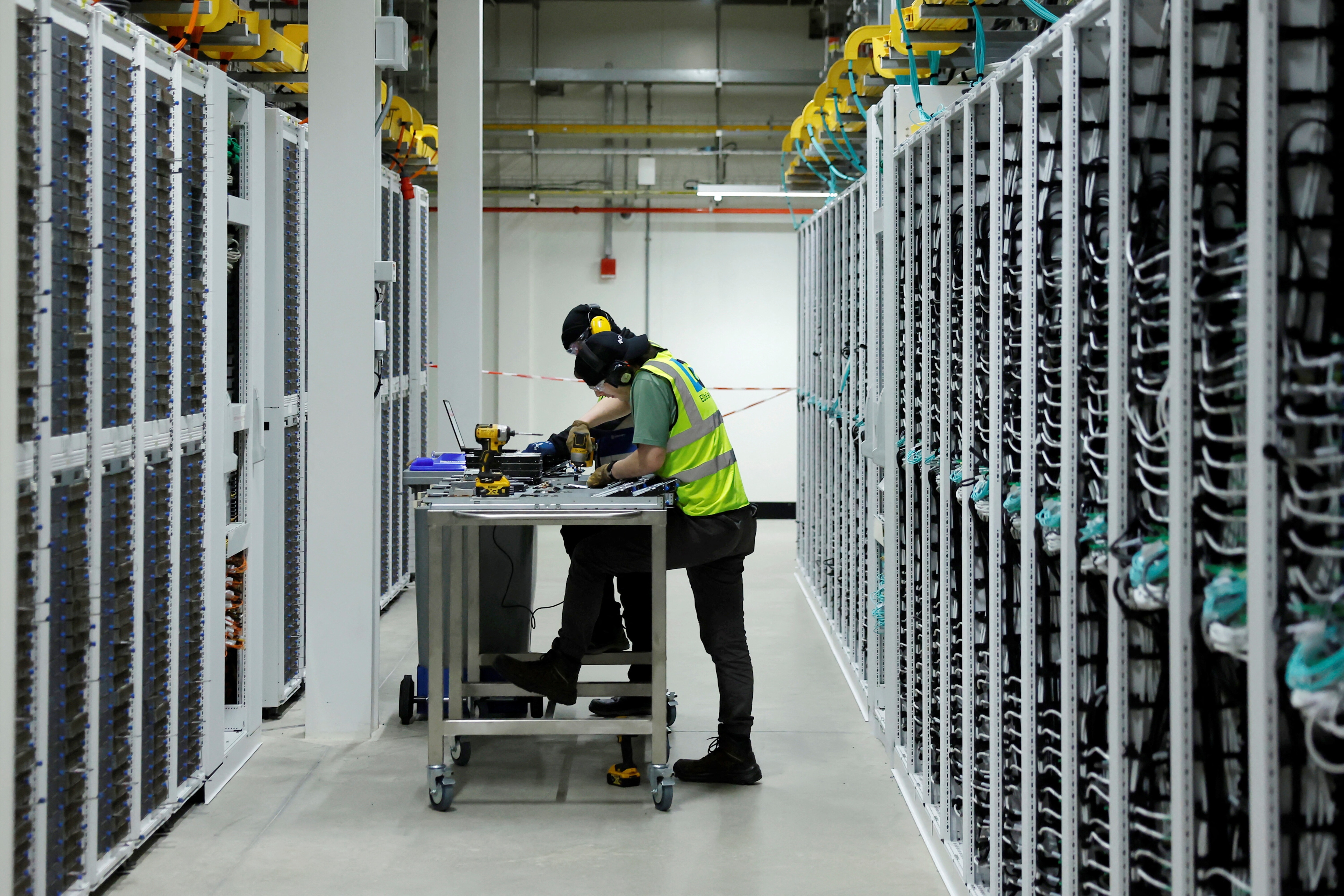
Technicians assembling equipment in a data center room, representing the growing data and power economy. Image: Reuters/Clodagh Kilcoyne
- In the era of artificial intelligence, competitiveness is increasingly defined by how quickly, precisely and reliably the electricity it requires can be controlled.
- Global electricity consumption for data centres on which AI relies is projected to reach 945 TWh by 2030 – more than double the levels required in 2024.
- High-power energy storage systems (ESS) will become a key enabler of the power economy as the digital workforce grows across the world.
For more than two centuries, the power industry asked one question: how much electricity can we produce? Today, competitiveness is increasingly defined by how quickly, precisely and reliably that electricity can be controlled. The clearest driver of this transition is artificial intelligence (AI).
In an AI data centre – commonly referred to as an "AI factory" – electricity is a critical production input, not just an operating cost, much as steel plants need iron ore and semiconductor fabs need wafers.
AI also consumes electricity differently. As thousands of graphics processing units (GPUs) activate and deactivate simultaneously, an entire data centre can fluctuate by tens of megawatts (MW) within milliseconds – volatility that traditional power systems were not designed to handle.
Data centre electricity consumption is projected to reach 945 terawatt-hours (TWh) by 2030, more than double 2024 levels – marking a fundamental increase in demand for electricity.
High energy demands of digital labour
AI may be only the beginning. Humans are food-powered, but AI and humanoids are electricity-powered. If AI is electricity-powered digital labour, humanoids may also become electricity-powered physical labour.
Morgan Stanley projects the humanoid market could reach $5 trillion by 2050, with industrial and commercial applications accounting for roughly 90% of deployed units, each consuming 0.5-3.75 kilowatts (kW). The deeper issue is not AI or humanoids themselves, but the nature of electricity demand, which is increasingly dynamic, complex and volatile.
Electricity is often understood as energy, measured in kWh. But power markets have long valued two things: maximum power in kW, and total energy in kWh (kilowatt-hour). Yet energy storage is still evaluated by capacity alone – how many MWh (megawatt-hour) it holds.
The next generation of power infrastructure asks different questions: how many MW can be delivered, how fast systems respond and how reliably they maintain power quality. The value of energy storage will increasingly depend on power control, not just stored capacity.
From the energy economy to the power economy
For the past decade, the energy storage market focused on reducing costs, storing surplus electricity and managing peak demand. This is the energy economy.
AI data centres, semiconductor fabs, hospitals and future power grids need something different: not just stored electricity, but guaranteed power stability. This is the electric power economy – or simply, the power economy – which marks a shift from the economics of kWh to the economics of kW.
Long-duration energy storage is sometimes seen as the answer to these demands. But most long-duration energy storage systems (ESS) are, in practice, low-power ESS – meaning slow to charge and slow to discharge. It is effective for energy buffering but mismatched to the millisecond-level power control that the power economy requires.
ESS does not produce electricity, yet it is increasingly central to power infrastructure because it regulates electric flow – a function that traditional systems were not designed to perform.
Historically, power systems have been built around three layers: generation, transmission and distribution. A fourth is now taking shape, what might be called the power buffer layer: absorbing fluctuations, maintaining power quality and controlling the timing of power delivery. In this sense, ESS is evolving from an energy tank into a power gate, and becoming a core physical enabler of the power economy.
Limited effectiveness of existing battery systems
Just as not every battery can power a vehicle, not every battery can become power infrastructure.
Supercapacitors respond quickly but store limited energy. Lithium-ion batteries offer high energy density but were designed for mobility, not infrastructure – where safety, cycle life and sustained power output under repeated high-demand conditions matter more.
Flow batteries offer safety and long-duration storage, but real-time power control requires higher power density and faster response than current flow designs typically deliver.
Future power infrastructure requires batteries that are responsive, safe, durable and scalable – capable of functioning as an integrated component of the power system, not merely a device attached to it.
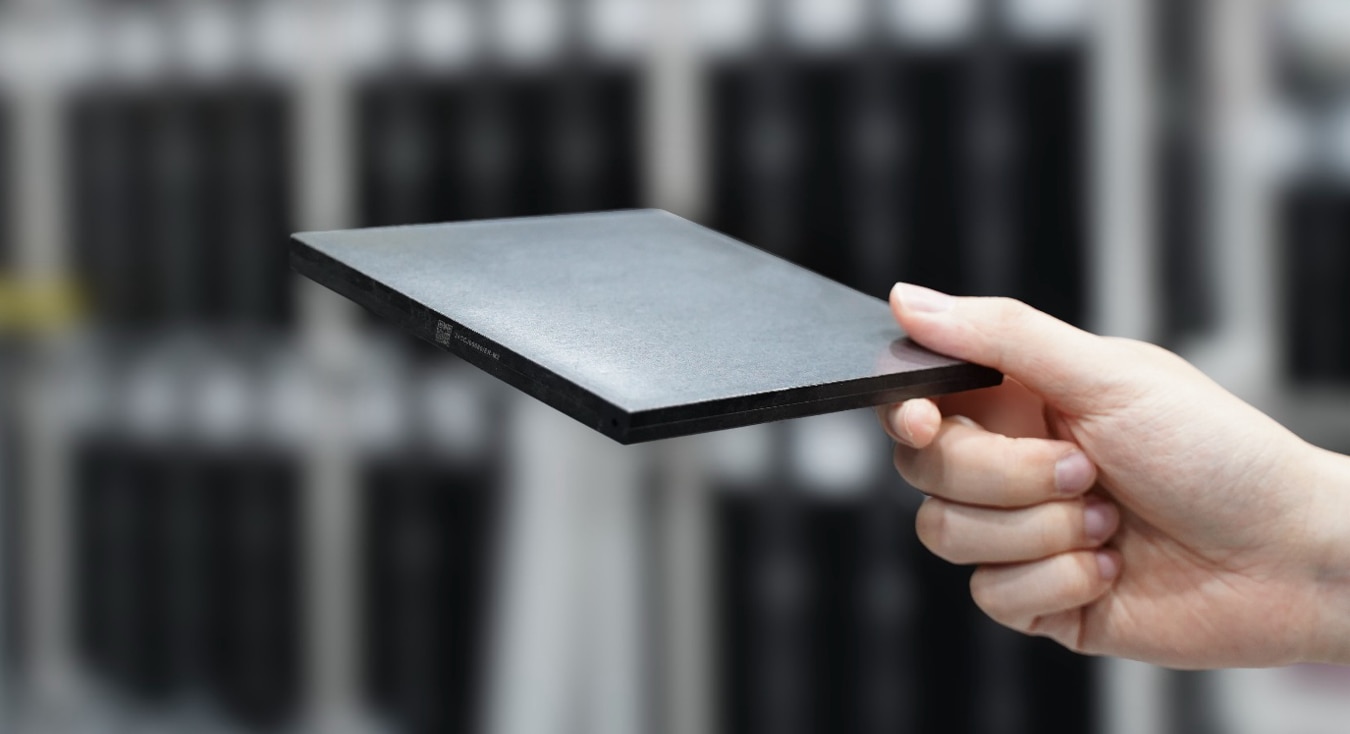
The most consequential divide in the battery industry may be emerging between mobility and power infrastructure. The power economy, in particular, requires a different kind of ESS — one designed not just to store energy, but to deliver power with speed and precision. That is high-power ESS.
The vanadium ion battery (VIB), developed by Standard Energy, is one example of this emerging category. Unlike conventional vanadium flow batteries – which rely on external pumps that limit response speed – VIB integrates vanadium-based electrodes and electrolyte within the cell, enabling aqueous-electrolyte safety, performance retention beyond 10,000 cycles, millisecond-level responsiveness and high-power capability.
A proprietary separator design enables self-balancing between electrodes, eliminating the need for external balancing circuits and underpinning both its longevity and power performance.
Future power infrastructure will move from extraction to circulation
Traditional power systems consume fuel, while future power infrastructure will circulate materials. Accordingly, battery recycling is as much a raw material and supply chain strategy as an environmental, social and governance issue.
Infrastructure built around recoverable materials like vanadium could establish an economic logic more resilient than one dependent on continuous mining – controlling not only the flow of electricity, but the flow of resources.
Energy storage systems support AI's power stability, while AI increasingly optimizes ESS operation. By 2030, data centres could deploy 20-25 GW of battery storage globally — shifting from backup power into grid assets for real-time power control.
In the last century, humans built power plants. In this century, we will need to build a new infrastructure layer – not to generate electricity, but to control its flow.
As AI and humanoids become electricity-consuming labour, electricity will become a defining input for economic growth. Future competitiveness will depend on how reliably and precisely power is controlled, not only on how much is produced. In this era, high-power ESS will become a key enabler of the power economy.
Don't miss any update on this topic
Create a free account and access your personalized content collection with our latest publications and analyses.
License and Republishing
World Economic Forum articles may be republished in accordance with the Creative Commons Attribution-NonCommercial-NoDerivatives 4.0 International Public License, and in accordance with our Terms of Use.
The views expressed in this article are those of the author alone and not the World Economic Forum.
Stay up to date:
Artificial Intelligence
Related topics:


Forum Stories newsletter
Bringing you weekly curated insights and analysis on the global issues that matter.


