We’re getting older faster. Here’s why that might not spell economic decay
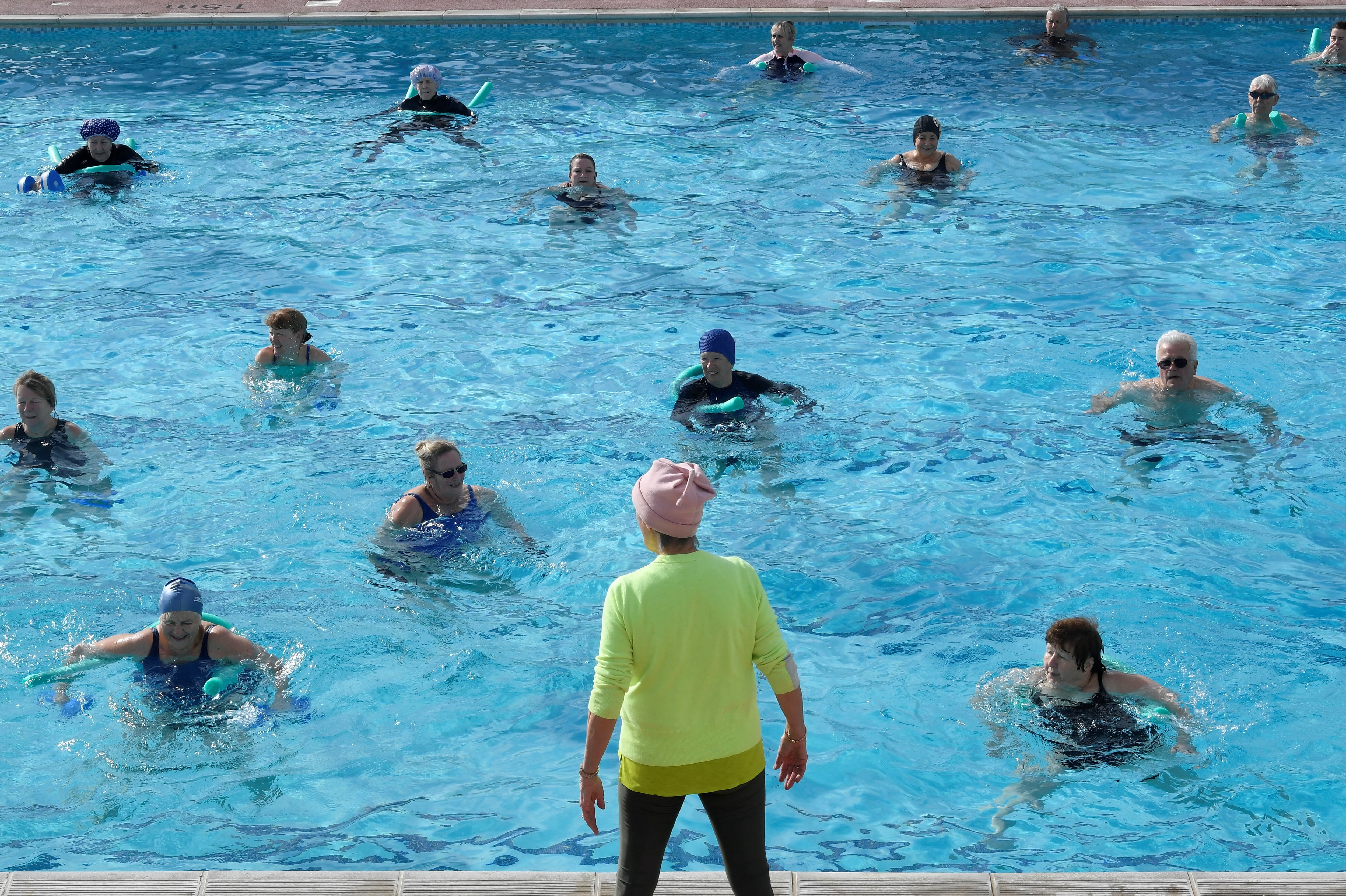
The global population has aged more quickly than expected, but it's also staying in better health. Image: REUTERS/Toby Melville
- The global population is ageing faster than anticipated. Questions abound about the impact on economies.
- One upbeat omen: more people seem to be avoiding the ‘physical or cognitive limitations’ associated with the autumn of life. Can productivity also flourish?
Scientific evidence supports the idea that it feels like we age more quickly the longer we stick around. That as yesterdays accumulate and tomorrows dwindle, the sensation is not unlike an avalanche picking up speed down the side of a mountain.
According to a recent report, it’s not always just a sensation.
The world really has been ageing faster than anticipated lately, according to the US Census Bureau, because “not all has gone as expected.” Pandemic-induced birth declines played a role, especially in places like China. But more people are also simply living longer, spending extended periods in a state traditionally designated “old.” It’s a condition that’s now more rule than exception; in over a third of all countries, at least 14% of people are presently “at older ages.”
We knew the age scale had already been getting top-heavy. Japan now has more than 100,000 people older than 100. Europe is also progressively greying. The portion of Americans 65 or older jumped to 18% in the first part of this century, and even youthful Africa is projected to become the second-biggest source (after Asia) of population growth in that over-65 demographic.
As we tip more decisively into a geriatric future, can we continue to propel economies forward at a sufficient pace? New ideas must continue to bloom in fertile minds. Productivity numbers will have to be hit.
Just let the machines do it, one might say. We’ll control them using apps on our mobile phones with easy-to-read displays.
No, say experts, the future does not have to be a strictly “WALL-E”-type scenario where robots assist diminished humans with one simplified task after another. People just might be able to continue creating real value themselves – because many are now better able to stay in good health.
“Older people make a huge contribution,” said London School of Economics Associate Professor of Health Policy George Wharton. “It's really important that we stop referring to them as a burden.”
It’s also important, Wharton said, to start investing more in long-term support systems for people we’re almost certainly going to depend on in a bigger way to keep economies running smoothly. Those investments could help offset conventional spending on things like social benefits and medical treatment.
A study published in June found that Americans are living the final act of their lives in decidedly better shape; between the early 1990s and the eve of the pandemic, US spending on Medicare benefits increased at less than half the rate of Social Security benefits. A surprising number of Americans, it turns out, have been able to spend the additional 2.4 years of life expectancy gained during that period “free of physical or cognitive limitations.”
“We’re not just living longer, we’re living better,” one of the study’s authors said.
Can living “better” translate into sustained performance gains? Not just on the padel court, but in ways that register in balance sheets and economic data?
There’s some research to suggest that workforces were able power through bouts of ageing even before the dawn of aquarobics. A recent paper co-authored by Nobel economics prize winner Daron Acemoglu found that ageing, shrinking (in both senses) populations have managed to lift economic output per worker in the past, without necessarily depressing overall GDP.
Still, that’s typically relied on coming up with new ideas for labour-saving technology, according to the paper. To model an abrupt absence of younger adults anything like what we face now, its authors went back to the post-World War II era – when a similar scarcity due to military deaths spurred a pickup in patenting ways to do more mechanically with fewer able bodies.
Now, healthier older-age workers may be able to combine forces with a particularly powerful labour-saving technology, artificial intelligence, for a more double-barrelled boost to economic momentum.
Longevity could actually be a huge economic opportunity, according to a World Economic Forum report. It contends that simple things like making hearing aids more widely available to help prevent dementia could contribute to $645 billion worth of added productivity in the next decade-and-a-half.
Here’s the thing about this world with more old people than children: it’s never happened before. The change has been stark. If you were a Swede in 1851, your odds of reaching 90 were not much better than zero. By 2022 they were about one in three.
Outside of some post-war years in places like Europe, there may be scant historical record to learn from about how to best proceed.
That has not stopped ageing societies from trying new approaches. In Japan, a policy change made last year requires companies to maintain job opportunities for people up to 65 (an acknowledgement of the fact that many elderly people will need the pay as much as economies need their labour). Singapore is seeking tech workarounds to help people work past 70. And South Korea, which in just 24 years went from “ageing” to “super-aged,” has tried to be proactive on a number of fronts.
We'll need all the map we can get. The pandemic disproportionately claimed older lives, according to that US Census Bureau report, but it didn’t reverse the ageing trend; people in their 40s and 50s during the health crisis remain “locked into” the great greying.
Here we go.
Don't miss any update on this topic
Create a free account and access your personalized content collection with our latest publications and analyses.
License and Republishing
World Economic Forum articles may be republished in accordance with the Creative Commons Attribution-NonCommercial-NoDerivatives 4.0 International Public License, and in accordance with our Terms of Use.
The views expressed in this article are those of the author alone and not the World Economic Forum.
Related topics:

Forum Stories newsletter
Bringing you weekly curated insights and analysis on the global issues that matter.
More on Economic GrowthSee all

Pim Valdre and Joy Shumake-Guillemot
September 17, 2026