How to turn Europe's waste into an energy security opportunity
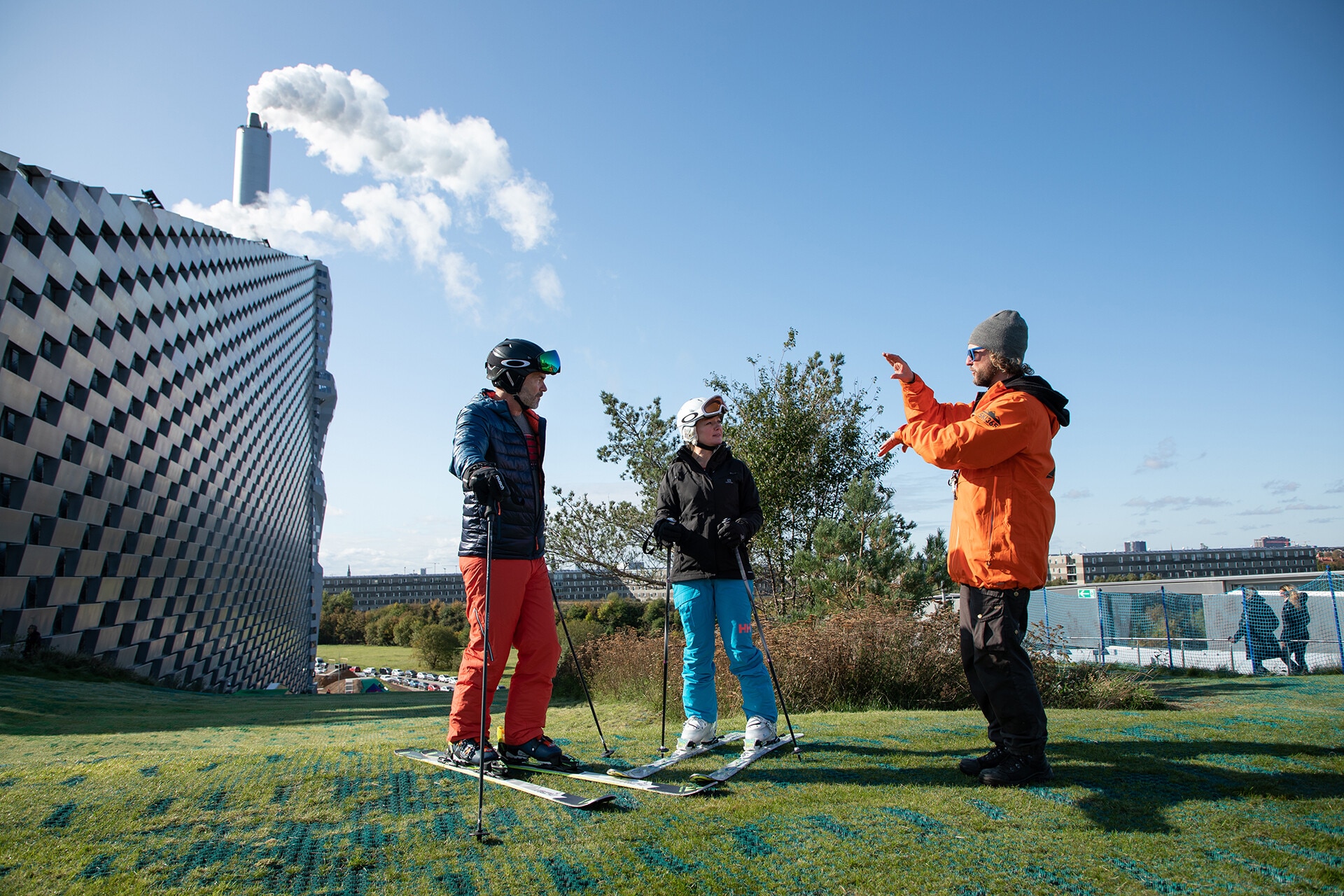
Copenhill, a public park and ski slope in Copenhagen, Denmark, is built on a waste-to-energy plant. Image: Press/CopenHill
- Waste-to-energy plants can convert non-recyclable rubbish into power, heat and fuel, rather than leaving waste in landfills.
- For the EU, it could provide a way to cut waste sector emissions, while boosting energy security by supplying more fuel for domestic generation.
- Using such technology to balance recycling, waste prevention and energy recovery could help Europe to meet its climate and energy goals.
While “waste-to-energy” might conjure up images of a smokestack, this landfill-free process of incinerating non-recyclable rubbish to create electricity, heat or fuel is quickly gaining ground in Europe as a cost-effective way to cut emissions.
The European Commission’s 2026 AccelerateEU energy plan names waste-to-energy as part of Europe’s domestic energy base for the first time. EU lawmakers are also currently working out how and when to bring waste incineration into Europe’s carbon market.
Meanwhile, a meaningful share of what Europeans throw away is still landfilled – right when methane and energy security have become two of the EU’s most pressing problems.
This isn’t just a matter of old habits dying hard. Landfilling remains a deliberate policy, although many European countries have set a deadline for phase-out. In 2024, Eurostat reported that 49.5 million tonnes of municipal waste, or 22.5% of all treated waste, was sent to landfill in Europe – even though the target is to reduce that to 10% by 2035. Countries like Romania, Greece, Malta, Cyprus, and Bulgaria still send 70–80% of their waste to landfill.
Organic waste rotting without oxygen in a landfill produces methane, which EPA data shows is roughly 80 times more heat-trapping than CO2 over 20 years, declining to about 28 times over a century. Landfills are already the third-largest human source of methane globally, behind only fossil fuels and livestock. And every tonne buried today will continue to emit methane for the next 20 to 30 years.
As the EU works to put a price on the waste sector’s carbon emissions, while separately assessing how much energy it can generate domestically, waste-to-energy could address both issues at once.
Making the case for waste-to-energy
Copenhagen’s Amager Bakke combined heat and power waste-to-energy plant makes the case better than any statistics could. Known locally as Copenhill, it is owned and operated by the Amager Resource Center and delivers low-carbon electricity to roughly 550,000 people and district heating to some 140,000 households.
Copenhill cuts an estimated 100,000 tonnes of CO2 a year against the fossil-fuelled power it displaces and recovers 90% of metals it collects as waste for reuse. It also has a public ski slope and climbing wall built onto its roof. This industrial site that’s been turned into a park that people actually go to on weekends has perhaps done more to shift public opinion on waste-to-energy than any campaign ever could.
As for the dirty-smokestack image, that’s 1970s technology. Plants like Amager Bakke use wet scrubbing and catalytic filtration to meet the EU’s strict emissions standards – among the toughest in the world for the waste industry – and the same site is already piloting carbon capture.
How waste-to-energy could work in Europe
In 2024, Europe’s 500 or so waste-to-energy plants generated energy equivalent to 15.7 billion cubic metres of natural gas. According to my calculations, that’s roughly 39% of what the EU imported from Russia that year and 20% of its US gas imports. If the same amount of energy had come from fossil fuels, it would have produced an extra 50 million tonnes of CO2.
This is a meaningful measure of the emissions avoided by using waste-to-energy, even before factoring in the extra benefit of not landfilling the waste. According to sector estimates, Europe will still need about 40 million tonnes of additional recycling capacity by 2035, even after targets are met.
Now, consider the 49.5 million tonnes of municipal waste still being sent to landfill each year. Using the same energy-output ratios as the current waste-to-energy fleet, diverting all that waste for energy recovery could add around 13 billion cubic metres of gas-equivalent energy annually, according to my calculations based on sector ratios. At the average EU gas price in 2024 of around €34 per megawatt-hour, this extra output could be worth €4-5 billion per year – on top of the €5-6 billion already generated by the sector.
If fully realized, the total value of waste-to-energy could reach €10 billion in annual fossil energy savings for Europe, with methane reductions providing up to 50 million tonnes of CO2 equivalent in climate benefits each year.
These are rough, back-of-the-envelope estimates using 2024 data, and actual results would depend on local waste types, plant technology and grid conditions. Still, the potential is immediate and tangible.
Scaling waste-to-energy
Waste-to-energy plants require a constant stream of waste to remain profitable, as advocacy group Zero Waste Europe points out, which could discourage efforts to reduce and recycle waste. This would potentially threaten the EU’s goal of recycling 55% of municipal waste by 2035.
There is also a concern that increasing the carbon price on incineration might simply push more waste to landfill, rather than into recycling. However, Zero Waste Europe’s modelling found that pricing incineration’s carbon is unlikely to do this, since bans and pretreatment rules already block that route in most EU countries. This means a stronger carbon price doesn’t have to come at the expense of recycling.
So while the solution isn’t “build more incinerators”, it isn’t “shut them all down” either. Europe is still landfilling roughly a fifth of its municipal waste while genuinely needing more energy recovery capacity by 2035, not less. Getting the incentives right, with an honestly priced carbon market, enforced recycling targets and updated regulations like the inclusion of waste incineration in the EU Emissions Trading System, matters more than the technology itself ever will.
Achieving the right balance between recycling, waste prevention and energy recovery will be central to meeting Europe’s climate and energy goals while minimizing environmental impacts, including those from air emissions.
This is not just a hypothetical policy debate, it’s a decision that EU lawmakers face right now, and it will have real consequences over the decade ahead.
Don't miss any update on this topic
Create a free account and access your personalized content collection with our latest publications and analyses.
License and Republishing
World Economic Forum articles may be republished in accordance with the Creative Commons Attribution-NonCommercial-NoDerivatives 4.0 International Public License, and in accordance with our Terms of Use.
The views expressed in this article are those of the author alone and not the World Economic Forum.
Stay up to date:
Circular Economy
Related topics:


Forum Stories newsletter
Bringing you weekly curated insights and analysis on the global issues that matter.


