Why Disability Pride Month is about more than the social media calendar
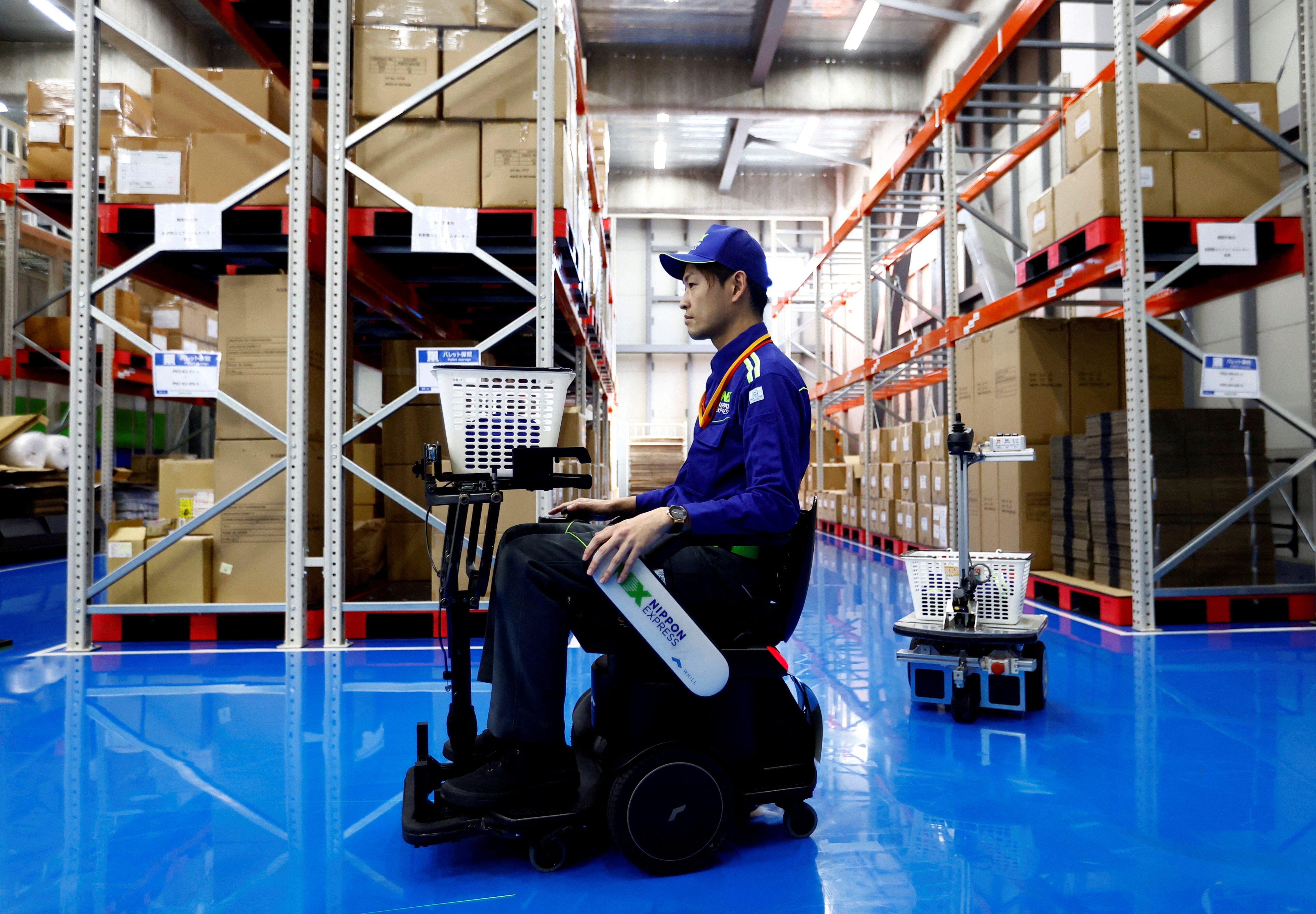
People living with disability and their families wield an estimated $18 trillion in spending power globally. Image: REUTERS/Issei Kato
- 16% of the global population live with a disability, yet they remain underrepresented economically, socially and politically.
- As AI becomes a more important force on the workplace, we run the risk of deepening the social divides disabled people face.
- 56% of disabled consumers are more likely to recommend a disability-friendly company – a loyalty earned through consistent everyday experience, not a Pride Month post.
Every July, organizations mark Disability Pride Month. Posts go up. Events get scheduled. Campaigns launch. And then, quietly, August arrives and people move on. However, there's a real opportunity here for disabled people and for wider society.
Disability Pride Month is a prompt to consider what that action could look like and to showcase the action your organization has taken. It can't be gifted, but it can absolutely be earned – and the upside is significant.
When organizations move past the social media calendar and into meaningful action on inclusion, everyone benefits: more diverse talent pipelines, better-designed products, stronger loyalty from disabled customers and their networks, and workplaces that function better for all.
Which means asking a harder question than "how do we mark Disability Pride Month?" The question every business leader should be asking is: “What would people with disabilities be proud of in our organization?”
If the answer is unclear, that means there is still work to do.
Disability Pride is more than awareness campaigns
Disability Pride Month has its roots in the signing of the Americans with Disabilities Act, a moment of hard-won legislative change in the US affirming the rights of disabled people to participate fully in public life. The spirit of that moment was not about visibility for its own sake. It was about belonging, access and power. That spirit deserves more than a campaign.
Disabled employees, customers and communities can tell the difference between an organization that is performing inclusion and one that is practicing it. According to the World Economic Forum and Valuable 500's New Frontiers of Disability Inclusion briefing paper, many of the remaining barriers disabled people face are not driven by a lack of awareness; rather, they stem from implementation gaps. Systems and practices that were never designed with inclusion in mind. That goes beyond being a communications problem, and becomes a structural one.
What disabled people actually need, according to the research
That joint research, conducted across more than 1,000 disabled consumers, found that 56% are more likely to recommend an inclusive, disability-friendly company to friends and family. That loyalty is not created by a Pride Month post. It is earned through consistent, everyday experience across five areas.
1. Safety to be themselves
Many employees with disabilities hesitate to request accommodations due to fears of stigma or career impact, and even when accommodations are approved, they often fail to fully meet individual needs. The self-ID rate is one of the most revealing measures of organizational culture a leader has. It only rises when people genuinely trust what happens next.
2. Representation that is real
Disabled people want genuine representation. Not in campaign photography, but in the boardroom, in leadership and in client-facing roles. The New Frontiers briefing paper is clear: visible senior leadership commitment is one of the core practices associated with stronger implementation of disability-inclusive workplace policies.
3. Equal opportunity to progress
In the US, the employment rate for working-age people with disabilities is approximately 22.7%, compared to 65.5% for those without. But the more uncomfortable gap for most organizations is not hiring, but progression. Disparities are sustained throughout careers, not just at the entry level.
Accessible environments, products and services. Deloitte's global survey, cited in New Frontiers, found that 60% of disabled respondents missed at least one workplace event due to accessibility barriers, and 41% experienced microaggressions or bullying in the previous year. Accessibility is a condition of participation.
4. Voices that shape decisions
Disabled people want to have a say in what happens to them before decisions are made. Consulting disabled people after decisions are made is not co-design; it is performance. A well-known statement used by the disability community is: "Nothing Without Us." Genuine inclusion means disabled people shaping strategy, not validating it.
The authenticity problem
Organizations cannot design effectively for people whose experiences they do not understand. Over 1.3 billion people, 16% of the global population, live with a disability, yet they remain underrepresented across economic, social and political spheres. People with disabilities and their families wield an estimated $18 trillion in spending power globally, the joint research by New Frontiers and the Forum found.
In the UK, the Purple Pound – the total money that disabled people and their families spend – was valued at £446 billion in 2025. Yet most organizations still treat customer-facing accessibility as separate from workplace inclusion, investing in accessible products while maintaining inaccessible workplaces, or championing internal inclusion while delivering customer experiences that exclude. This is a reputational risk and presents a credibility problem. You cannot build for people whose experiences are absent from your team.
The AI question no one is asking
AI holds real promise, enabling workplaces and services to adapt to individual needs rather than requiring people to conform to inflexible systems. But it also carries a serious risk.
The New Frontiers briefing paper highlights that AI trained on incomplete or unrepresentative data can fail to recognise the needs of disabled users, misclassifying interactions, reinforcing stereotypes or deepening existing barriers. Resume-screening AI has been accused of ranking candidates with disability-related credentials lower than identical candidates without them. Automated interview systems have reportedly downgraded deaf candidates due to speech analysis errors.
The organizations best placed to get this right are those that already have disabled people in product development and governance. The decisions being made now about how AI is built will shape participation in employment and public life for a generation. Inclusion cannot be retrofitted. It has to be there from the start, and we are seeing companies use it to better support disabled customers and colleagues.
The question that changes everything, Disability Pride Month, is a prompt. Not to post, but to reflect. Consider this: What would disabled employees say if asked honestly whether they feel safe disclosing their disability? What would disabled customers say about whether your products genuinely meet their needs? What would disabled leaders say about whether their voices shaped strategy, or were consulted after the fact?
If those answers are uncomfortable, the work is still ahead of you.
Don't miss any update on this topic
Create a free account and access your personalized content collection with our latest publications and analyses.
License and Republishing
World Economic Forum articles may be republished in accordance with the Creative Commons Attribution-NonCommercial-NoDerivatives 4.0 International Public License, and in accordance with our Terms of Use.
The views expressed in this article are those of the author alone and not the World Economic Forum.
Stay up to date:
Social Justice


Forum Stories newsletter
Bringing you weekly curated insights and analysis on the global issues that matter.


