How agentic AI is reshaping supply chain resilience through a new generation of start-ups
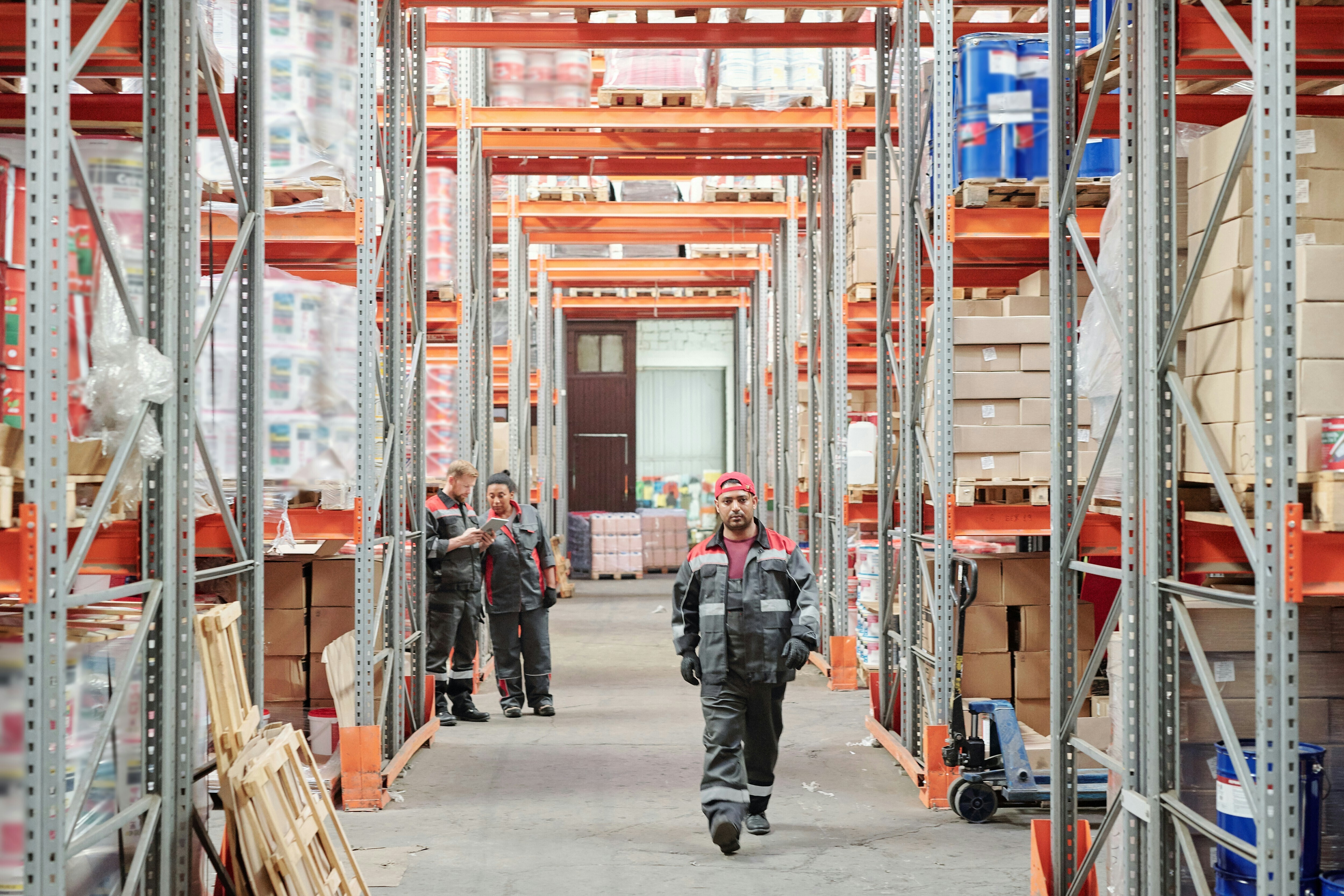
Supply chain resilience can be aided with AI. Image: Unsplash+/Getty
- Historically, resilience relied on buffers such as more inventory, suppliers and spare capacity, often at the expense of efficiency.
- Advances in artificial intelligence are enabling organizations to pursue resilience and efficiency simultaneously by reducing uncertainty rather than adding redundancy.
- A new generation of specialized AI start-ups is making frontier resilience capabilities more accessible, changing how organizations build resilient supply chains and competitive advantage.
For decades, supply chain leaders have accepted what seemed like an unavoidable trade-off: organizations could either optimize supply chains for efficiency by minimizing costs, reducing inventory and maximizing asset utilization, or invest in resilience by building flexibility, redundancy and optionality.
Achieving both at the same time was widely considered unrealistic. Advances in artificial intelligence (AI) are beginning to challenge that assumption.
This shift could not come at a more important time. Geopolitical fragmentation, climate-related disruptions, cyber threats and economic uncertainty are exposing the limits of supply chains optimized primarily for efficiency.
Supply chain disruptions are estimated to cost businesses up to $1.6 trillion in lost global revenue growth every year. Meanwhile, only 29% of organizations have developed the capabilities needed to prepare for the future.
At the same time, nearly three out of four business leaders now view resilience as a driver of growth and competitive advantage and not simply a way to manage risk.
What is changing is not only the capability of AI models, but also how easily they can be deployed.
”Agentic AI is changing how supply chain resilience is built
Supply chain resilience refers to an organization’s ability to sense disruption early, absorb its effects, adapt operations in response and recover quickly enough to maintain performance. Historically, resilience depended on creating buffers of more inventory, suppliers and spare capacity. Those approaches can still matter, but they come with a cost.
According to the Organisation for Economic Co-operation and Development (OECD), supplier diversification increases fixed costs, while higher inventories tie up working capital and require firms to balance resilience against the cost of holding stock.
The emergence of agentic AI allows for a different approach to building resilience. Its ability to orchestrate workflows and act autonomously enables organizations to anticipate disruption and coordinate responses faster.
For example, agentic AI can monitor millions of data points and global news sources to identify weak signals across supplier networks, continuously assess and flag operational risks, model alternative scenarios in real time and coordinate responses and associated workflows across planning, procurement, manufacturing and logistics.
Organizations advancing towards autonomous supply chain capabilities expect to reduce disruption response times by 62% and recovery times by 60%, reducing average response times from eleven days to just four.
This shifts supply chains from simply absorbing disruption to building more responsive, adaptive systems. In doing so, organizations can increasingly pursue resilience and efficiency simultaneously rather than treating them as competing priorities.
The democratization of AI is fueling a new wave of start-up innovation
AI investment has reached record levels. Corporate AI investment reached $252.3 billion in 2024, and the sector has grown more than thirteenfold since 2014. Meanwhile, Gartner reports that inquiries on multi-agent systems grew by 1,445% between 2024 and 2025, reflecting rapidly growing enterprise interest in agentic AI and autonomous AI systems.
What is changing is not only the capability of AI models, but also how easily they can be deployed. Until recently, many of the most advanced AI capabilities were accessible only to organizations with significant technical expertise and investment capacity.
Today, increasingly accessible foundation models and AI applications are democratizing access to these capabilities, fundamentally changing the innovation landscape.
This shift has enabled a rapidly growing ecosystem of specialized AI start-ups that translate agentic AI into practical solutions in areas such as supplier risk intelligence, procurement workflow automation, flexible manufacturing systems and supply chain orchestration.
Rather than replacing enterprise systems, these companies are enabling organizations to adopt frontier AI capabilities faster through solutions designed to integrate with existing architectures.
This creates a significant opportunity for organizations seeking to strengthen resilience.
Despite a rapid pace of innovation, implementation remains a significant challenge. Challenges such as fragmented data across suppliers, logistics providers and internal systems; a shortage of specialist AI talent; and legacy enterprise systems make integrating AI difficult, slow and costly.
Together, these barriers help explain why, despite record levels of AI investment, only 22% of organizations have developed advanced AI-powered supply chain and operations capabilities.
These barriers are also changing how organizations need to think about building AI capabilities. Rather than developing everything internally, organizations can draw on specialized AI start-ups for expertise, data foundations and deployable solutions that help accelerate AI adoption.
Leaders need to determine which capabilities to develop internally and where start-ups and other ecosystem partners can complement their strengths.
”How to navigate the AI start-up ecosystem for supply chain resilience
As the AI start-up ecosystem continues to evolve, the leadership challenge is also changing. Many start-up solutions already exist, but the harder question is where to look, what to prioritize and how to engage effectively.
To help organizations navigate this shift, the World Economic Forum’s report, The Role of Start-Ups in AI-Enabled Supply Chain Resilience, developed in collaboration with Accenture, draws on interviews with more than 50 industry leaders, start-ups, investors and academics, alongside an analysis of more than 600 AI start-ups.
The research explores the role of the AI start-up ecosystem in strengthening resilience across supply chains and operations and provides a practical framework for organizations to determine when to buy, partner or build AI solutions.
Leaders need to determine which capabilities to develop internally and where start-ups and other ecosystem partners can complement their strengths. Ultimately, the organizations that build the most resilient supply chains may not be those with the largest AI budgets but those that can most effectively identify, access and scale the capabilities that matter.
Don't miss any update on this topic
Create a free account and access your personalized content collection with our latest publications and analyses.
License and Republishing
World Economic Forum articles may be republished in accordance with the Creative Commons Attribution-NonCommercial-NoDerivatives 4.0 International Public License, and in accordance with our Terms of Use.
The views expressed in this article are those of the author alone and not the World Economic Forum.
Stay up to date:
Artificial Intelligence
Related topics:


Forum Stories newsletter
Bringing you weekly curated insights and analysis on the global issues that matter.
More on Supply Chains and TransportationSee all

Pim Valdre and Joy Shumake-Guillemot
September 17, 2026


