How green trade is becoming the next engine of resilient growth for China
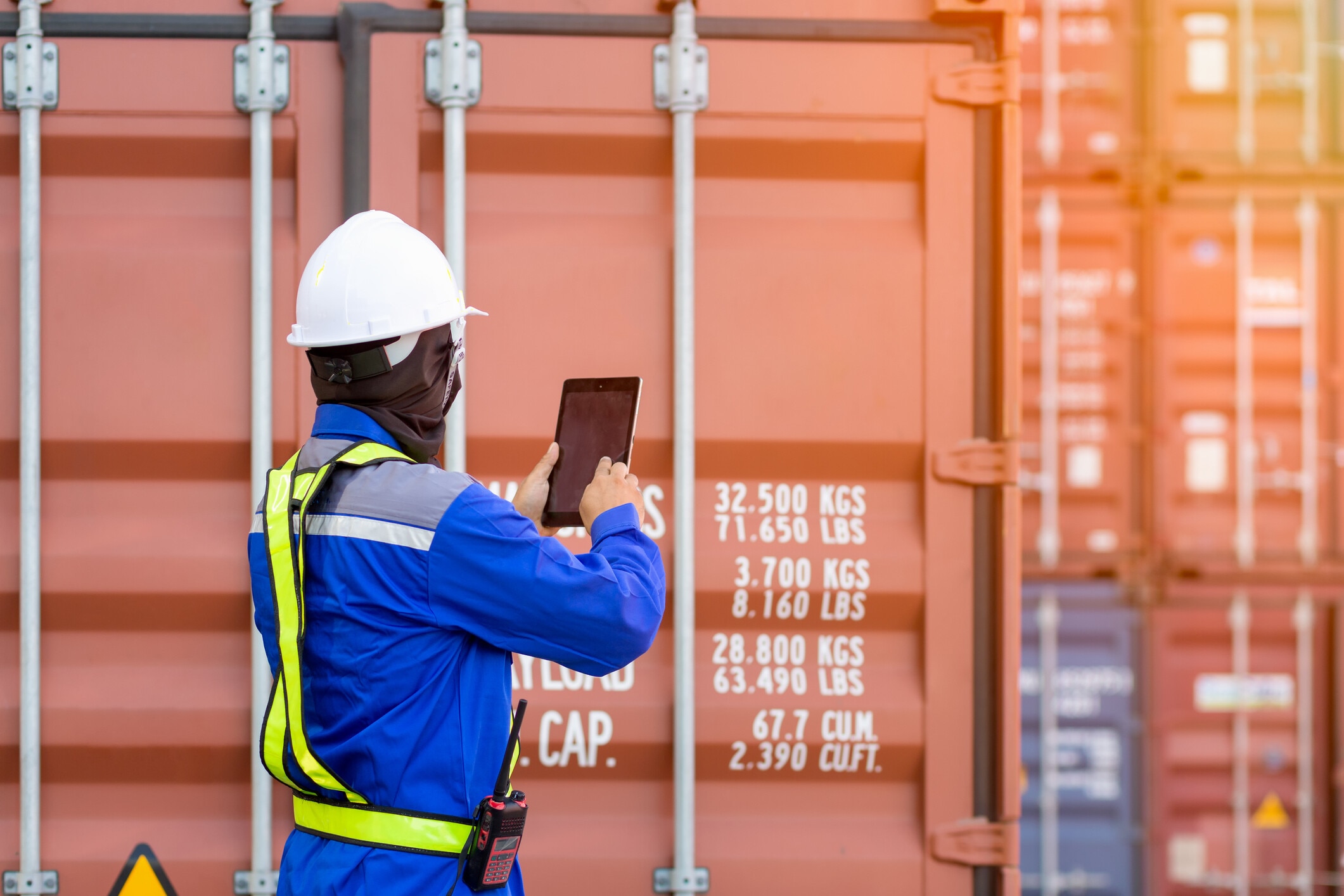
One way to promote green trade is through digital carbon management platforms that track emissions across supply chains. Image: iStockphoto/Kittikorn
- The global green trade industry is already a multi-trillion growth engine and it's expected to be worth $7 trillion by 2030.
- By embedding sustainability across value chains and trade corridors, China is aligning economic growth with broader climate and development goals.
- How promising ideas can be scaled for impact in areas like global trade is a key focus at the World Economic Forum’s Annual Meeting of the New Champions, also known as 'Summer Davos', in China from 23–25 June 2026.
As rising costs, trade barriers, technological competition and climate risks reshape global value chains, the ability to navigate uncertain regulatory territories and to grow sustainably is becoming a defining feature of economic competitiveness.
At the same time, the global green economy has become a multi-trillion dollar growth engine. After surpassing $5 trillion in value in 2024, it is projected to exceed $7 trillion by 2030, making green trade one of the world’s top two growing industries after technology.
This will create a wealth of new opportunities for sustainable trade and industrial transformation.
In fact, the economics of sustainability-powered growth has already been proven. The World Economic Forum’s Alliance of CEO Climate Leaders represents $4 trillion in revenues and 12 million employees in 130+ companies. Between 2019 and 2023, its members reduced aggregate emissions by 12% while delivering revenue growth of 20%.
In China, green trade reached $1.08 trillion in 2022, accounting for 12.2% of the global total. And under the country’s 15th Five-Year Plan (FYP), green trade is positioned to drive industrial upgrades, environmental governance and long-term competitiveness.
By embedding sustainability across value chains and trade corridors, China is demonstrating how to align economic growth with broader climate and development goals.
How does China trade in critical sectors?
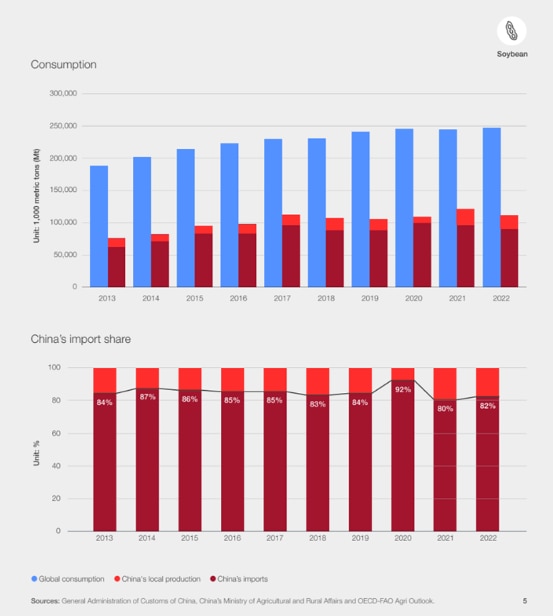
China is the world’s largest soybean importer, hitting a record high of 111.83 million metric tons imported in 2025, up 6.5% from a year before. Meanwhile, its 15th FYP’s agricultural plan calls for “diversifying agricultural imports and better aligning trade with domestic production”, as well as managing the environmental footprint of imported goods.
In line with this, China’s largest food company, COFCO International and Modern Farming Group, signed an agreement in 2023 with its trading partners to supply and accept soybeans coming from sustainable areas of production in Brazil.
The deal is valued at more than $30 million and is China’s first soybean order with a deforestation- and conversion-free (DCF) clause. With this, it aims to eliminate deforestation from its global soy and corn supply chains, and align with the Science-Based Targets initiative's 1.5°C emissions targets.
Separately, the exponential growth of green technology like EVs, data centres and grid expansion are driving unprecedented demand for copper, aluminum and rare earth elements. As a result, critical minerals are becoming the new backbone of green trade.
China’s 15th FYP aims to continuously strengthen the competitive advantages of rare metals and superhard materials and to strengthen its green trade agenda. Green mining and minerals is another key area and China has committed to implement the G20 Initiative on Supporting Industrialization in Africa and Least Developed Countries.
Green trade in China’s free trade zones
Green trade is not only about compliance, it’s also a growth engine fuelled by China’s industrial policy, technology development, taxation, fiscal and financial regulation. China’s 23 Free Trade Zones (FTZs), for example, are encouraged to focus on green trade.
Shanghai's Lin-gang Special Area, for example, pushes for greater openness in offshore finance, allocating more funding and resources to education, healthcare and other areas critical to nurturing young talent. And Guangdong province’s nation-leading carbon footprint label scheme has inspired similar practices in Gansu Province, one of China’s less developed regions. In Xiamen, the FTZ is shaping comprehensive green upgrades in port logistics and accelerated digitalization in shipping operations.
China’s 15th FYP also mandates pilot FTZs to develop sector-specific green transition roadmaps as part of a broader, location-specific strategy. As a result, Inner Mongolia leads the country in installed capacity for new energy, coal production capacity and reserves of 20 key minerals. Its wind and solar energy resources account for about 57% and 21% of the national total, respectively. Inner Mongolia's pilot FTZ also plans to establish a recycling system for wind and photovoltaic equipment.
How does industry innovation interact with policy?
China’s approach to green trade policy encourages industry to interact with and shape market trade dynamics in real time. As leading Chinese companies test emerging clean technologies, traceability tools and circular models, the data they generate feeds directly into national standards, certification systems and trade rules. From factory floor to policy, this interactive loop enhances green trade resilience.
Green trade is also increasingly influencing investment and production decisions. A leading Chinese steelmaker has invested in low-carbon production processes, emissions monitoring systems and product-level carbon accounting capabilities in response to the EU’s Carbon Border Adjustment Mechanism, for example.
By building verifiable emissions data into its export strategy, the company has strengthened its ability to demonstrate the carbon performance of its products to overseas buyers while improving operational efficiency.
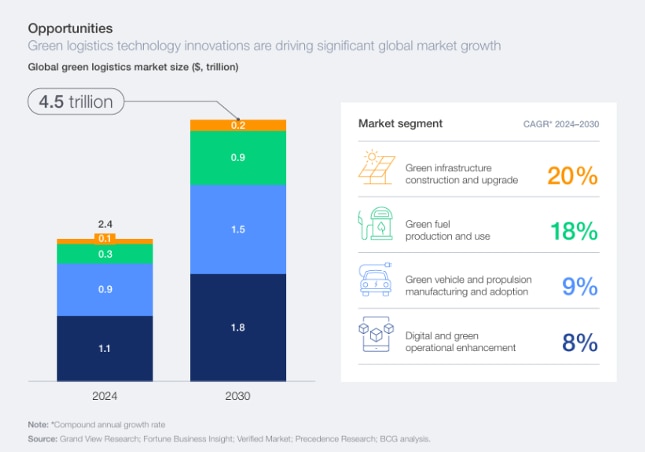
Green trade transformation is also extending beyond production into logistics networks. According to the World Economic Forum’s Green Logistics Innovation for Emerging Markets: Driving Competitiveness and Shared Value report, by 2030 the global green logistics market will reach $4.5 trillion.
As the report details, one of China’s largest logistics companies, Jingdong (JD) Logistics, has built a digital carbon management platform that tracks emissions across supply chains while supporting low carbon warehousing, hydrogen-powered transport and circular packaging systems.
How to seize green trade opportunities
There are three key lessons from China’s experience of developing green trade that could be used beyond its borders:
1. Policy consistency is key
The new China Ecological and Environment Code indicates the country’s learning journey from focusing on domestic environmental governance to addressing global climate and nature concerns.
2. Green trade is a competitive strategy not a compliance exercise
By identifying the value proposition and investing early in traceability, low-carbon production and supply chain transparency, companies will be better positioned to manage regulatory risks, strengthen customer trust and access emerging market opportunities.
3. Financial institutions can bridge ambition and implementation
Green trade finance, sustainability-linked lending and investment in low-carbon trade infrastructure can help accelerate this transition. As carbon considerations become more deeply embedded in global commerce, organizations that support resilient and sustainable value chains will be better positioned for long-term growth.
Green trade as a competitive advantage
As the global economy adapts to a more complex and fragmented landscape, resilience and sustainability are increasingly becoming two sides of the same coin.
China's experience suggests that green trade can serve as a tool for emissions reduction, as well as a catalyst for innovation, industrial upgrades and supply chain transformation.
In the current global economy, competitiveness depends less on cost and more on building value chains that are resilient, transparent and sustainable.
The Forum is spotlighting how innovation moves from breakthrough to scale to impact ahead of 'Summer Davos' in China, 23–25 June 2026. Follow the latest.
Don't miss any update on this topic
Create a free account and access your personalized content collection with our latest publications and analyses.
License and Republishing
World Economic Forum articles may be republished in accordance with the Creative Commons Attribution-NonCommercial-NoDerivatives 4.0 International Public License, and in accordance with our Terms of Use.
The views expressed in this article are those of the author alone and not the World Economic Forum.
Stay up to date:
Trade and Investment
Related topics:


Forum Stories newsletter
Bringing you weekly curated insights and analysis on the global issues that matter.