Clean energy push accelerates but still falls short of global goals – and more top energy stories
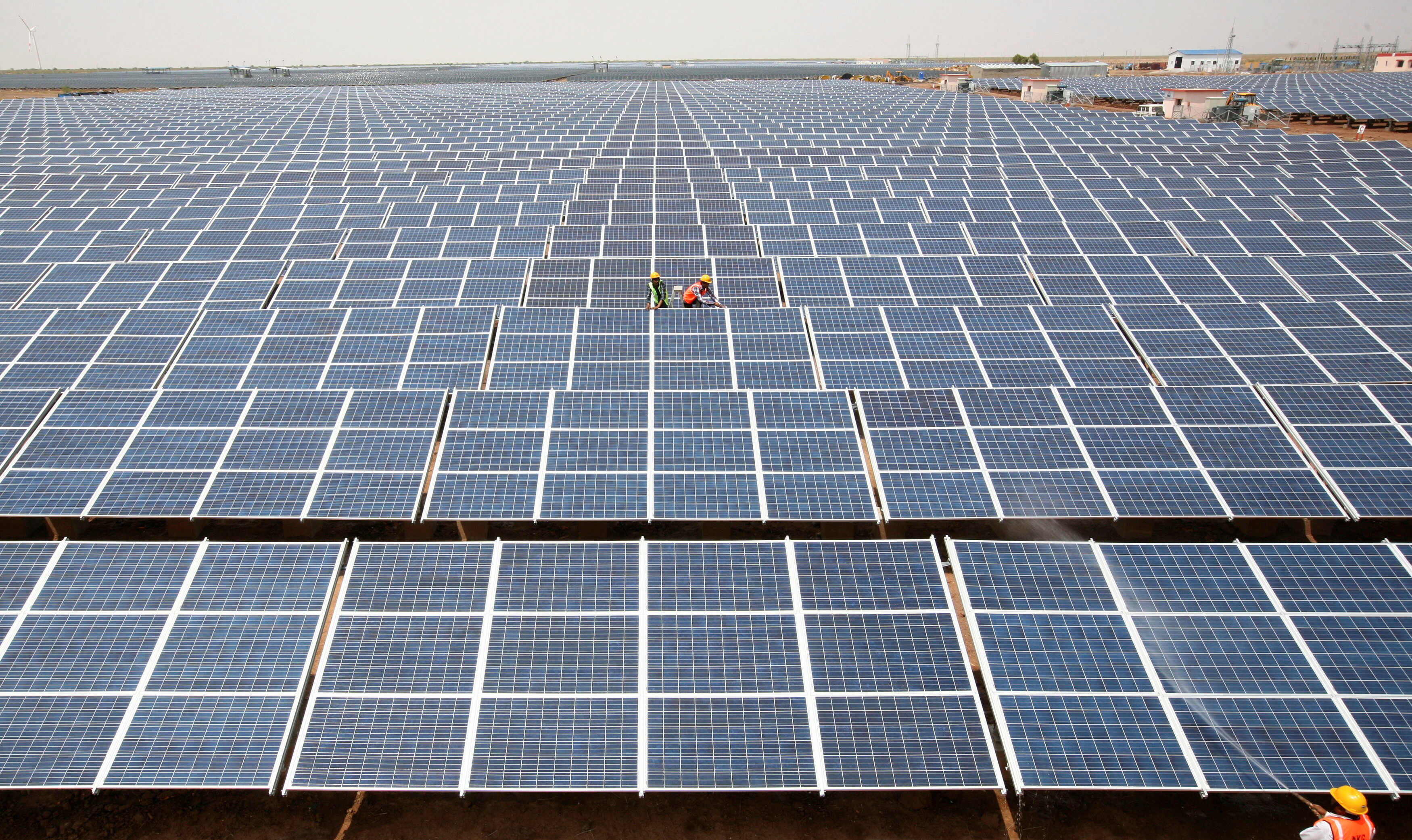
The world added a record 582 gigawatts of renewable energy capacity in 2024. Image: REUTERS/Amit Dave
- This round-up brings you the key stories from the energy sector over recent weeks.
- Top energy news: World falling short on key renewables target; Japan looks to nuclear to cut fuel imports; UK says it will create 400,000 new clean energy jobs.
- For more on the World Economic Forum’s work in the energy space, visit the Centre for Energy and Materials.
1. World still falling short of UN targets and meeting rising power demand
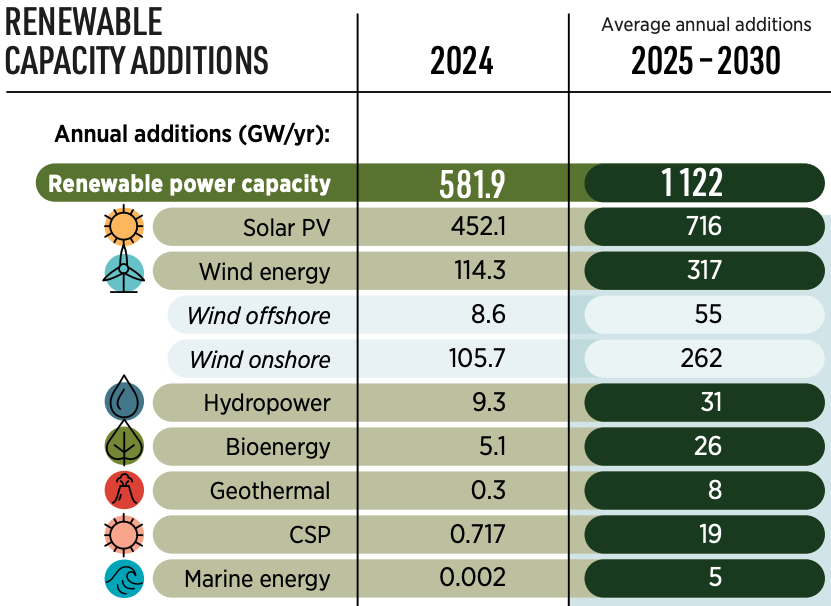
The world added a record 582 gigawatts of renewable energy capacity in 2024. Yet it remains off track to meet the critical global target of tripling renewables by 2030, according to a report from the International Renewable Energy Agency (IRENA).
Despite this unprecedented growth, the current pace falls short of the goal, set at the COP28 United Nations climate change summit, to increase global renewable capacity to 11.2 terawatts by the end of this decade. Achieving this target now requires adding 1,122 gigawatts annually – nearly double the 2024 record – the report says.
Progress on energy efficiency remains too slow, IRENA says, with global energy intensity improving just 1% in 2024, well below the 4% annual improvement required to keep global warming within 1.5°C.
The report identifies insufficient investment, outdated electricity grids, and supply chain constraints among the reasons, adding that investment in renewables must more than double from $624 billion in 2024 to at least $1.4 trillion annually between now and 2030.
IRENA calls for urgent government action to integrate renewable targets into national climate plans ahead of COP30 in Brazil. The G20 nations, projected to account for over 80% of global renewables by 2030, must lead this acceleration, it says.
2. Japan looks to nuclear to cut fuel imports
Japan’s new prime minister, Sanae Takaichi, is putting nuclear power at the centre of her government’s energy strategy to combat inflation and reduce dependence on costly fuel imports, according to Reuters.
Takaichi is expected to accelerate the revival of Japan’s nuclear sector, which has struggled to recover since the 2011 Fukushima disaster, in which three reactor cores melted following a major earthquake.
Japan currently runs 14 of its 33 operable reactors, representing a significant reduction from the 54 reactors in operation before Fukushima.
Imported fossil fuels currently provide 60-70% of Japan’s electricity generation and have been a major driver of inflation, creating public discontent.
The nuclear push reflects Japan’s broader goal of achieving energy security while addressing decarbonization objectives through domestic power generation, as outlined in its latest Strategic Energy Plan.
More countries are turning their attention back to nuclear power. Advanced economies are currently home to more than 70% of operable reactors, but emerging economies are increasingly investing in nuclear power.
3. News in brief: More energy stories from around the world
The UK has said it will create 400,000 new jobs in the country’s clean energy sector by 2030. Employment in wind, solar and nuclear is expected to double to 860,000 in five years, the BBC reports.
Iran is moving to fast-track solar energy projects to address fuel shortages that have forced it to impose rolling blackouts this year, the Financial Times writes. The country is aiming for 12 gigawatts (gW) of renewable energy capacity in three years’ time – compared with 2.5gW this year.
South Africa wants to revive its small modular nuclear reactor programme and increase its reliance on gas to generate electricity, according to a new energy plan approved by the country’s cabinet. South Africa was once considered a leader in small modular reactor development but stopped its research in 2010.
How the Forum helps leaders navigate the transition of energy and materials systems
Danish wind turbine maker Vestas has suspended plans for a new factory in Poland amid “lower than projected demand for offshore wind in Europe”, the company has told the FT.
Maersk has said it is testing a blend of Brazilian ethanol with methanol and marine diesel for its vessel engines. The move is part of the shipping company’s efforts to further decarbonize its operations. The shipping sector accounts for about 3% of global greenhouse gas emissions.
Indian solar manufacturers are changing their supply chains to maintain access to the US market and offset higher tariffs, Reuters reports, sourcing solar cells from countries with lower duties.
The energy sector will remain central to the EU’s work on competitiveness, growth and economic resilience next year, the European Commission has said.
4. More on energy from Forum Stories
The World Bank has renewed its backing of nuclear projects, marking a global shift towards nuclear energy for energy security, climate action and growth. But to ramp up capacity, annual investment in nuclear also needs to soar. Blended finance, risk-sharing mechanisms and policy parity can help.
What is electrotech and what will it mean for geopolitics and energy security? Read more in this article on an energy transition concept that focuses on solutions driven by physics, economics and geopolitics, not just climate action.
For decades, the prosperity of Gulf Cooperation Council states has been underpinned by oil and gas exports that have fuelled rapid urbanization, world-class infrastructure and generous social welfare systems. But as global energy dynamics evolve and the effects of the climate crisis increase, the energy transition is an economic, climate and societal priority for the region. Strategic foresight and greater collaboration will be vital to ensuring future resilience.
To learn more about the work of the Energy, Materials, Infrastructure Platform, contact Ella Yutong Lin: ellayutong.lin@weforum.org
License and Republishing
World Economic Forum articles may be republished in accordance with the Creative Commons Attribution-NonCommercial-NoDerivatives 4.0 International Public License, and in accordance with our Terms of Use.
The views expressed in this article are those of the author alone and not the World Economic Forum.

Forum Stories newsletter
Bringing you weekly curated insights and analysis on the global issues that matter.


