Earth Day 2026: A moment for a new generation to reimagine climate action
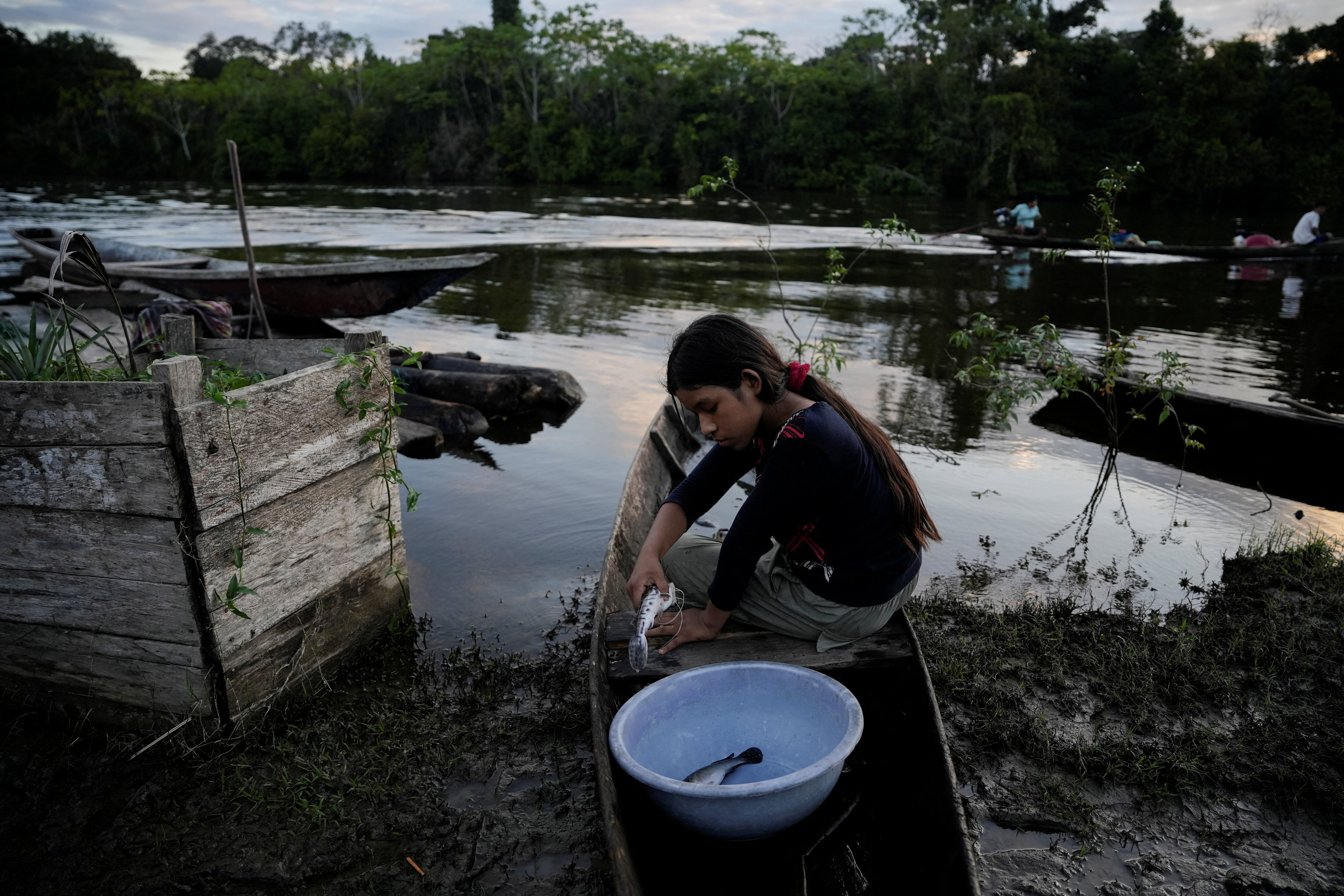
Earth Day is a reminder that successful climate action does not come from the top down alone. Image: Reuters/Angela Ponce
- Earth Day 2026 falls on 22 April and is a reminder that successful climate action does not come from the top down alone.
- Supporting those who know their land best can play a critical role in restoring ecosystems and strengthening communities.
- Investing in community-led, nature-based solutions can deliver environmental, social and economic benefits.
The difficult truth: flashy green bonds, artificial intelligence (AI) models and billion-dollar funds cannot deliver the highest return on investment (ROI) for climate action alone.
Green bonds, artificial intelligence (AI) models and billion-dollar funds all have an important role to play in driving change.
Instead, it is imperative to create opportunities for marginalized people, especially women and youth from informal communities, to restore their own land and lead future change through grassroots efforts.
In my experience working in informal settlements across rural Peru, investing directly in local mothers and young people who plant, maintain and monitor trees can deliver measurable carbon sequestration, flood protection and, importantly, restored community dignity.
When people earn a living healing the land around them, trust can grow and resilience can take root. Not only does this approach offer physical results, but those working the land often develop a stronger sense of purpose and agency in the face of global crises.
To our collective disadvantage, this approach is consistently underfunded. Investors may overlook opportunities to fund mothers and young people directly because timelines can extend beyond 36 months and returns are harder to capture in traditional quarterly models.
Nature-based solutions led by the people who live closest to the problem aren’t merely side projects – they they can be among the most effective tools for closing the multi-billion dollar biodiversity and restoration finance gap, while supporting economic and social stability in an era of accelerating climate shocks.
Millennials, now in our early 30s to mid-40s, are no longer just the youngest voices in the room. We are increasingly assuming leadership roles in companies, governments, non-governmental organizations, investment firms, and civil society. We sit at an intersection: experienced enough to influence budgets and policy, but still positioned to challenge entrenched habits.
The tension we face between maintaining the status quo and meeting the urgent demand for change is intensified by overlapping crises: AI is beginning to reshape job markets, geopolitical fractures are disrupting alliances and supply chains, and climate impacts are, in many cases, arriving faster or with greater intensity than expected.
Yet we are also equipped to act. We grew up with digital tools that enable rapid scaling and transparent storytelling. We prioritize purpose alongside profit. And we know the stakes intimately – we will be the ones raising families, leading organizations, and inheriting the systems of the 2030s and beyond.
Earth Day 2026, under the theme “Our Power, Our Planet”, is a call to harness exactly this power: people and communities sustaining the natural systems that underpin health, economies and security.
This is a critical window to move from inspiration to more intentional, scalable action that demonstrates to decision-makers that people-centred models can deliver long-term value while showing younger generations that change is possible.
What millennials can do to protect the Earth now
1. Launch or fund a ‘regenerative ROI’ pilot in your own city or network
Identify a degraded area in need of improvement and partner with local women’s groups, youth collectives or community organizations to restore it. These projects can be local and low-cost, such as building community gardens or planting trees with a long-term monitoring component.
For example, rural communities in Peru have seen positive transformations through the construction of school greenhouses in climates that struggle to support agricultural productivity. While small in scale, these initiatives can reduce food insecurity and help build land-stewardship skills for future generations.
These initiatives can generate visible progress while helping navigate bureaucratic constraints and building trust over time.
2. Organize fundraisers or competitions for nature-based community restoration
Local fundraisers are an effective way to re-invest in the community. When it comes to restoration efforts, donors tend to be particularly enthusiastic about contributing to the enhancement of their own neighbourhood or country.
In Peru, we at Pan Peru have organized benefit theatre productions to raise money to implement libraries, reforestation efforts, greenhouses and a water reservoir in impoverished areas.
Like the previous example of building school greenhouses, these fundraisers need not be large in scale – a simple event can create enduring change with far-reaching effects. Alongside larger funding mechanisms, community-level fundraising can play a meaningful complementary role.
3. Amplify human stories to build cross-generational coalitions
Prioritize authentic human stories alongside raw statistics. Collect and share voices from the field to raise awareness about the challenges and successes of a given community. Use short videos, threads and events to connect local experiences to global challenges, reaching both decision-makers and younger audiences.
In my experience, human stories can have a powerful effect on fundraising, awareness and collaboration across generations. I think of a young girl in a rural Andean village who now walks each day to a small library we helped build. Before, her access to books was scarce – and computers, nonexistent. Today, she sits on the floor with her classmates, reading aloud and imagining a future far beyond what her parents had access to.
When I share her story, just as statistics but as lived experiences, people across generations respond. Younger audiences see what’s possible, while decision-makers better understand where investment can have meaningful impact.
These are the stories that unlock funding, trust and collaboration. They remind us that climate action is not abstract – it is human, local, and personal.
Why Earth Day is a moment for reflection and action
Earth Day 2026 is both a reminder and an opportunity: to recognize that meaningful progress often comes from people working in partnership with the planet, alongside broader financial and policy efforts.
One of the more overlooked realities millennials must acknowledge is that effective climate solutions are often rooted in supporting the people who know their land best.
As we navigate a tumultuous world, we must combine direct investments in regenerative pilots, community-level fundraising with broader systems-level efforts while leading with lived stories to close the generational divide and build the resilience our generation and the next will depend on.
This isn’t about waiting for permission or perfect conditions. Real transformation happens when we deliver resources and funding straight to the ground, to the people already out-restoring entire multinationals. Let’s make Earth Day 2026 the moment we stop talking about regenerative ROI and start proving it at scale.
Don't miss any update on this topic
Create a free account and access your personalized content collection with our latest publications and analyses.
License and Republishing
World Economic Forum articles may be republished in accordance with the Creative Commons Attribution-NonCommercial-NoDerivatives 4.0 International Public License, and in accordance with our Terms of Use.
The views expressed in this article are those of the author alone and not the World Economic Forum.
Stay up to date:
Renewable Energy


Forum Stories newsletter
Bringing you weekly curated insights and analysis on the global issues that matter.
More on Climate Action and Waste Reduction See all

Janka Oertel and Massimo Portincaso
September 9, 2026


