How Japan is building resilience through innovation in the green materials sector
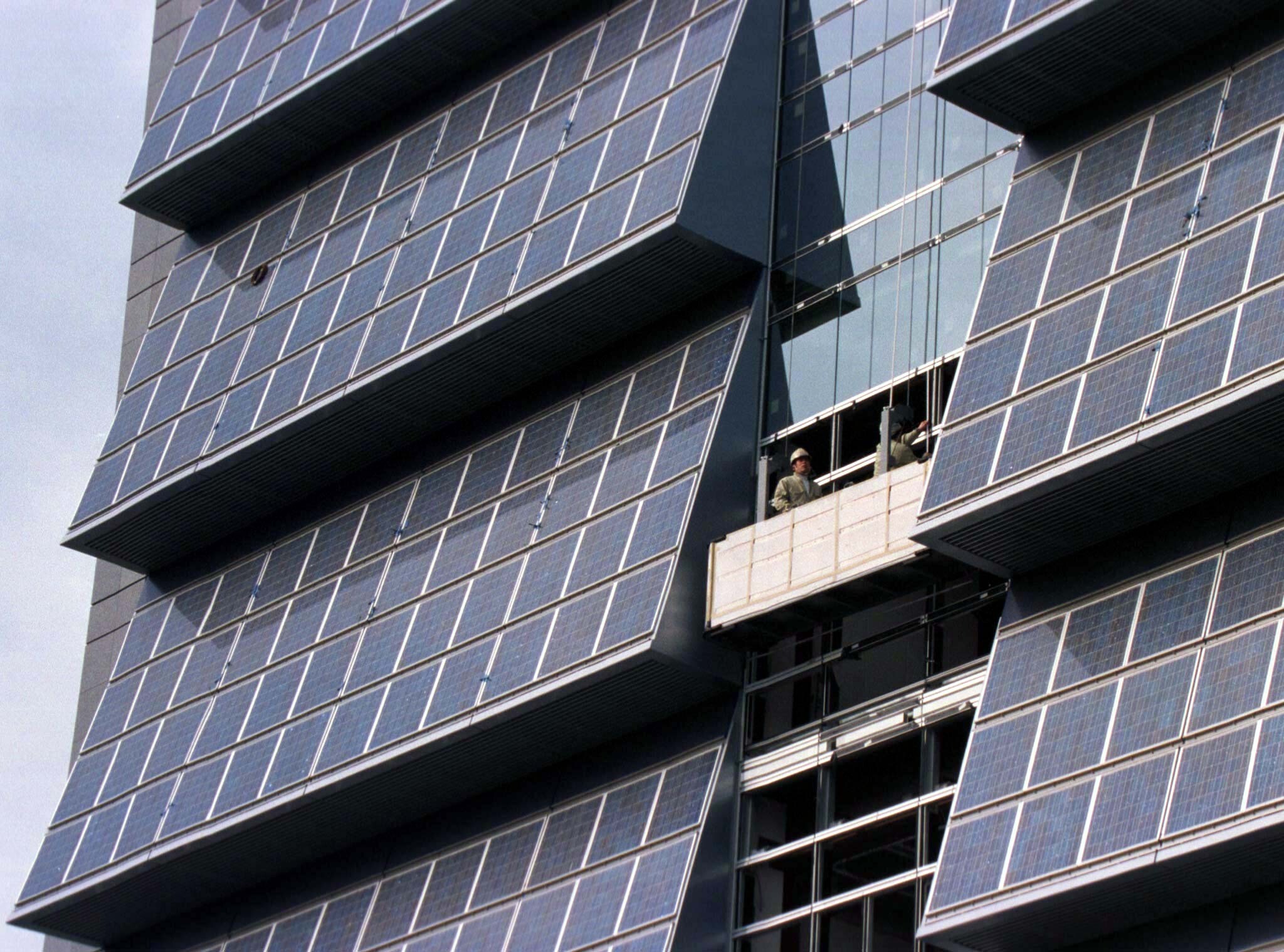
Government support is accelerating green materials development in Japan Image: REUTERS
- Lifecycle carbon emissions from buildings in Japan are estimated to account for approximately 40% of the country’s total greenhouse gas emissions.
- In addition to decarbonization, energy-efficient materials reduce utility costs, improve indoor comfort for building users.
- Government support for energy-efficient construction is accelerating the advancement and innovation of materials in this space.
As climate change accelerates, building materials are playing an increasingly critical role in advancing decarbonization and energy efficiency.
According to data published in 2026, lifecycle carbon emissions from buildings in Japan, including materials production, construction, operation and demolition, are estimated to account for approximately 40% of the country’s total greenhouse gas emissions.
Decarbonizing the built environment has therefore become an urgent priority. At the same time, energy-efficient materials offer additional benefits, including lower utility costs and improved indoor comfort, creating tangible value for residents and building users.
Against this backdrop, innovation in Japan’s green building materials sector is advancing rapidly. The market has already reached $1.8 billion and is projected to grow at a compound annual rate of 11.83% between 2026 and 2034, reaching $4.8 billion.
Alongside solutions such as carbon-sequestering concrete and high-performance heat-reflective coatings, advanced materials such as photovoltaic glass are emerging, enabling buildings to generate renewable energy.
Policy support is accelerating this transition. Since April 2025, compliance with energy-efficiency standards has become mandatory for new residential buildings, requiring minimum levels of insulation performance and equipment efficiency.
In addition, the government is expanding subsidies for energy-efficient construction and retrofits, while supporting innovation through the Green Innovation Fund, which promotes an integrated approach spanning research, development and real-world deployment.
Advances in low-carbon concrete
In the concrete sector, technological development is focused on reducing carbon dioxide (CO2) emissions during production, enhancing carbon capture and storage, and improving material performance. At the Global Environment Award in March 2026, several innovative solutions were recognized for their contributions.
Nippon Hume’s low-carbon, high-performance concrete “e-CON” reduces CO2 emissions by approximately 80% compared to conventional concrete, while utilizing more than 90% industrial by-products in its composition.
It also offers enhanced resistance to salt damage and acid corrosion, making it suitable for infrastructure applications. Kao’s “rebound reduction technology” addresses material loss during sprayed concrete applications, reducing environmental impact and construction burden.
In addition, the New Energy and Industrial Technology Development Organization has established the “Carbon Utilized Concrete (CUCO)” consortium, bringing together 55 companies, universities and research institutions.
The initiative focuses on three key areas – reducing cement content, developing CO2-absorbing concrete and advancing carbon-fixed concrete technologies – supporting broader efforts to achieve carbon neutrality by 2050.
High-performance heat-reflective and insulating coatings
In response to rising temperatures, the development of coatings with heat-reflective and insulating properties is gaining traction. Kansai Paint has developed the ALES Dynamic ECO Insulating and Heat-Reflective System, which combines both functions to significantly reduce heat transfer.
This allows the insulating layer to help prevent increases in indoor temperature, even when infrared radiation is not fully reflected by the outer coating.
Compared to conventional methods, the system reduces surface temperatures by up to 15 degrees Celsius and backside temperatures by 21.4 degrees Celsius, thereby significantly reducing cooling demand.
Generating energy through building materials
Building materials are no longer limited to reducing energy consumption. They are increasingly being designed to generate energy.
Perovskite solar cells, which are lightweight and flexible, are expanding the range of possible installation sites and accelerating integration into buildings.
In August 2025, the Tokyo Metropolitan Government launched a demonstration project at the Telecom Center Building in Tokyo’s waterfront area, testing building-integrated photovoltaic inner windows using next-generation solar cell modules.
Similarly, Nagoya Electric Works began Japan’s first demonstration project in December 2025, using chalcopyrite solar cells in road information boards and traffic monitoring systems. Like perovskite cells, these are lightweight and flexible, with future potential for tandem integration to achieve higher efficiency and durability.
Strengthening resilience through green materials
The expansion of green solutions in the building materials sector represents a practical and scalable pathway to strengthening resilience in the face of accelerating climate change.
These efforts align closely with the objectives of the First Movers Coalition, of which Japan is a member, particularly in creating demand for low-carbon materials and accelerating market transformation.
Beyond emissions reduction, decarbonized building materials deliver multiple co-benefits, including lower energy costs, improved urban comfort and enhanced disaster resilience.
As private-sector innovation and public policy continue to align, the deployment of these solutions is expected to accelerate further.
Transforming the built environment will thus be a key driver in building a more sustainable, resilient and productive society.
Don't miss any update on this topic
Create a free account and access your personalized content collection with our latest publications and analyses.
License and Republishing
World Economic Forum articles may be republished in accordance with the Creative Commons Attribution-NonCommercial-NoDerivatives 4.0 International Public License, and in accordance with our Terms of Use.
The views expressed in this article are those of the author alone and not the World Economic Forum.
Stay up to date:
Buildings
Related topics:


Forum Stories newsletter
Bringing you weekly curated insights and analysis on the global issues that matter.
More on Climate Action and Waste Reduction See all

Emily Bayley and Nadia Greutert
October 15, 2026


