World facing ‘biggest-ever’ energy crisis – and more top energy stories
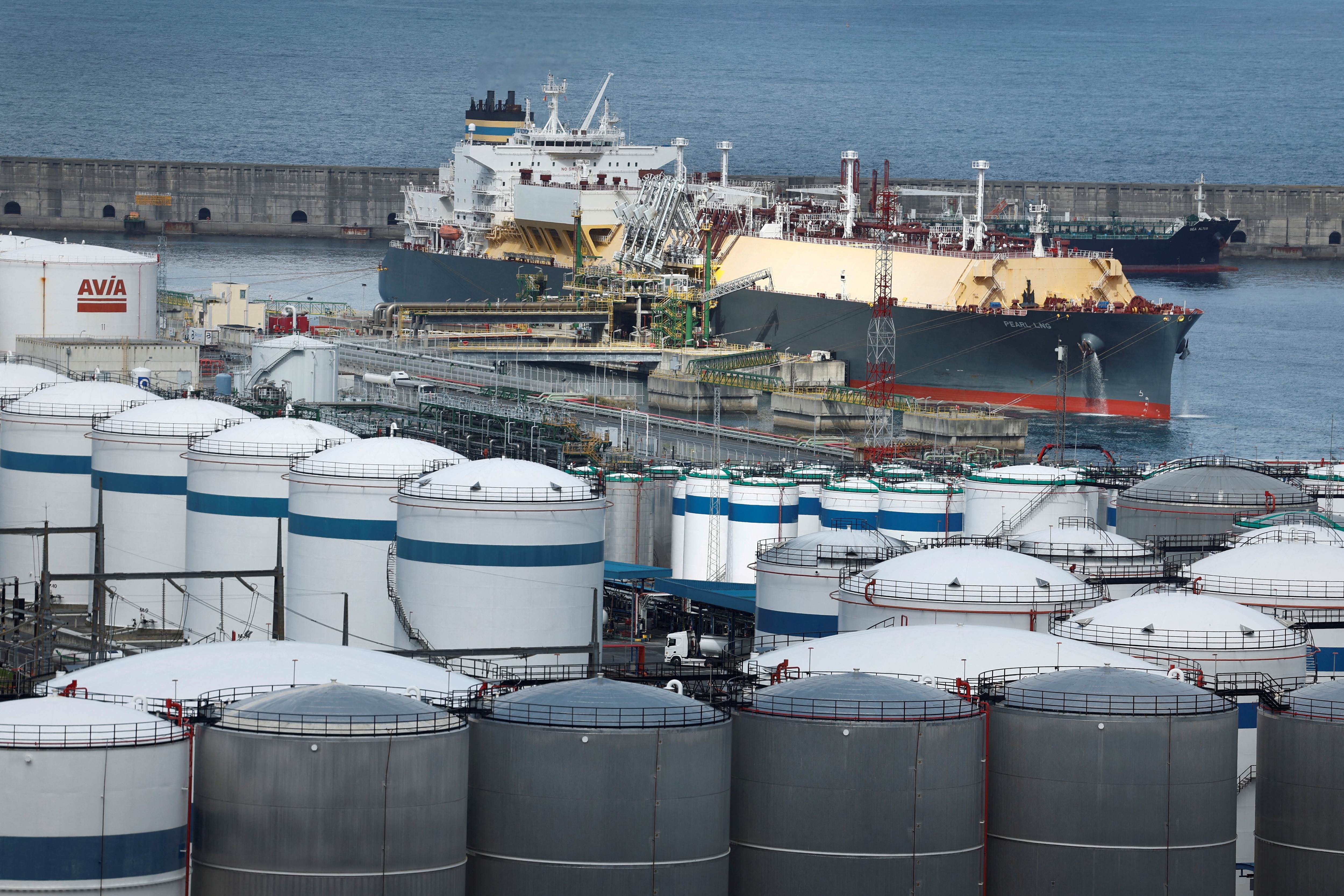
The Middle East conflict has caused significant disruption to global oil and gas supply. Image: REUTERS/Vincent West/File Photo
Roberto Bocca
Head, Centre for Energy and Materials; Member of the Executive Committee, World Economic Forum- This round-up brings you the key stories from the energy sector over recent weeks.
- Top energy news: World ‘facing biggest-ever energy crisis’; Countries gather for first international fossil fuel phaseout meeting; South Korea and Australia partner on energy supply chain.
- For more on the World Economic Forum’s work in the energy space, visit the Centre for Energy and Materials.
1. World ‘facing biggest energy crisis in history’
Disruption caused by the conflict in the Middle East has left the world facing the biggest energy crisis in history, according to the head of the International Energy Agency (IEA).
At a conference in Paris, Fatih Birol said oil and gas markets were undergoing “big difficulties”, with oil prices that have risen above $120 putting pressure on countries around the globe.
With Brent crude prices at a four-year high at the end of April amid concerns the conflict could worsen, Birol underscored that the world is facing a “major economic and energy challenge”.
About a fifth of the world’s oil and gas supply has been affected by the disruption in the Strait of Hormuz, the vital maritime passage that connects the Gulf with the Arabian Sea.
As countries move to reduce exposure to oil and gas markets, the war is “supercharging” the global shift to renewable energy, according to UN climate chief Simon Stiell.
2. More than 50 countries agree to work on fossil fuel trade measures
As the energy crisis driven by the Middle East conflict continues, nations gathered in Colombia for a first-of-its-kind meeting dedicated to phasing out fossil fuels.
More than 50 countries agreed to work on trade measures aimed at cutting fossil fuel demand, the Financial Times reports. Attendees also pledged to work on financial reforms to help tackle debt and subsidy systems that keep them reliant on fossil fuels.
3. News in brief: More energy stories from around the world
South Korea and Australia have said they will work together to bolster the resilience of the energy supply chain to keep the supply of resources, including diesel and liquefied natural gas (LNG), stable, safe and reliable.
For the first time since World War Two, the US has become a net exporter of crude after shipping a record volume of oil to refiners, including in Europe and Asia. The country’s Energy Information Administration said this had led to large drops in domestic inventories.
Abu Dhabi’s state energy group, Adnoc, plans to invest "tens of billions" of dollars to build a natural gas business in the US. Global demand for US LNG is booming amid the disruption caused by the Iran war.
Sweden has warned of a potential shortage of jet fuel as a result of the Middle East conflict. The government said there was currently a good supply, but a shortage could be further ahead.
Democratic Republic of Congo will create a $100 million armed security force to guard mine sites and secure supply chains. The resource-rich country has moved to gain greater control over critical minerals, including cobalt and coltan.
A green fertilizer project in Paraguay is testing whether hydropower can support ammonia production without natural gas. UK-listed company Atome plans to use the method to produce about 260,000 tonnes of fertilizer a year.
Belgium has said it is planning to nationalize its nuclear power plants in order to secure its energy supplies. The deal would involve a “full takeover” of the nuclear fleet from French power company Engie.
4. More on energy from Forum Stories
A new Forum report, Making Critical Minerals Bankable, outlines how targeted financial solutions can unlock investment in critical mineral supply chains. It provides a practical framework and sets out a forward-looking pathway to move projects from risk to resilience and ensure supply can keep pace with the technologies shaping the future.
Far from being a drag on business, energy regulation gives companies the clarity and focus they need to invest, innovate and manage risk, argues Lena Thiede, Co-Founder and General Partner of Planet A Ventures, in this opinion piece for Forum Stories. Efforts to deregulate, however, could simply push costs elsewhere rather than liberating business and consumers.
Geopolitical disruptions to fossil fuel supply chains produce a dual effect: reinforcing the strategic case for diversifying energy systems and accelerating domestic renewables, while increasing short-term reliance on fossil fuels.
As the crisis continues, some experts argue that such moments can hold opportunity. Here is how previous global energy shocks have resulted in meaningful progress for the energy transition.
To learn more about the work of the Centre for Energy and Materials, contact Ella Yutong Lin: ellayutong.lin@weforum.org
License and Republishing
World Economic Forum articles may be republished in accordance with the Creative Commons Attribution-NonCommercial-NoDerivatives 4.0 International Public License, and in accordance with our Terms of Use.
The views expressed in this article are those of the author alone and not the World Economic Forum.

Forum Stories newsletter
Bringing you weekly curated insights and analysis on the global issues that matter.
More on Energy TransitionSee all

Stefano Salomoni
September 29, 2026


