This town took control of its energy supply – here’s how others could do the same
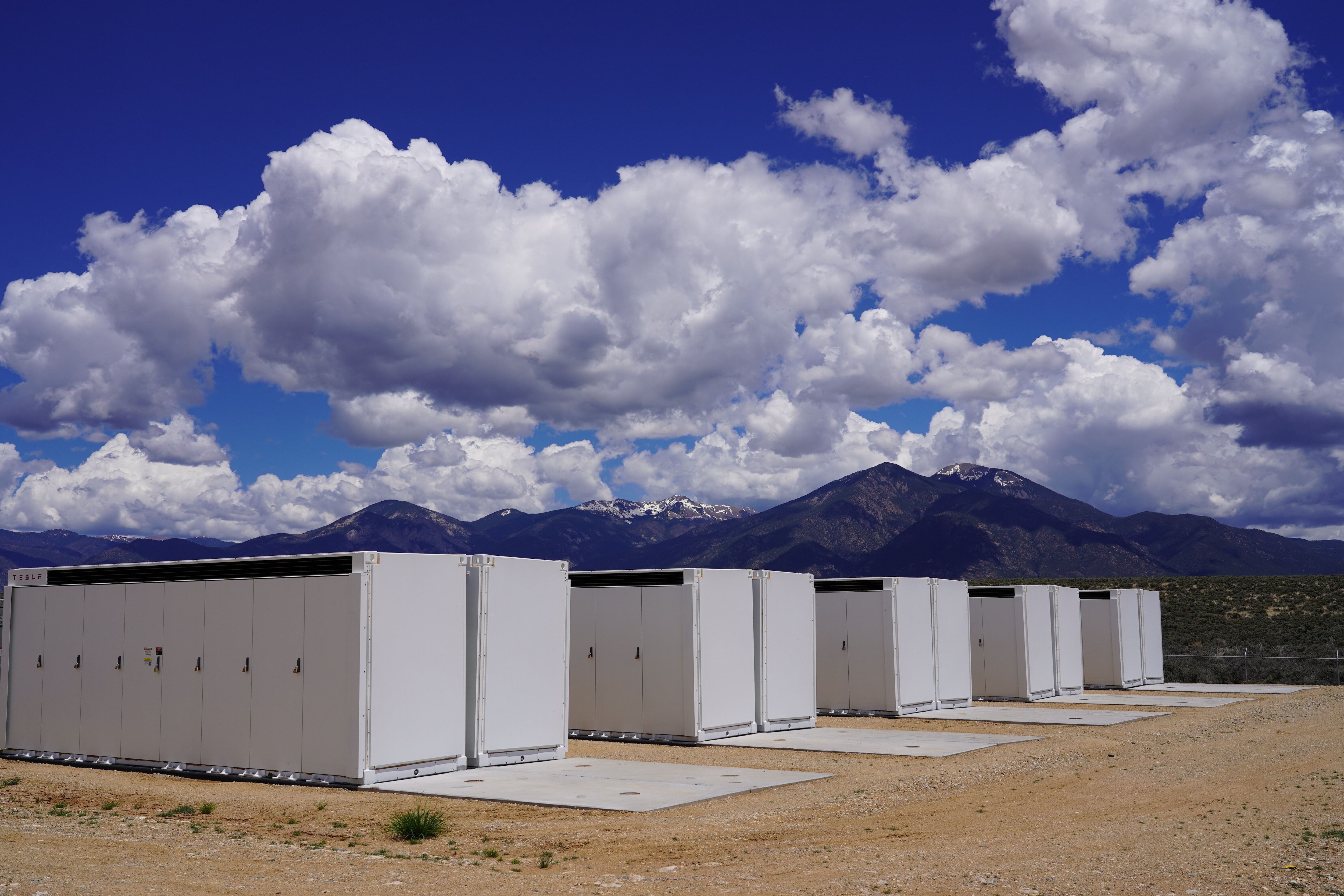
Batteries maximize the energy supply of locally produced solar electricity. Above, a battery energy storage system (BESS) in the US town of Taos, New Mexico Image: Kit Carson Electric Cooperative
- Taos, a town in the US state of New Mexico, saw its energy supply costs nearly double between 2000 and 2016.
- But since the town became an "energy community" that manages its own generation and supply, it has cut costs and taken control of its energy supply.
- These six lessons learned in Taos could help other energy communities around the world to cut the cost of electricity.
In 2011, the Groundhog Day Blizzard triggered a natural gas cut-off, leaving Taos, a town in the US state of New Mexico, without heat for a week in temperatures as low as -30°F.
As residents relied on electric space heaters, immense strain hit the local electricity system. The operator, Kit Carson Electricity Cooperative (KCEC), had to accept the prices it was charged for power by suppliers it had signed contracts with.
Between 2000 and 2016, KCEC’s wholesale power costs nearly doubled due to frequent supplier rate hikes. In a community where per capita income is 24% below the national average, taking control of the electricity supply became an economic necessity.
Creating 'the Taos model'
Today, Taos is powered by 100% solar during the day with batteries that extend the “solar day” into the evening hours. Its electricity prices are on a par with the US average, the same as they were in 2016 and fixed to 2040. The area’s solar and battery assets are built and maintained by a local workforce. Annual electricity consumption is 75-80% renewables, which includes 45% local solar and 35% wind contracted from other areas.
Energy communities like Taos are legal entities that allow citizens, small businesses and local authorities to jointly own and manage energy projects. The US National Renewable and Energy Lab (now the National Laboratory of the Rockies) and the US Department of Energy have featured “the Taos model” of energy supply in their publications as an example of how taking control can reduce electricity costs for local communities.
Here are six lessons learned in Taos that could help other energy communities around the world that want to cut the cost of electricity:
1. How to manage electricity supply activities, contracts and partners
When KCEC exited its energy supply contract in 2016, it had to restructure who would be responsible for the activities that were previously the responsibility of the electricity supplier.
Energy communities often lack the technical ability to talk to regulators, system operators and transmission providers. KCEC hired retired utility executives who were familiar with the interconnections, grid codes and regulations to support contract negotiations.
Previously, all control was with the electricity supplier. Now, if KCEC finds an opportunity to add solar and storage, KCEC can pursue it. KCEC and its current supply partner are in the seventh amendment of their initial contract first signed 10 years ago. Both have expanded their activities as they gained experience, built new skills and found new areas of value.
2. How to grow and manage a power generation portfolio
KCEC’s generation portfolio has grown from 2.5 megawatts (MW) of solar in 2015 to around 100 MW of solar, batteries, microgrids and clean hydrogen (produced using solar and water) operating or under construction today.
KCEC’s asset portfolio is managed by a mix of staff and third parties. By establishing a four-year apprenticeship initiative and partnering with the National Rural Electric Cooperative Association (NRECA), as well as equipment vendors and regional schools and colleges, KCEC has built a robust workforce development programme.
New energy supply-related ideas and opportunities can come from KCEC’s own team, external developers, partners and members. And cost does not have to be their first consideration.
3. How to build system resilience and manage risk
In addition to winter storms, Taos County also faces wildfire risk, which can create the need for Public Safety Power Shutoffs (PSPS). In 2022, for example, two wildfires surrounded Taos.
Decisions made during the first minutes and hours of these events can make a significant difference. KCEC is now building microgrids because 4-6 hours of battery power can support the wider emergency planning team, such as fire departments, and increase local resilience – by ensuring fire, water and waste, and medical services can continue to operate.
4. How to develop electricity system planning expertise
KCEC transitioned from being a passive “reviewer” to a proactive developer of load forecasts and production plans that reflect its objectives.
While initially reliant on third parties, KCEC built in-house energy supply expertise by directly managing data on loads, energy generation and future projects. Central to this planning is the use of real-time data to manage export limits, optimize battery energy storage system performance and achieve the lowest possible electricity costs.
5. How to use communications data and technology effectively
KCEC’s communications infrastructure enables it to meter, visualize, monitor and remotely manage energy assets. It can also optimize batteries, participate in wholesale markets and test innovative applications.
This communications infrastructure is as critical as any physical electrical equipment. A lean IT team collaborates with third parties, academia and national labs to maintain these systems and shares its expertise with the nearby university, college and high school to foster local expertise.
6. How to get the best results from member engagement
KCEC stakeholders are not energy people. For every energy supply project, KCEC uses around 70 consumer advisories, does public presentations, engages with local media and solicits user feedback (good and bad).
The language that KCEC uses with its members – the people and businesses that use its power – reflects their diverse reasons for supporting new projects – whether that's to lower costs, add more renewables, create an alternative revenue stream for a casino, or to be able to hunt elk drinking from a clear stream under a blue sky from four hundred meters.
Taking the Taos model worldwide
More than 20 years ago, KCEC was a price taker, delivering expensive, largely coal-fired electricity to members who had no choice and faced electricity supply risks during cold winters or fire seasons.
Today, KCEC controls a large solar and battery portfolio and is increasing local resilience by building microgrids. KCEC is also developing the next generation of leaders, offering community members a pathway to high-demand jobs in the clean energy sector.
For those of us who grew up in Taos, this land is more than a place on a map. It is where we were raised, where our families built their lives and where our traditions continue. Other energy communities can – and should – implement the Taos model, which is about community, even more than energy.
Don't miss any update on this topic
Create a free account and access your personalized content collection with our latest publications and analyses.
License and Republishing
World Economic Forum articles may be republished in accordance with the Creative Commons Attribution-NonCommercial-NoDerivatives 4.0 International Public License, and in accordance with our Terms of Use.
The views expressed in this article are those of the author alone and not the World Economic Forum.
Stay up to date:
Net Zero Carbon Cities


Forum Stories newsletter
Bringing you weekly curated insights and analysis on the global issues that matter.
More on Energy TransitionSee all

Prajeev Rasiah
September 23, 2026


