AI is changing the factory floor – here's what to expect
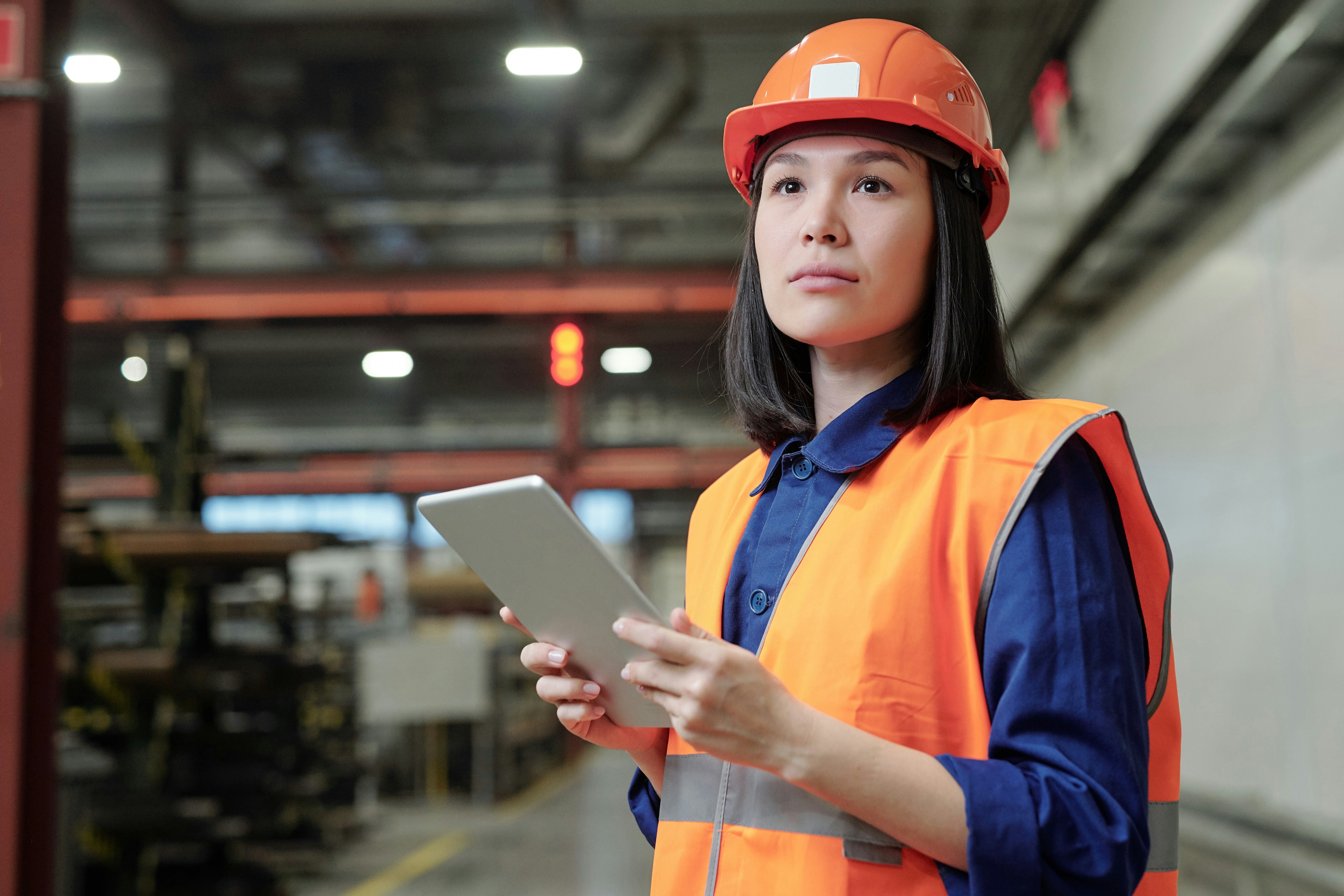
Intelligent manufacturing means that, as human and machine collaboration deepens, frontline roles will become more specialized and knowledge-intensive. Image: UnsplashPlus/Getty Images
- Through intelligent manufacturing, robots are increasingly handling repetitive, data-rich and physical tasks while artificial intelligence (AI) systems monitor processes.
- But as machines take on more, the work that people do will become more specialized and knowledge-intensive – and more important than ever.
- The World Economic Forum's Human-Machine Collaboration (HMC) initiative, launching in June 2026 at the Annual Meeting of New Champions in Dalian, China, will explore how intelligent manufacturing is transforming work, skills and jobs.
The floor vibrates under your boots before you clear the factory entry gate. You step into a fabrication hall, eight stories of glass and steel, lit by the blue-white glow of chambers where solar cells are grown.
Below you, panels move, not on conveyor belts or forklifts, but on autonomous mobile robots – low, flat platforms that navigate the floor without fixed paths, rerouting in real time around each other, workers and anything else that moves.
Across manufacturing and supply chain operations, the line between what machines and people do is rapidly evolving. Robots are increasingly handling repetitive, data-rich and physical tasks while artificial intelligence (AI) systems monitor processes. But as machines take on more tasks, the work that remains for people will be more important than ever.
Back on the floor of our not-to-distant future factory, autonomous robots carry individual modules, sensors adjusting for vibration, tilt and load. The process is precise, but it is not perfect. Small differences in quality, material consistency or humidity can build up across steps. A solar panel layer that looks clean on inspection may carry tiny defects that only show up months later.
This is where the system reaches its limits. And where a different kind of work begins.
A new kind of factory role
Dao is on the mezzanine, one level above the factory floor. She does not operate a machine, she watches how the system behaves.
This means monitoring multiple production lines. On the first line, silicon wafers – a key component of semiconductors – move through cleaning, surface texturing and coating stages. Each stage affects how the finished cell converts sunlight into electricity. On a second line, coatings are applied at lower temperatures. On a third, newer line, two novel materials are layered on a cell to optimally capture different ends of light spectrum.
Dao's role did not exist 10 years ago. It sits at the intersection of process engineering, data interpretation and systems thinking. This is one of the defining patterns of the next generation of industrial work: As machines handle more of the execution, human roles will shift toward oversight, judgement and cross-system coordination.
Manufacturing workflow in practice
Looking at the monitor to her right, Dao can see that the chamber depositing light-absorbing layers on the new line is running slightly hotter than expected. It’s not enough to trigger an alert, but the trend across the last six batches shows the temperature creeping upward, which may weaken their structure. She adjusts the gas flow to bring the temperature down and tags the batch so she can check the impact later.
Then Dao notices something on her left screen. Silicon wafers from a Xi’an supplier are showing slightly higher resistance at their contact points – the spots where thin metal lines are printed onto each wafer to carry electricity out of the solar cell.
Dao pulls eight weeks of records to see how far the effect has spread through the process, logs her observations and adjusts the chemical cleaning process. She looks at the data on her screen. The issue clears. The line does not stop.
Three times a shift, Dao leaves her station and walks the floor. Near the lamination station, where layers of glass and protective film are pressed together under heat to seal each panel, she notices that the robots carrying modules from line one are zipping faster than usual. Speed can cause vibrations, and vibrations can impact sensitive components.
The robots' routing logic and the lamination quality system do not share a data model, so no alert was sent. Maybe there was a bottleneck at the loading dock earlier and the robots are trying to compensate by increasing their speed? Dao flags her observation for the engineering and logistics teams.
Each batch, adjustment and flagged issue becomes part of a record that link conditions to performance. Some of what Dao logs will matter right away. Some will only make sense in six months.
This kind of work – spotting technically acceptable patterns, connecting signals across technology systems and making adjustments that prevent larger problems – is the "human layer" of advanced manufacturing. People enable machines to work at their best.
New skills and specializations
Dao's shift ends soon and Meilin arrives to replace her. They greet each other, smiling. They watch the same system, but not in the same way.
Meilin focuses on lamination. Dao focuses on material behaviour. Their different specializations grew from preferences, shared logs, overlapping shifts and continuous interaction with a complex system.
As human and machine collaboration deepens, frontline roles will become more specialized and more knowledge-intensive. They will also become more dependent on skills that are difficult to automate, such as cross-system judgement, contextual problem-solving and the ability to act on incomplete information.
What next for intelligent manufacturing?
Dao is fictional, but the work she represents is not.
The World Economic Forum's Human-Machine Collaboration (HMC) initiative, launching in June 2026 at the Annual Meeting of New Champions in Dalian, China, will explore how work, skills and jobs are transforming in industrial settings. It will recommend strategies to help frontline workers, organizations and the wider ecosystem navigate that change.
This will include a set of practical resources and an activation playbook for organizations navigating the shift to more intelligent manufacturing processes. HMC will also provide guidance for workforce development, skills-based role design and ecosystem recommendations.
The partnership between humans and machines will define the next generation of industrial work. Will organizations, workers and institutions be ready for it?
Don't miss any update on this topic
Create a free account and access your personalized content collection with our latest publications and analyses.
License and Republishing
World Economic Forum articles may be republished in accordance with the Creative Commons Attribution-NonCommercial-NoDerivatives 4.0 International Public License, and in accordance with our Terms of Use.
The views expressed in this article are those of the author alone and not the World Economic Forum.
Stay up to date:
Artificial Intelligence
Related topics:


Forum Stories newsletter
Bringing you weekly curated insights and analysis on the global issues that matter.
More on Artificial IntelligenceSee all

Ariel Kastner, Miriam Schive, Sannan Pervaiz and Jessica Margolis
October 2, 2026


