Japan is reshaping disaster preparedness through data and collaboration
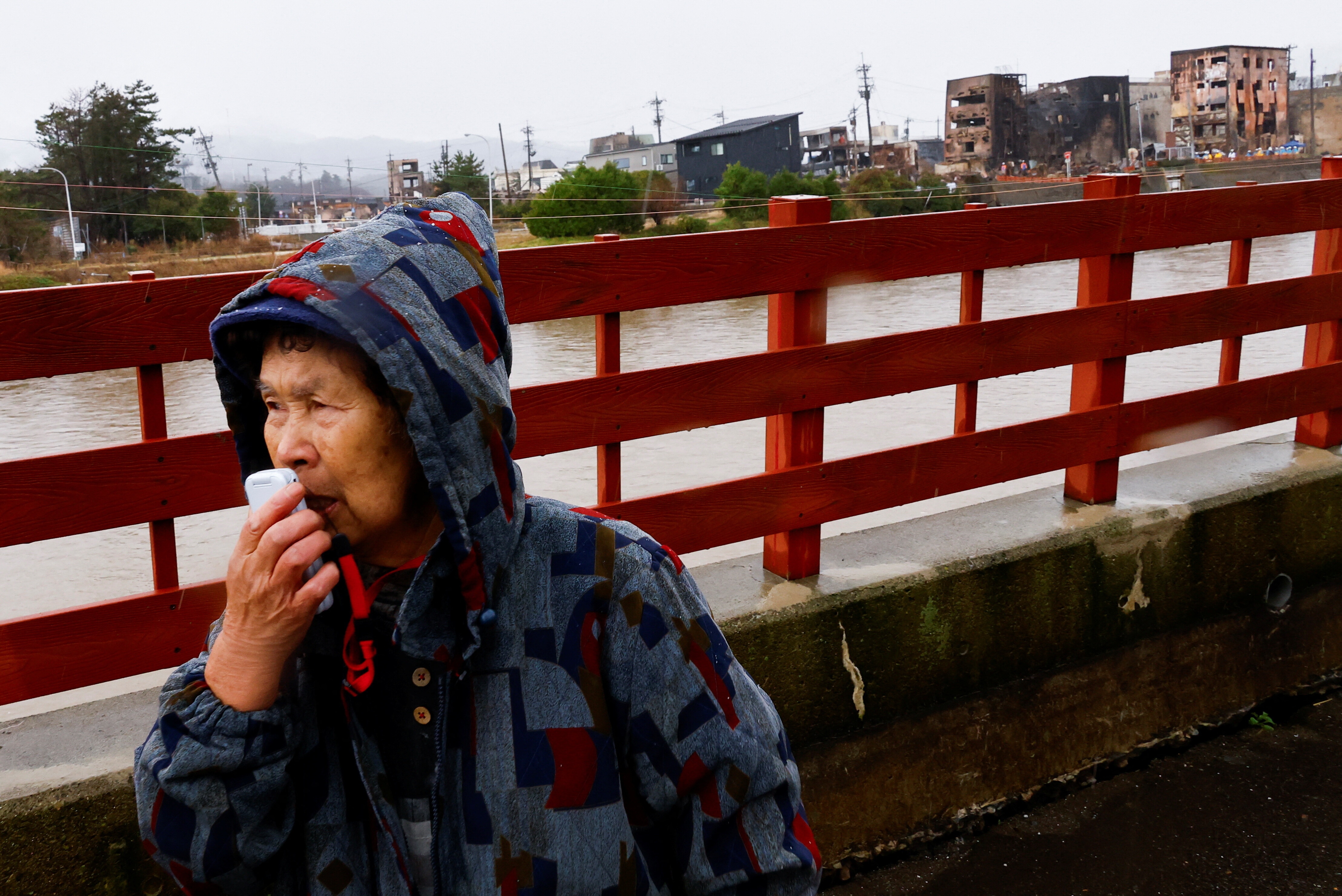
Japan is highly prone to earthquakes and other natural disasters, and has become a global leader in preparedness and response. Image: REUTERS/Kim Kyung-Hoon
- Japan will invest roughly $134 billion between 2026 and 2030 to strengthen disaster resilience and address ageing infrastructure.
- A new centralized Disaster Management Agency launches in November 2026, shifting Japan's approach from reactive response toward long-term preparedness.
- AI, digital transformation and deeper public-private collaboration are reshaping how Japan detects, responds to and recovers from disasters.
On 20 April 2026, a magnitude 7.7 earthquake struck off Japan’s Sanriku coast, causing strong tremors across northeastern Japan, including Aomori Prefecture, and triggering tsunami warnings. The quake was felt as far away as Tokyo, roughly 700 kilometres from the epicentre, underscoring the wide-reaching impact of seismic events in Japan. Just one week later, another earthquake measuring magnitude 6.5 struck Hokkaido; another reminder of Japan's exposure to earthquakes.
In a country so frequently affected by earthquakes, typhoons and floods, Japan has continuously revised and strengthened its disaster preparedness measures based on lessons learned from past crises. The year 2026 marks major milestones: 15 years since the Great East Japan Earthquake, 10 years since the Kumamoto earthquakes and two years since the Noto Peninsula earthquake. These anniversaries are accelerating the momentum for disaster management updates.
Japan's new disaster management agency
One of the most significant developments is the launch of a new Disaster Management Agency in November 2026. The agency will serve as a centralized command body overseeing preparedness, emergency response, recovery and reconstruction.
Until now, Japan’s disaster management system has often been forced to prioritize immediate response to frequent disasters, leaving limited capacity for long-term preparedness. The new agency aims to address this challenge through three core functions:
1. Developing national disaster strategies based on long-term risk analysis.
2. Accelerating preventive disaster preparedness.
3. Coordinating integrated responses from emergency response through recovery.
The agency ultimately aims to build a “disaster-resilient nation that prioritizes human life and dignity”. By strengthening preparedness and streamlining post-disaster response, it is expected to minimize the impact of future disasters.
What role does preventive reinforcement of infrastructure play?
Routine inspection and maintenance of infrastructure during normal times plays a critical role in reducing disaster damage.
Under the government’s first national resilience implementation midterm plan, Japan will invest more than 20 trillion yen ($134 billion) between fiscal years 2026 and 2030 to strengthen disaster resilience and address ageing infrastructure.
About half of the total will be allocated to strengthening lifeline infrastructure, including water and sewage systems, through preventive maintenance. In addition, around 5.8 trillion yen will be invested in disaster prevention infrastructure, while around 1.8 trillion yen will support stronger public-private collaboration and regional disaster resilience. A further 0.3 trillion yen will be directed toward the use of emerging technologies, with the overall aim of strengthening resilience in a comprehensive manner.
The goal is to strengthen essential infrastructure before disasters occur, minimizing disruption to people’s daily lives when crises strike.
How is disaster prevention advanced through digital transformation
Japan’s Digital Agency is also working with the private sector to advance disaster prevention DX. One major focus is improving information-sharing during disasters. Effective disaster response depends on rapidly understanding damage, making informed decisions and coordinating action. By digitally connecting national agencies, local governments and public institutions, Japan aims to enable faster and more accurate responses.
In collaboration with the disaster prevention DX public-private co-creation council, the Digital Agency is promoting a range of initiatives, including data-sharing systems that help residents receive tailored support during disasters. It has also launched online catalogues and service maps to help municipalities procure disaster-response apps and digital services more efficiently. Additional efforts include pilot projects using digital technologies in evacuation shelters and the establishment of digital disaster-response support teams.
Meanwhile, Japan’s Cabinet Office operates the Disaster Prevention x Technology Public-Private Partnership Platform, which connects local governments with companies offering advanced disaster-response technologies. The platform operates a free matching website used by approximately 3,000 registered organizations and hosts matching seminars that bring together public bodies and companies, as well as private-sector firms themselves, to encourage collaboration. Through these initiatives, it is working to strengthen resilience across society as a whole.
Private-sector innovation in disaster technology
Private companies are also accelerating the development of disaster technologies powered by AI and other emerging technologies. Applications include flood prediction, damage estimation, fire detection, real-time social media analysis, evacuation support and disaster-response chatbots.
One example is Spectee Pro, which uses AI to analyze text and images posted on social media in real time and rapidly provide situational updates to governments and businesses. This allows organizations to grasp the overall disaster situation far faster than would be possible through manual analysis alone, enabling quicker and more effective decision-making.
Updating disaster preparedness for a more resilient future
Together, these initiatives demonstrate how Japan’s disaster management approach is evolving from fragmented response systems toward a more integrated, data-driven model. The establishment of a centralized disaster agency, preventive infrastructure investment and expanded use of digital technologies are helping build a system that connects preparedness, emergency response and recovery more seamlessly.
At the same time, advances in AI and deeper public-private collaboration are improving the speed and accuracy of decision-making during crises. These developments suggest that Japan is building a new model for disaster resilience, one that could play an increasingly important role in addressing future climate and disaster risks.
Don't miss any update on this topic
Create a free account and access your personalized content collection with our latest publications and analyses.
License and Republishing
World Economic Forum articles may be republished in accordance with the Creative Commons Attribution-NonCommercial-NoDerivatives 4.0 International Public License, and in accordance with our Terms of Use.
The views expressed in this article are those of the author alone and not the World Economic Forum.
Stay up to date:
Pandemic Preparedness and Response
Related topics:


Forum Stories newsletter
Bringing you weekly curated insights and analysis on the global issues that matter.
More on Geographies in DepthSee all

Karikari Achireko
October 2, 2026


