Opinion
Asia's challenges lie in the contrast between hypermodernity and fragility
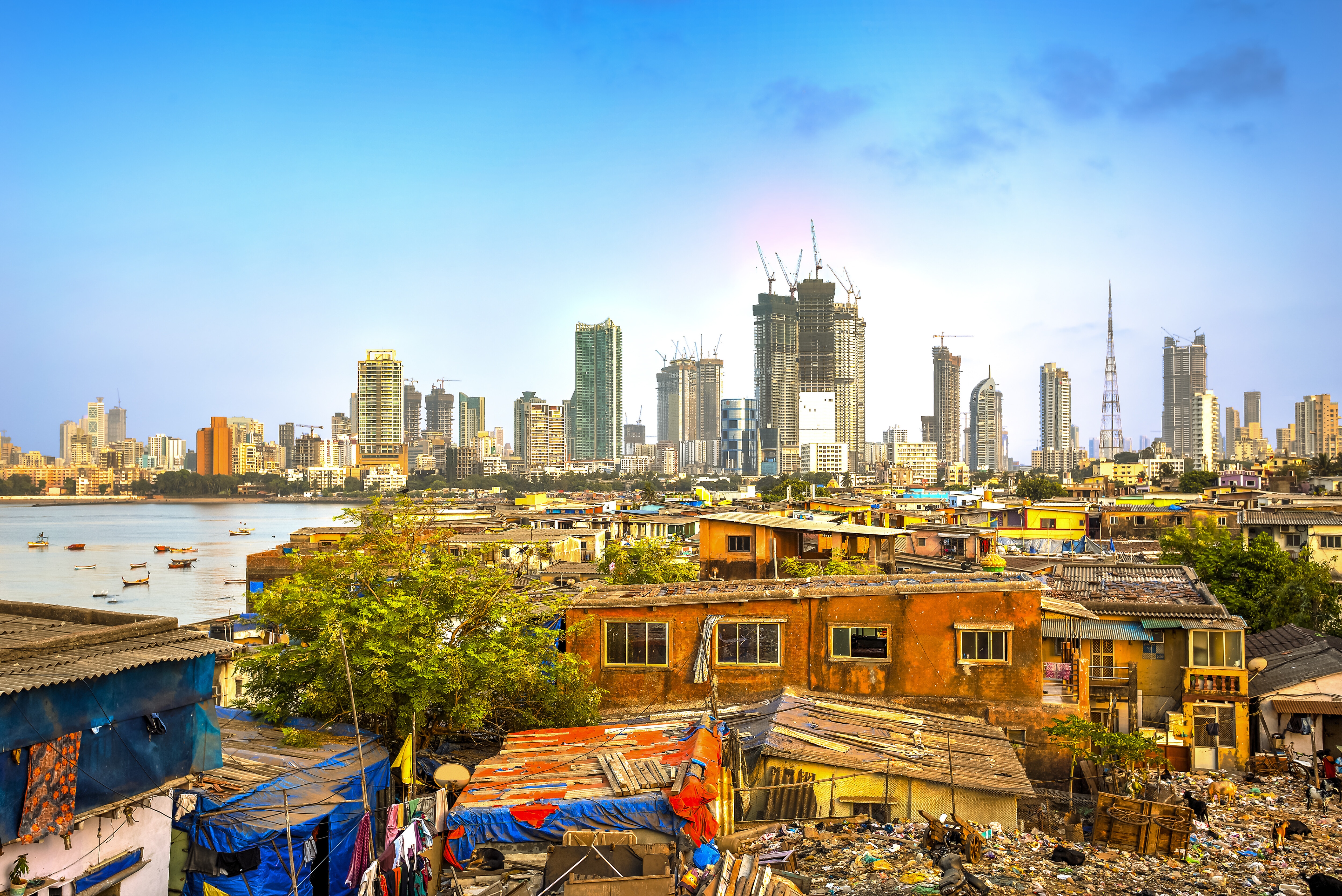
Asia is both an economic powerhouse and climate vulnerable. Image: Getty Images/iStockphoto
- Asia is asserting itself as the world's new centre of gravity, driven by growth, technological revolution and geopolitical influence.
- Yet the rising power of the world's most populous continent is built on fault lines that make it a region of profound paradoxes.
- Asia must overcome its challenges through strengthened cooperation, inclusive governance and long-term vision.
The largest and most populous continent on the planet, Asia is home to nearly 60% of the global population. China and India alone account for more than 2.9 billion people – more than all other continents combined.
As early as 1993, books were heralding an "Asian Renaissance" and celebrating the region's "economic miracle". Today, that momentum has only grown stronger: Asia is asserting itself as the world's new centre of gravity, driven by sustained growth, a technological revolution and an ever-expanding geopolitical influence.
Yet this rising power is built on deep fault lines – demographic, climatic and security-related – that make it a continent of profound paradoxes.
A striking demographic contrast
In April 2023, India officially surpassed China to become the world's most populous country, with 1.46 billion inhabitants. At the other end of the spectrum, nations such as Bhutan and Brunei count fewer than one million residents, illustrating a demographic diversity unmatched anywhere else on Earth.
This disparity also plays out in age structures. Northeast Asia – Japan and South Korea, in particular – is grappling with rapidly ageing populations, with median ages between 45 and 50, placing enormous pressure on pension and healthcare systems.
Southeast Asia, by contrast, enjoys a young and dynamic demographic profile, with median ages ranging from 25 to 35 — a genuine demographic dividend, provided it is matched by adequate investment in education and economic opportunity.
Compounding these contrasts is a wave of accelerated urbanization. The mass migration of populations toward major metropolitan areas is overwhelming infrastructure, producing chronic traffic congestion – Bangkok, Manila, and Jakarta rank among the world's most gridlocked cities – and generating alarming levels of pollution with direct consequences for public health.
A reshaping of the global economic order
Asia is at the centre of a profound reconfiguration of global trade, driven by competing large-scale initiatives.
China, through its Belt and Road Initiative, is connecting more than 80 countries via sea and land routes, channelling massive investments into infrastructure – ports, airports, highways and railway lines – with the strategic goal of structuring global trade flows to its advantage.
In response, India launched the India-Middle East-Europe Economic Corridor (IMEC) at the G20 Summit in 2023, an alternative trade route designed to link South Asia to Europe while bypassing China's sphere of influence.
Meanwhile, the Regional Comprehensive Economic Partnership (RCEP), which entered into force in January 2022, stands as the largest free trade agreement in the world. Bringing together the 10 ASEAN nations alongside Australia, China, Japan, South Korea and New Zealand, it represents approximately 30% of global GDP and outlines an integrated zone of prosperity on an unprecedented scale.
Taken together, these initiatives signal an Asia that no longer simply accepts the rules of global trade – but is actively working to rewrite them.
Accelerating climate disruption
Asia is on the front line of climate change, and its most vulnerable populations – women, children and the elderly living in rural areas – are bearing the heaviest burden.
Extreme weather events are multiplying devastating floods in China, Vietnam and Thailand; major earthquakes in Japan; and rising sea levels threatening the densely populated river deltas of Bangladesh and Vietnam. What were once exceptional occurrences are rapidly becoming the norm.
Policy responses remain uneven. China combines massive investment in renewable energy – it is now the world's leading producer of solar and wind power – with the continued operation of a still heavily carbon-dependent industrial sector. Other countries in the region struggle to finance their transition, constrained by limited resources.
New technologies, however, offer promising prospects: artificial intelligence (AI)-powered risk modelling, early warning systems and satellite mapping of vulnerable areas. These tools can help anticipate disasters and reduce their impact – but only if governments commit to deploying them at scale.
Technology and urban modernity
Asia is at the forefront of the digital revolution and the rise of the smart city. Shenzhen, Singapore and Tokyo exemplify this model, integrating AI, the internet of things and big data to optimize urban mobility, energy management, public safety and citizen services.
Yet the challenges extend well beyond technology alone. They encompass the adoption of digital tools by the wider population, the development of local talent, the availability of quality data across vastly different languages and cultural contexts, and the building of open, interoperable infrastructure.
The digital divide between well-connected metropolises and isolated rural communities remains one of the region’s most significant social cohesion challenges.
Geopolitics in a fragile region
Asia is crossed by multiple fault lines that make it one of the world's most volatile regions from a security standpoint.
Territorial disputes persist along several borders: between Thailand and Cambodia over the Preah Vihear temple, between India, Pakistan and China in the Kashmir region, and more recently in the Strait of Hormuz. The Taiwan question represents a major flashpoint between China and the United States, while China's assertive claims in the South China Sea are being resisted by the Philippines, backed by Washington.
The Indo-Pacific has become the primary theatre of Sino-American rivalry. Both powers are deploying their alliances – AUKUS, the Quad and bilateral agreements — and positioning their militaries in a strategic competition that is redrawing the regional balance of power. In this environment, smaller states are often forced to navigate carefully between the blocs, seeking to preserve their autonomy without alienating either side.
The contradictory face of Asia
Asia presents a deeply contradictory face: demographic and economic powerhouse on one hand, climate-vulnerable and geopolitically fractured on the other.
The French philosopher and sociologist Edgar Morin introduced the concept of polycrisis as early as 1993 in his book Terre-Patrie — a situation in which multiple crises erupt simultaneously, feed off one another and produce amplified, unpredictable consequences. Contemporary Asia is a vivid illustration of precisely that.
This reality speaks to a fundamental truth: the impermanence and interdependence of all things. The challenges this continent faces can only be overcome through strengthened cooperation, inclusive governance and long-term vision.
It is on these foundations that Asia will be able to fulfil the promise of its renewal – and perhaps bring a measure of much-needed harmony to a world in search of it.
A version of this article also appears on the Les Rencontres Économiques website.
Don't miss any update on this topic
Create a free account and access your personalized content collection with our latest publications and analyses.
License and Republishing
World Economic Forum articles may be republished in accordance with the Creative Commons Attribution-NonCommercial-NoDerivatives 4.0 International Public License, and in accordance with our Terms of Use.
The views expressed in this article are those of the author alone and not the World Economic Forum.
Stay up to date:
Geopolitics


Forum Stories newsletter
Bringing you weekly curated insights and analysis on the global issues that matter.
More on Global RisksSee all

Sebastian Hallensleben and Francesca Bosco
October 8, 2026


