Extreme heat is the next big economic risk for Asia and the Pacific. Resilience is key
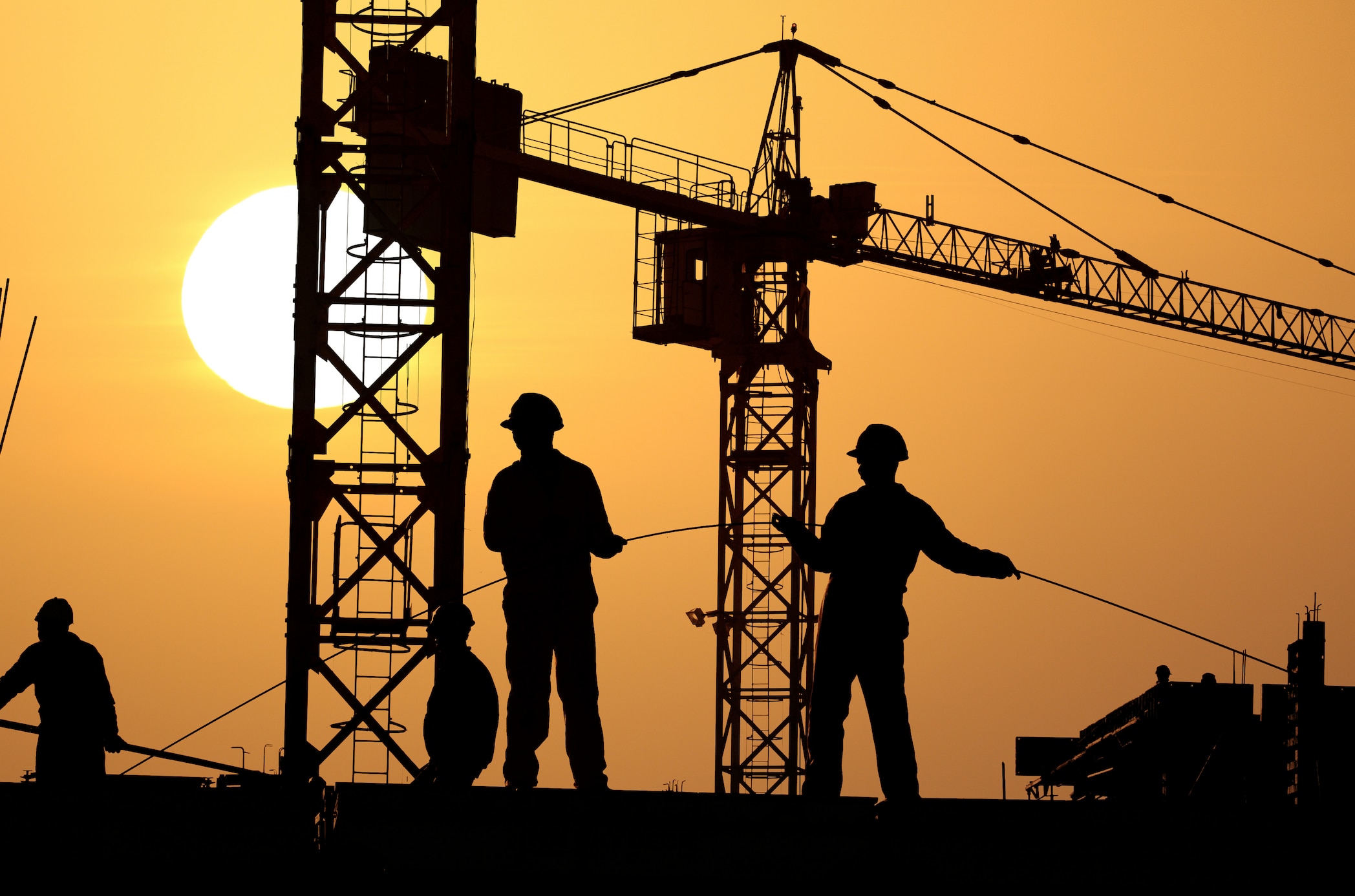
For millions of people that work outdoors or in poorly ventilated spaces, extreme heat affects health, productivity and income. Image: Shutterstock/sculpies
- Asia is warming almost twice as fast as the global average, which is leading to more extreme weather events throughout the continent.
- Extreme heat is becoming a systemic risk to labour markets, infrastructure, supply chains and economic growth across Asia and the Pacific - resilience must become a core economic and investment priority.
- Scaling promising ideas to impact issues like climate resilience is a key focus at the World Economic Forum’s Annual Meeting of the New Champions, also known as 'Summer Davos', in China from 23–25 June 2026.
Extreme heat is rapidly becoming one of the defining risks shaping the future of Asia and the Pacific. Once considered seasonal disruptions, heatwaves are now arriving earlier, lasting longer and reaching unprecedented intensity across the region.
Asia is warming almost twice as fast as the global average, according to the World Meteorological Organization, amplifying the frequency and severity of extreme weather events. Many cities across the region have experienced record-breaking temperatures in recent years, risking the health of communities and placing growing pressure on public health systems, infrastructure and economies.
The consequences extend beyond discomfort, undermining labour productivity, public health, business resilience and energy systems.
Communities on the frontline
While heat affects everyone, it does not affect everyone equally. The people most exposed to extreme heat are often those with the fewest resources to adapt.
Across Asia and the Pacific, prolonged heatwaves raise the risk of dehydration, cardiovascular disease, respiratory illness and heatstroke, particularly among lower-income communities. In dense cities, the urban heat island effect and poor housing make this worse, especially in informal settlements where tin roofs and poor ventilation can trap heat indoors.
The impacts ripple through entire communities. Heatwaves threaten food security, reduce household incomes and strain health systems. Women face heightened burdens during heatwaves, with 60% seeing an increase in unpaid labour during extreme heat events as they take on extra caregiving, water and food duties.
Access to cooling solutions is becoming another dividing line. Lower-income households and informal workers are often the least able to access cooling technologies or climate-resilient housing. This leaves them disproportionately exposed to dangerous heat. As heatwaves intensify, this divide may become one of the region’s defining development challenges.
The heat health crisis is also economic
What begins as a health crisis quickly becomes an economic one.
For workers and businesses, the impacts are already visible: workers tire faster, concentration declines and safety risks rise, while productivity and incomes fall.
The Asia and the Pacific region is particularly exposed. Around 75% of its workers were already exposed to excessive heat in 2020, higher than the global average of 71%, according to the International Labour Organization (ILO). For millions working outdoors or in poorly ventilated spaces, extreme heat is a daily workplace risk affecting health, productivity and income.
Low-income and informal workers are most vulnerable. Construction workers, street vendors, delivery drivers and farm labourers may work through dangerous temperatures because cutting hours is not financially possible.
By 2030, the capacity of outdoor workers could decline by more than 50% in some parts of Asia. Agriculture is especially vulnerable, with implications not only for workers and farmers, but also for food systems, exports and rural economies. In the Pacific, marine heatwaves are bleaching coral reefs and disrupting fisheries and tourism, which island economies rely on.
And the risks extend beyond outdoor work. Factory and warehouse staff in poorly cooled buildings are also exposed. As indoor temperatures rise, productivity falls and equipment failures become more common, destabilizing supply chains across sectors.
Over time, these pressures ripple through economies, affecting growth and competitiveness. The ILO estimates that heat stress could cause the loss of the equivalent of 13 million jobs across ASEAN economies by 2030. China, for example, could face economic losses equivalent to roughly 2.7% of GDP by 2060 due to heat-related manufacturing supply chain disruptions.
But businesses cannot act alone. Their ability to adapt depends on the enabling environment set by governments, infrastructure and finance.
The strain on energy and cooling systems
Extreme heat has also exposed a vulnerability at the heart of the region’s growth story: energy infrastructure.
During heatwaves, electricity demand surges as cooling use rises, yet power generation itself becomes less efficient in extreme temperatures. Solar panels lose efficiency above 25°C, thermal power plants struggle as cooling water warms, and electricity grids and transmission systems face greater stress and overheating.
This creates a dangerous feedback loop as the hotter it gets, the more economies depend on cooling systems that strain already vulnerable energy infrastructure. Recent heatwaves have triggered blackouts across several countries in the region, affecting businesses, hospitals and households alike.
Cooling is therefore essential for protecting health, productivity and resilience, but it already accounts for roughly 7% of global greenhouse gas emissions. Asia and the Pacific are responsible for around 62% of cooling-related emissions globally.
A rapid shift to energy-efficient cooling, resilient grids and low-carbon energy systems will ensure adaptation does not reinforce the climate pressures it seeks to address.
Resilience through investment at scale
To protect the region’s workforce and economies from extreme heat, resilience must become a core economic and investment priority.
Regional collaboration and knowledge sharing is equally important to help countries replicate what works and to accelerate progress. The Asian Development Bank’s Urban Heat and Health (HEAT) Toolkit was developed to help cities translate climate and health data into practical adaptation and investment decisions.
Combining urban heat mapping, hotspot analysis and solution prioritization, the toolkit helps identify where interventions can deliver the greatest benefits for vulnerable communities. In Jakarta, it was used to map heat-risk hotspots by assessing heat exposure alongside factors such as population vulnerability, critical infrastructure, informal settlements and access to cooling and healthcare.
ADB is now sharing these approaches through regional training and knowledge exchange programmes, helping countries accelerate action and strengthen resilience across Asia and the Pacific.
Extreme heat as a systemic risk
Rather than simply an environmental or seasonal challenge, extreme heat is becoming a systemic risk to labour markets, infrastructure, supply chains and economic growth across Asia and the Pacific.
And so heat resilience should no longer be treated as a niche climate issue or a corporate social responsibility initiative, but as a foundation for long-term economic stability and competitiveness.
How governments, businesses and financial institutions respond now will help determine, not only the region’s climate resilience, but also its long-term productivity and competitiveness.
The Forum is spotlighting how innovation moves from breakthrough to scale to impact ahead of 'Summer Davos' in China, 23–25 June 2026. Follow the latest.
Don't miss any update on this topic
Create a free account and access your personalized content collection with our latest publications and analyses.
License and Republishing
World Economic Forum articles may be republished in accordance with the Creative Commons Attribution-NonCommercial-NoDerivatives 4.0 International Public License, and in accordance with our Terms of Use.
The views expressed in this article are those of the author alone and not the World Economic Forum.
Stay up to date:
Climate and Health
Related topics:


Forum Stories newsletter
Bringing you weekly curated insights and analysis on the global issues that matter.