How the energy transition could benefit from better storytelling
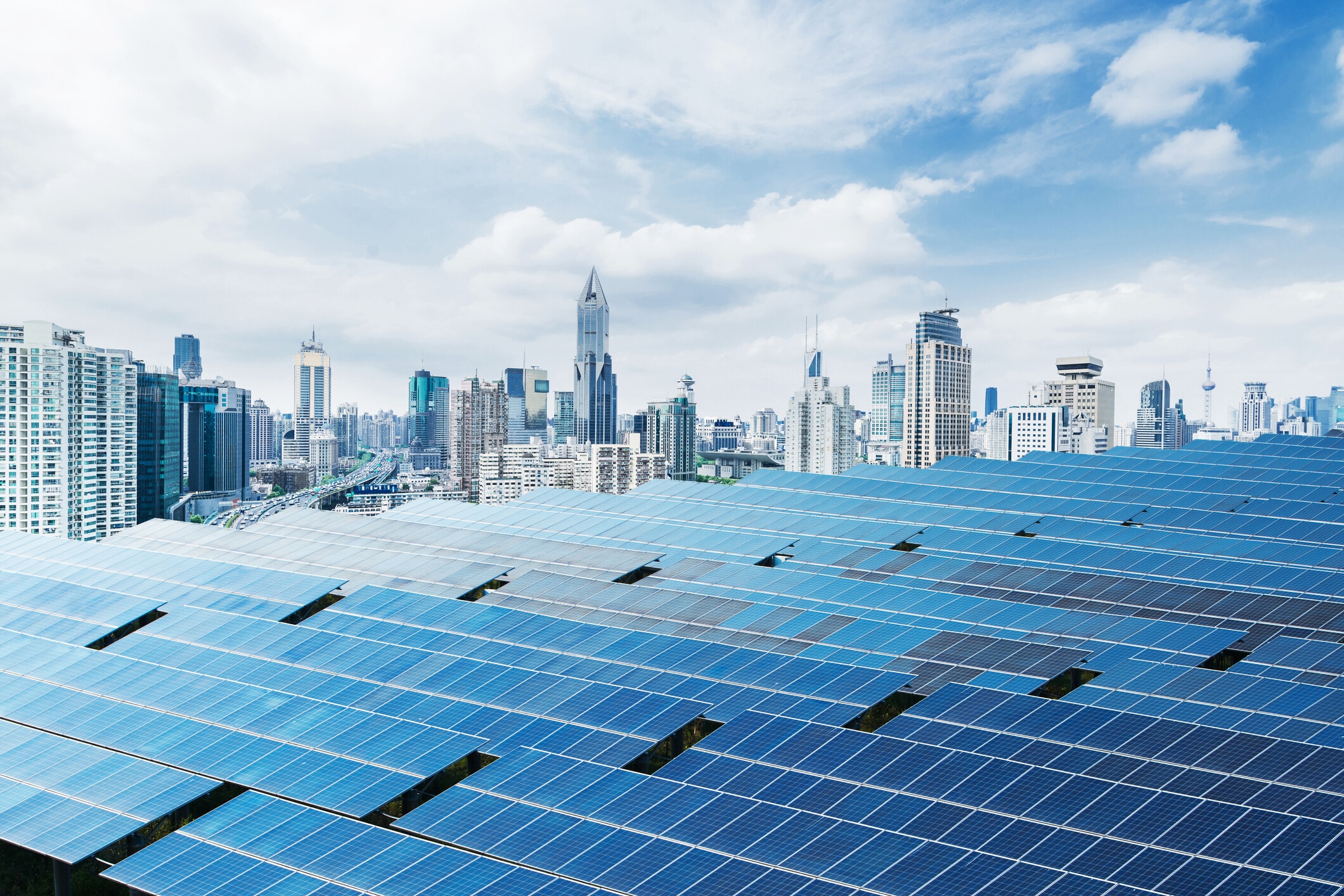
The energy transition: Shanghai, China provides a backdrop for a solar energy project. Image: Getty Images/WangAnQi
- The energy transition is accelerating as renewables are being installed at a record pace around the world.
- But the industry has, so far, proved better at building this new infrastructure than explaining its value.
- Scaling promising ideas for energy transition impact is a key focus at the World Economic Forum's Annual Meeting of the New Champions, also known as 'Summer Davos', in China from 23–25 June.
Renewable energy now accounts for nearly half of global installed capacity, according to the International Renewable Energy Agency — in China, that figure exceeds 60%. And the numbers keep climbing. But could a gap in public understanding create a genuine obstacle to a safer, more efficient energy transition?
The industry has mastered building clean energy infrastructure, but not communicating the value it can deliver. The gap between what the energy industry is doing and the general public's comprehension of it is quietly becoming one of the most underappreciated barriers to progress — and one of the least discussed.
Energy transition discourse has long centred on measuring installed capacity, technological breakthroughs and carbon reduction milestones — a language of achievement aimed at policy-makers and industry insiders. And now, large-scale renewables integration requires simultaneously managing generation, grids, consumption and storage.
This is a structural transformation that demands a more rational distribution of costs, responsibilities and benefits across the system.
Artificial intelligence (AI) infrastructure is accelerating this. Even advanced economies with mature power infrastructure are already feeling supply pressure from the scale-up of computing power. And this challenge is compounded by the need to work out how costs should be distributed, and who should ultimately benefit from the energy transition.
The industry's responses to these questions have not kept pace with the acceleration of clean energy installations. And when information gaps occur, there is always a danger that they'll be filled by inaccurate narratives.
Changing the energy transition narrative
Several major shifts are needed to ensure that the general public understands the energy transition.
First of all, the value of clean electricity is already measured by generation volume, but it should also be measured by whether it can underpin the future functioning of industries and society.
For climate-focused audiences, the emphasis should be on how much room renewables open up for industries to achieve the net-zero transition. For growth-focused audiences, the question is whether clean power can provide stable, low-carbon, dispatchable support for EV manufacturing, energy storage, data centres and high-end production.
The same facts, framed differently, speak to very different perceptions of value.
It's also important to note that technical achievements are best understood in relation to the systemic problems they solve.
Ultra-high-voltage transmission addresses the mismatch between resource-rich regions and load centres, for example. Solar PV costs have fallen by more than 90% in a decade, alongside sharp declines in new energy storage costs. This has collectively redefined the feasibility of the energy transition across the Global South.
And China's energy transition experience is notable for its internal diversity — from ecologically fragile zones to fossil-fuel use and high-tech clusters. This makes its approach to balancing transition and security a useful reference for countries at different stages of development.
Finally, using technical language judiciously will help to close the energy transition information gap. Power grids are one of the most complex man-made systems in existence. Terms like "peak and frequency regulation" and "source-grid-load-storage coordination" are standard within the industry, but are not typically understood outside of it.
More accessible language can help to translate the effects of complex system operations into economic realities that businesses and the public can understand and act on.
While the industry can't abandon technical rigour, it should help to support wider understanding of how the power system works and how it's evolving. This is ultimately about the public's right to understand a system that shapes their lives.
How to explain the energy transition clearly
The energy transition requires coordinated action from policy-makers, financial institutions, businesses and the public. And the quality of that coordination depends on whether all parties share a basic common understanding. Building that understanding through a common public language is essential.
There are three narratives the industry can use to explain the energy transition to the general public:
1. The energy transition is not an additional burden, it will reshape development logic
Scaling renewables improves carbon reduction metrics, but it also strengthens energy self-sufficiency and could boost manufacturing through a more stable low-carbon energy base.
And for many Global South countries with limited resources, the transition is not a cost borne to satisfy international climate commitments, it is a strategic choice to strengthen energy sovereignty and progress national development.
2. Broad societal participation is necessary and every stakeholder is a protagonist
In the past, energy production was centralized and the public was mostly at the end of the supply chain. Today, rooftop solar panels, electric vehicles and smart appliances can become a dispatchable node in the energy system.
In Jiangsu Nantong, for example, 83 enterprises have joined a citywide microgrid cluster. This shifts consumers from passive to active grid participants and has cut electricity costs by 6.71%.
By breaking down the boundary between producers and consumers, every member of society gets the opportunity to participate in and benefit from the energy transition.
3. Energy system resilience is invisible when nothing goes wrong
Resilience is the hardest part of the energy transition story for the public to perceive. It is invisible when the system runs normally, only revealing itself in moments of crisis when there is rarely time for explanation. This cognitive gap leaves resilience-building chronically under-supported and makes preventive investment difficult to justify publicly.
As extreme weather events grow more frequent and prolonged, renewable energy generation faces increasing unpredictability and variability. Significant fluctuations in renewable energy power generation can make it difficult to balance the system.
In China, maximum daily output fluctuations of renewable energy across the grid have exceeded 350 gigawatts since 2024 – more than the EU27's summer peak electricity demand. This underscores the sheer scale of the balancing challenge.
When renewable output drops during peak demand times, the grid must quickly fill the gap to keep supply and demand balanced. Therefore, "no blackouts" is not a given — it is the result of inter-provincial dispatch and energy storage absorbing enormous swings in real time to keep supply and demand in balance.
Only when people understand this will they genuinely support sustained investment in resilience-building. For countries facing supply security pressures and climate vulnerability, grid resilience is becoming as central a topic as installed capacity.
Communicating energy transition achievements
Clearly communicating the facts and values behind energy transition achievements will help to secure public trust as the world shifts towards using cleaner energy sources.
This capacity to communicate must become a core component of energy transition capabilities – it's a story worth telling.
The Forum is spotlighting how innovation moves from breakthrough to scale to impact ahead of 'Summer Davos' in China, 23–25 June 2026. Follow the latest.
Don't miss any update on this topic
Create a free account and access your personalized content collection with our latest publications and analyses.
License and Republishing
World Economic Forum articles may be republished in accordance with the Creative Commons Attribution-NonCommercial-NoDerivatives 4.0 International Public License, and in accordance with our Terms of Use.
The views expressed in this article are those of the author alone and not the World Economic Forum.
Stay up to date:
Renewable Energy
Related topics:


Forum Stories newsletter
Bringing you weekly curated insights and analysis on the global issues that matter.


