Capital isn’t flowing to food systems. Coordinated action can make this happen
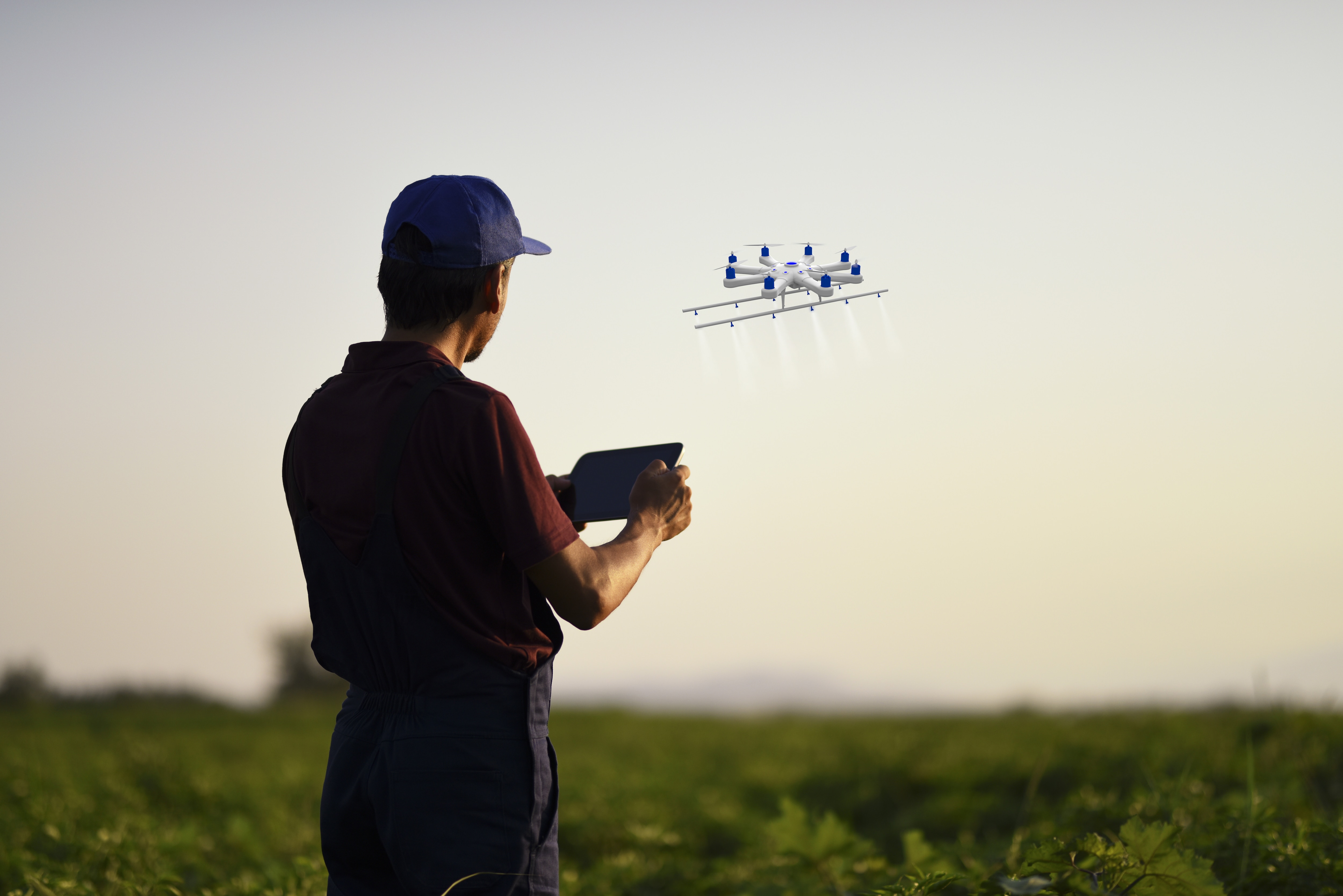
Food systems investment suffers from a shortage of investable structures that would help to fund and scale innovation in areas like technology. Image: Getty Images
Tania Strauss
Head of Sustainable Growth and People Agenda, Member of the Executive Committee, World Economic Forum- The main barrier to food systems investment is a shortage of investable structures, not a shortage of capital.
- Scaling this requires long-term purchasing commitments, financing solutions that share risk, support for farmers and rewards for environmental outcomes.
- Scaling promising ideas for impact in industries like food and agriculture is a key focus at the World Economic Forum’s Annual Meeting of the New Champions, also known as 'Summer Davos', in China from 23–25 June 2026.
Every year, trillions of dollars move through global capital markets in search of returns. But the food and agriculture sectors continue to struggle to attract investment at the scale they need.
The food systems that deliver what we eat from field to fork receive only about 7% of annual climate finance, or just short of $95 billion. But an estimated $1.1 trillion per year is needed to fund the transition to more resilient and sustainable food systems by 2030.
Why is it so difficult to channel capital into one of the world's most essential sectors?
The issue is not simply the availability of capital. It is the ability to channel capital towards opportunities that meet investors' requirements for risk, return and scale.
Food systems sit at the intersection of climate risk, supply chain fragility, economic resilience and livelihoods. While many sustainable agriculture solutions have demonstrated their value, they often require upfront investment, involve uncertain short-term returns and remain fragmented across value chains.
As a result, promising initiatives frequently remain stuck at the pilot stage rather than attracting the coordinated financing needed to scale.
Moving food systems from pilots to portfolios
Financial models capable of mobilizing commercial capital into food systems have been identified and tested. Corporate procurement leaders are already reshaping sourcing strategies to create the long-term demand signals that investors need and in line with all competition and antitrust laws and regulations. And the financing structures that can bring together commercial lenders, development finance institutions and philanthropic capital are no longer theoretical – they exist, and are working in practice.
A new World Economic Forum report, From Pilots to Portfolios, builds on this progress to set out what coordinated action across the full food systems investment chain must look like now.
A growing portfolio of pilots is demonstrating market readiness across sustainable agriculture and food systems. The challenge now is to create the conditions that allow capital to flow with greater confidence – and to keep flowing – so that proven solutions can scale across value chains and geographies.
This requires coordinated action across four interdependent areas:
1. Strengthening demand signals
Investors and lenders need confidence that transition investments will generate predictable returns. Stronger demand signals from food companies, traders and retailers can help provide that confidence.
Long-term procurement commitments, sustainability-linked sourcing programmes and other market mechanisms can improve revenue visibility and strengthen the business case for investment.
For example, Rabobank's Tomorrow's Dairy programme, developed with Nestlé and Vreugdenhil, shows how corporate procurement commitments can do more than signal intent. It links price premiums directly to farmers who adopt on-farm sustainability practices, creating the revenue stability that makes farmer lending viable.
Importantly, these premiums are paid to farmers rather than being passed on to consumers through higher retail prices. Over €50 million has been invested through 2030 and more than 150 farmers have been engaged already.
2. Building coordinated financing platforms
No single institution can finance food system transition alone. Commercial lenders, insurers, development finance institutions, philanthropic organizations and corporate actors each bring different capabilities and risk appetites.
Coordinated financing platforms can help align these actors, allocate risk more effectively and mobilize larger pools of capital than any one institution could deploy independently.
The Responsible Commodities Facility in Brazil illustrates what coordinated finance can look like in practice. By using catalytic capital to absorb early-stage risk, it creates the conditions for commercial banks to provide senior debt at scale. It has allocated $60 million to 280 farms in a single crop cycle.
3. Expanding farmer support and delivery infrastructure
Finance is necessary but not sufficient. Farmers transitioning to more sustainable production systems also need access to technical assistance, agronomic data, measurement tools and risk management solutions. This will help them navigate changes in farming practices, track results and protect against potential yield or income losses during the transition.
Strengthening this on-the-ground infrastructure reduces implementation risk, improves farm performance and builds the track record that financial institutions need to lend with confidence.
Combining technical assistance with insurance coverage can overcome farmer risk aversion by covering insurance premiums upfront for farmers who commit to supplying their harvest. AXA Climate and Axéréal's pea insurance programme has successfully converted 400-500 growers across 5,000-6,000 hectares in France. The initiative uses income protection against yield losses and technical assistance to de-risk the transition from growing other crops to cultivating peas – a sustainable but historically highly volatile crop.
4. Creating value for sustainability outcomes
Many of the benefits generated by sustainable food systems, including lower emissions, improved soil health and enhanced resilience, are not yet fully reflected in market incentives.
Expanding mechanisms that recognize and reward these outcomes can strengthen farm economics, create additional revenue streams and improve the attractiveness of transition investments.
The Soil Association Exchange Market, funded by Lloyds and other companies, financially rewards farmers for adopting action plans that reduce carbon emissions. It creates value beyond the loan by combining traditional lending with payments tied to verified practice changes. And corporate partners including Tesco, Lidl and Co-op are able to report direct reductions in their Scope 3 emissions as a result.
Financing food system resilience
The need to move food system solutions from pilots to portfolios comes at a pivotal moment. Extreme shocks are exposing the fragility of food systems, whether through conflict, new trade regimes or extreme weather.
From Dalian to London, leaders are meeting to identify ways to drive change. Those that help build these pathways will not only support more resilient and sustainable food systems;, they will secure sustained advantage and help shape the next generation of transition finance.
In June 2026, as discussions at London Climate Action Week focus on mobilizing private capital and scaling climate solutions – and as leaders gather at the Annual Meeting of the New Champions to explore new drivers of growth, innovation and resilience – food systems are emerging as a critical frontier for innovation and investment.
Greater coordination between corporates, financial institutions, governments and farmers is crucial to create investable pathways for transition. Those that help build these pathways will support more resilient and sustainable food systems while shaping the next generation of climate transition finance.
With thanks to Christian Graf, Partner, EMEA Practice Lead Sustainability & Responsibility in Financial Services at Bain & Company, Carlo Farina, Partner, core member of the Sustainability & Responsibility Practice at Bain & Company and Martina Gabrielli, Manager at Bain & Company for providing ongoing support and expertise for the report on which this article is based.
The Forum is spotlighting how innovation moves from breakthrough to scale to impact ahead of 'Summer Davos' in China, 23–25 June 2026. Follow the latest.
Don't miss any update on this topic
Create a free account and access your personalized content collection with our latest publications and analyses.
License and Republishing
World Economic Forum articles may be republished in accordance with the Creative Commons Attribution-NonCommercial-NoDerivatives 4.0 International Public License, and in accordance with our Terms of Use.
The views expressed in this article are those of the author alone and not the World Economic Forum.
Stay up to date:
Banking and Capital Markets
Related topics:


Forum Stories newsletter
Bringing you weekly curated insights and analysis on the global issues that matter.
More on Food, Water and Clean AirSee all

Naoko Tochibayashi
September 15, 2026


