Live updates
Innovation at scale: What's working and what's holding it back
The Forum is spotlighting how innovation moves from breakthrough to scale to impact ahead of 'Summer Davos' in China, 23–25 June 2026.
Forum live blog team
Tracking innovation from breakthrough to real-world impact
Tech breakthroughs are everywhere but translating them into positive results - at scale, across industries and economies - is the harder, less-told story.
This tracker brings together the Forum's latest research, data and expert perspectives on how innovation actually moves from lab to life: the strategies, the barriers, the proof points, and the questions that still need answering.
We'll be updating through the Annual Meeting of the New Champions in Dalian, People's Republic of China (23–25 June 2026).
Interested in partnering with the Forum on innovation? Get in touch.
Dalian gets set for Annual Meeting of the New Champions
It’s just three days until the Annual Meeting of the New Champions opens its doors in Dalian, China.
From 23-25 June, more than 1,700 business, government and scientific leaders will gather for ‘Summer Davos’ to consider the event’s theme, ‘Innovating at Scale’.
Across the event, they’ll explore five key questions:
- How can we find prosperity amid shifting trade and industrial realities?
- How can we understand the next phase of China's economic trajectory?
- How can technology be harnessed for outcomes in the real economy?
- How can growth create jobs and opportunities for the next generation?
- How can the energy and climate transition become a source of competitiveness?
Follow our live blog throughout the week to see how innovation and emerging technologies can unlock new growth models and drive positive economic momentum.
Rethinking urban futures through cultural architecture
Does size really matter? When considering today's cities, growth is no longer the most relevant measure of success.
Instead, today's large-scale urban developments must be more intelligent, immersive and human-centric.
In this article, Joseph Fowler, Head, Arts and Culture, World Economic Forum, has explored the work of the internationally acclaimed Chinese architect and founder of MAD Architects, Ma Yansong.
“Instead of repeating modular solutions or prioritizing efficiency alone, Ma introduces a design philosophy where architecture draws inspiration from natural landscapes and traditional cultural narratives,” Fowler writes. “This approach reframes scale itself: rather than diminishing human experience, scale becomes a means to amplify it.”

Ma will be sharing his philosophy in a session at the Annual Meeting of the New Champions. You can find out more here.
Driving gender parity in senior leadership
Senior leaders face shifting and interconnecting pressures from technological transformation, geopolitical instability and economic volatility.
Navigating change effectively requires fresh thinking, so steps must be taken to ensure that pathways to the top are open to all.
The Forum’s Closing the Gender Gap in Senior Leadership report shows that, while women’s representation in top management roles has improved, progress is fragile, and momentum is being lost.
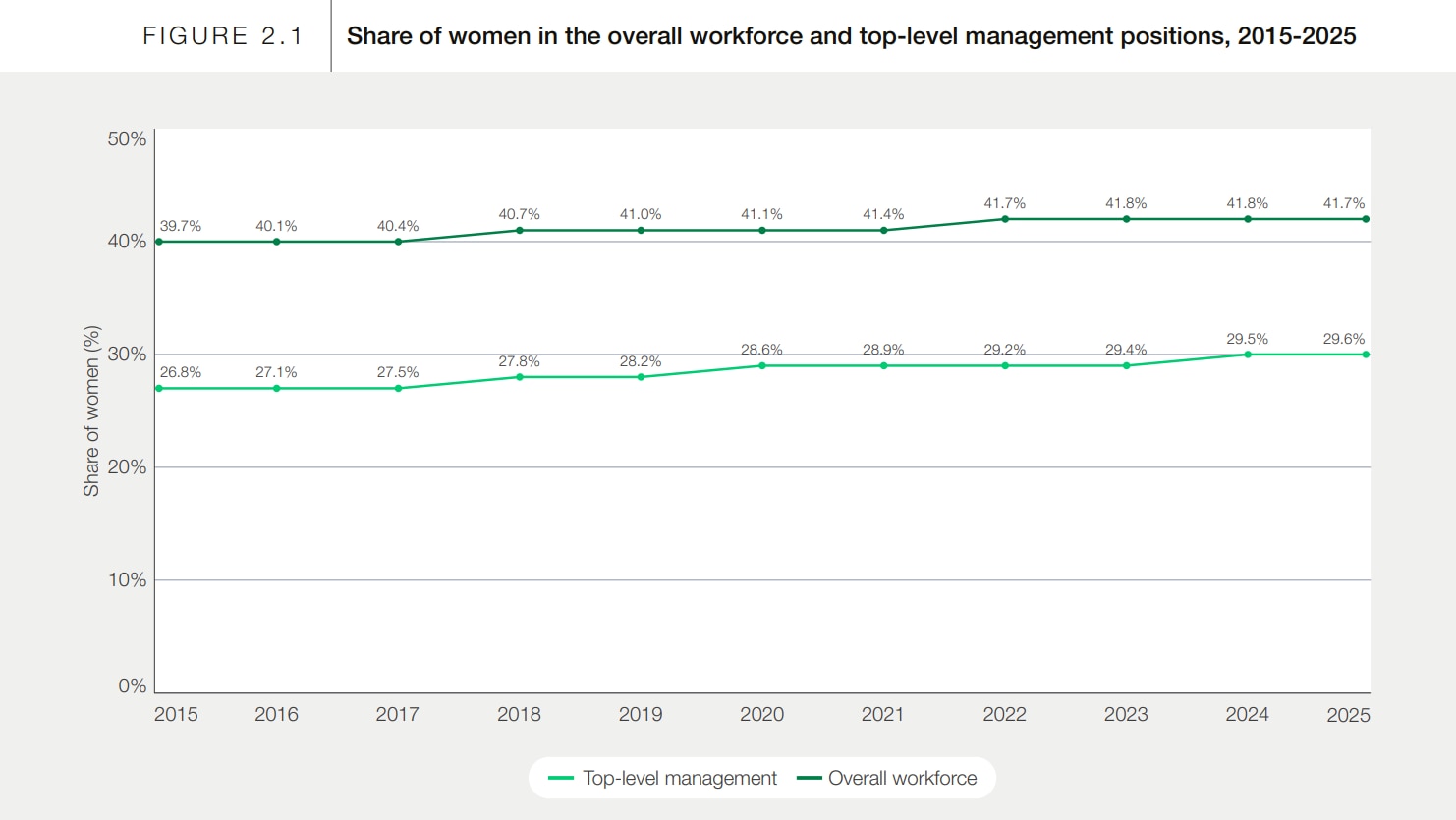
The report presents a Future-Fit Leadership Framework for Senior Leadership Parity, organized around four pillars: redefining leadership capabilities, rewiring power pathways, building fair selection systems and redesigning the conditions under which leadership is exercised.
Read the full report here.
AI-enabled workflows could expose an organization’s data to a cyberattack in seconds
Last year, companies paid an estimated $4.44 million per data-breach incident, according to research by IBM and Ponemon Institute.
The speed at which new technology operates is only increasing the risk of attack – and the costs associated with such breaches. AI-enabled workflows could expose an organization’s data to a cyberattack in seconds.
But as NTT RESEARCH's Bennett Indart explains, a zero-trust architecture creates strong security controls and faster breach containment, lowering data-breach costs for companies.
What to watch at Summer Davos
The Annual Meeting of the New Champions 2026 is almost here.
From 23-25 June, more than 1,700 leaders will gather in Dalian, China, under the theme ‘Innovating at Scale’ to explore how emerging technologies and new growth models can move from promise to real-world impact.
Check out livestream highlights from across the programme, featuring sessions on AI-first enterprises, the next billion jobs, deep tech deployment, China’s innovation model, energy demand and more.
Why AI skills scale faster when people learn together
Confidence is a major barrier to using AI for many people across companies and industries. But in-person workshops demonstrate the value of learning AI skills in a group setting.
Cognizant's Thomas Mathew says companies must invest in putting humans in the AI loop who can bring their colleagues closer to understanding, applying and eventually shaping how AI works in their specific context.
Here's how an in-person workshop could help.
Why entrepreneurs, not algorithms, will create the next wave of jobs
AI is reshaping work, but tools do not create livelihoods on their own.
Vijay Eswaran, Executive Chairman, QI Group, argues that the next wave of jobs will come from entrepreneurs using new technologies to build businesses, solve real problems and open new markets, particularly in emerging economies.
The stakes are high. The World Bank estimates that 1.2 billion young people in developing and emerging economies will reach working age over the next 10-15 years, while current projections suggest only around 400 million jobs will be created to meet that demand.
For AI to create opportunity rather than exclusion, Eswaran points to three priorities: adaptable skills, better access to the infrastructure of entrepreneurship and governance that makes it easier to start and scale legitimate businesses.
Why AI is about more than the tech
AI could unlock a new era of progress. But technology alone won’t decide it.
In this episode of Radio Davos, Oxford economist and historian Carl-Benedikt Frey argues that AI’s real promise is not just making existing tasks cheaper or faster. It is whether it can help create new industries, new forms of work and new sources of growth.
The trends propelling a $1.8 trillion space market
The next phase of the space economy will be less about rockets and satellites and more about the services they enable.
Commercial providers are currently delivering connectivity, intelligence and monitoring solutions that are seeing value in recurring services. At the same time, growing demand for sovereign space capabilities is creating long-term investment opportunities. In addition, faster innovation cycles help commercial actors bring new solutions to market more quickly.
These three trends are helping shape a more mature space sector, which could reach $1.8 trillion by 2035 if governments, investors and industry continue to strengthen the foundations for sustained growth.
Moving frontier technology from pilots to public impact
Technology is most powerful when it serves people.
The Forum’s Fourth Industrial Revolution Network 2024–2025 Impact Report shows how its centres are helping governments, industries and communities turn emerging technologies into practical reforms, skills programmes and governance models.
The report covers impact across five areas: digital public services, future-ready skills, industrial competitiveness, frontier technologies and cross-centre collaboration. Examples range from Serbia’s eSickLeave reform, which handles 1.4 to 1.7 million sick-leave days a year, to Azerbaijan’s Nation Programme, which has enrolled 52,500 citizens in digital learning.
Read the full report here.
Who is creating the infrastructure behind the next era of AI?
The Forum's 2026 Technology Pioneers cohort includes 100 start-ups from 23 countries advancing innovation across AI, energy, quantum computing, biotechnology and more.
From autonomous AI agents to energy systems, computing capacity and digital infrastructure, this new generation of innovators is laying the foundations needed to scale AI in the real world.
Meet the 2026 Technology Pioneers
Discover this year’s cohort here.
The $700 billion potential of Earth observation
Earth observation has the potential to become one of the most valuable tools for understanding and responding to global challenges.
Earth Observation: Unlocking the $700B Opportunity, a new report from the Forum and Deloitte, finds that while the sector already generates an estimated $440 billion in global economic value, unlocking progress across the EO value chain could expand that impact significantly.
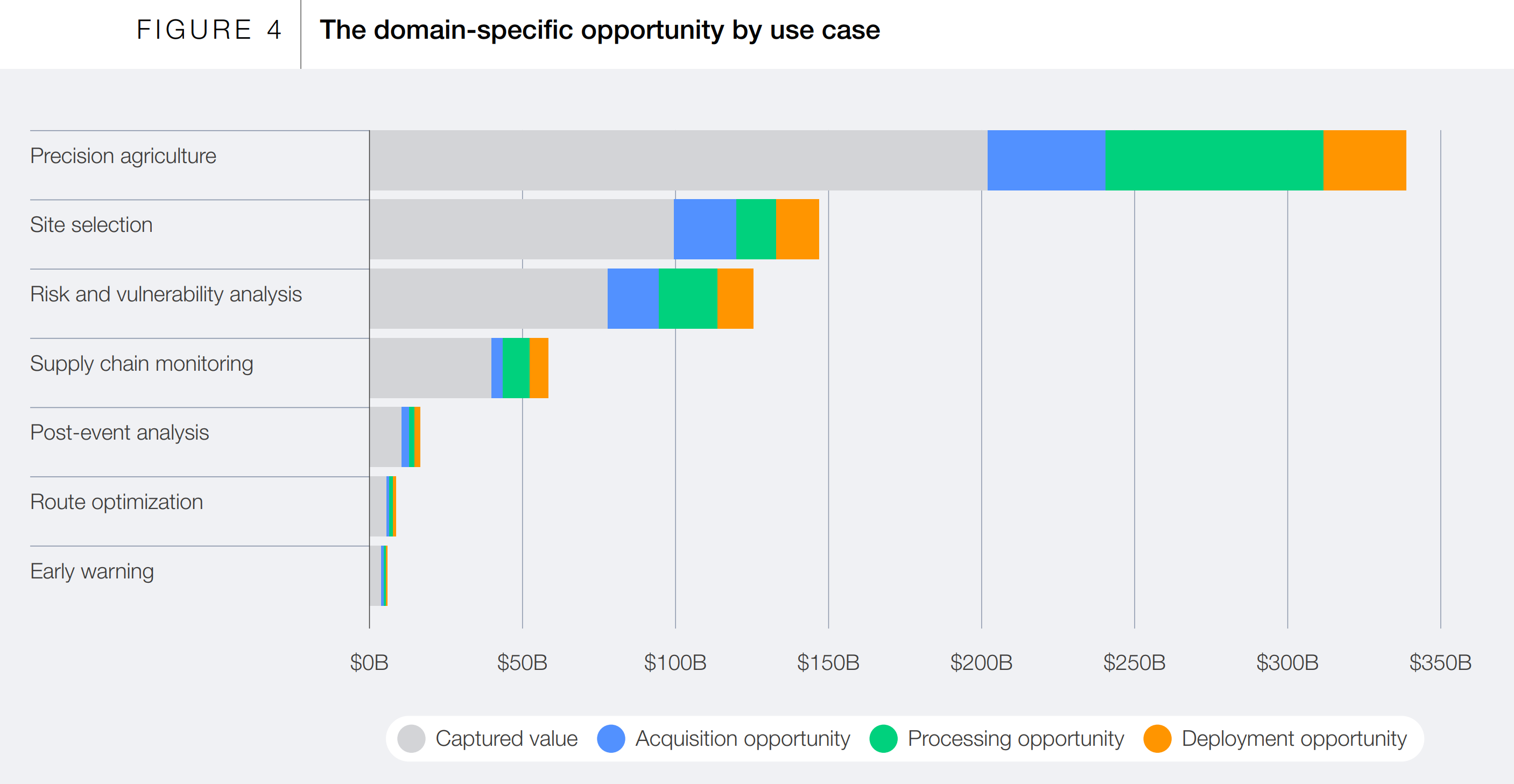
Discover the findings here.
India is showing that AI success depends on ecosystems as well as technology
Many discussions about AI focus on models, investment or technical breakthroughs. There is another perspective – the importance of building the ecosystem around AI.
India is investing in AI innovation and the foundations that make innovation possible – accessible datasets, multilingual resources, testing environments and collaboration between government, researchers and startups.
Initiatives such as AIKosh, Bhashini and state-level programmes are helping turn AI ideas into practical solutions in healthcare, finance and public services.
A useful reminder that the real challenge isn't creating AI but the conditions for responsible, scalable adoption that delivers meaningful public impact.
This Māori leader trained AI to speak his language
About half of the world’s 7,000 languages are under threat - and especially Indigenous languages, which are disappearing at a rate of one a fortnight.
Māori media company Te Hiku has taken a 21st-century approach to stopping the slide, watch below.
Why AI innovation needs more than state funding or market freedom
Fuelling AI innovation is less about state input vs market freedom than strengthening the institutional layer between them, says Stanford University's Chuck Eesley.
He explains how, in a successful innovation economy, an institutional layer of university-industry collaboration, accelerators and founder-mentor networks can help make research commercially viable.
Academic research on innovation hubs such as Silicon Valley shows that a strong institutional layer compounds investment. Read why.
AI is already changing how students learn. Are education systems ready?
AI is spreading through classrooms faster than curricula, assessment and governance can keep up.
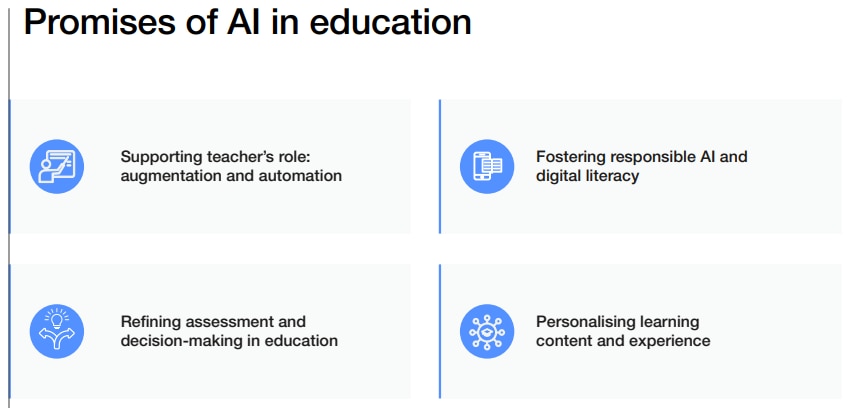
The Forum’s new report, Shaping the Future of Learning: Education Readiness for the Age of AI, looks at what needs to be in place for AI to strengthen learning rather than undermine it. One sign of the pace: the share of students using AI for homework rose from 48% in May 2025 to 62% in December 2025, even as 67% recognized it may harm their critical thinking.
The report introduces an AI Readiness Framework covering governance, infrastructure, academic integrity, digital literacy, teacher capacity, assessment and learner experience - the conditions that determine whether innovation translates into better education at scale.
Read the full report.
Safety by design is key to building digital safety from the outset
Safety by design principles are increasingly reflected in how regulators and institutions think about digital safety and artificial intelligence.
This approach puts user safety and rights at the heart of the development of online products and services, with an emphasis on anticipating harms, explain Australia's eSafety Commissioner Julie Inman Grant, David Sullivan of the Digital Trust and Safety Partnership and the World Economic Forum's Cathy Li and Agustina Callegari.
Read how the Forum's new 'Preparing for the Future: The Pillars of Digital Safety Foresight' report helps organizations think more anticipatorily and link foresight to action, in this article.
Meet the new MINDS cohort: The AI solutions actually working at scale
From a factory in China where anomaly resolution is now 83% faster to an AI platform that has reduced battery R&D timelines from two years to three months, the Forum's third MINDS cohort includes 16 cases where AI is delivering in the real world.
Selected from more than 100 applications across 38 countries, they span healthcare, education, sustainability and infrastructure.
Find out more about the use cases that have been selected.
Innovate. Scale. Impact. Watch the trailer
A breakthrough that reaches one person is a discovery. A breakthrough that reaches millions is progress.
Watch the trailer.
Where innovation consistently fails to reach patients: Women's health as a case study
The Forum's Women's Health Innovation Radar, developed with the Global Alliance for Women’s Health, the Kearney Health Institute, the Gates Foundation and Wellcome Leap, maps what happens when the pipeline between scientific discovery and real-world impact breaks down at scale.
Across 10 high-burden conditions, only 20% of programme research funding is women-focused, and more than half of that concentrates in just two conditions: ovarian cancer and menopause.
The consequences show up downstream: Ischaemic heart disease, one of the leading causes of death in women globally, has among the lowest levels of women-focused research funding in the entire analysis.
The innovation needed to tackle major global challenges largely exists. Deployment is the harder problem.
UpLink, the Forum's early-stage innovation initiative, surveyed more than 200 start-ups and ran over 60 dialogues with investors, corporates and policy-makers to understand what separates ventures that scale from those that stall in the pilot phase.
Four lessons emerged and across all of them, the limiting factor is rarely the technology. The survey points instead to institutional conditions: procurement barriers, misaligned incentives and the organizational readiness of the businesses and cities these start-ups are trying to sell into.
Read the full article.
Tracking innovation from breakthrough to real-world impact
Tech breakthroughs are everywhere but translating them into positive results - at scale, across industries and economies - is the harder, less-told story.
This tracker brings together the Forum's latest research, data and expert perspectives on how innovation actually moves from lab to life: the strategies, the barriers, the proof points, and the questions that still need answering.
We'll be updating through the Annual Meeting of the New Champions in Dalian, People's Republic of China (23–25 June 2026).
Interested in partnering with the Forum on innovation? Get in touch.
From the operating room to the factory floor: The technology pattern driving results
The Forum's second Technology Convergence report documents a meaningful shift taking place across sectors: they aren't just using a single advanced technology but rather generating the most impact by combining them.
In healthcare, for instance, the pairing of robotics with AI and advanced sensing is improving surgical precision while reducing pressure on overstretched care teams. And in manufacturing, digital twins combined with robotics are enabling real-time iteration on product designs before hardware is involved.
The report finds that eight domains are converging simultaneously. Track them in the Forum's first Tech Maturity Index:
Or, read about the specific industry examples from the report's authors.
Catch up on what happened in AI in May
The Forum's monthly AI digest rounds up the most significant developments across the AI landscape.
This month's edition covers the Forum's new Technology Convergence report, the EU's updated code of practice on AI-generated content (expected to take effect in August), and the latest on open model collaboration among leading AI companies.
License and Republishing
World Economic Forum articles may be republished in accordance with the Creative Commons Attribution-NonCommercial-NoDerivatives 4.0 International Public License, and in accordance with our Terms of Use.
The views expressed in this article are those of the author alone and not the World Economic Forum.

Forum Stories newsletter
Bringing you weekly curated insights and analysis on the global issues that matter.