How we can rethink cross-border payments as infrastructure for global inclusion
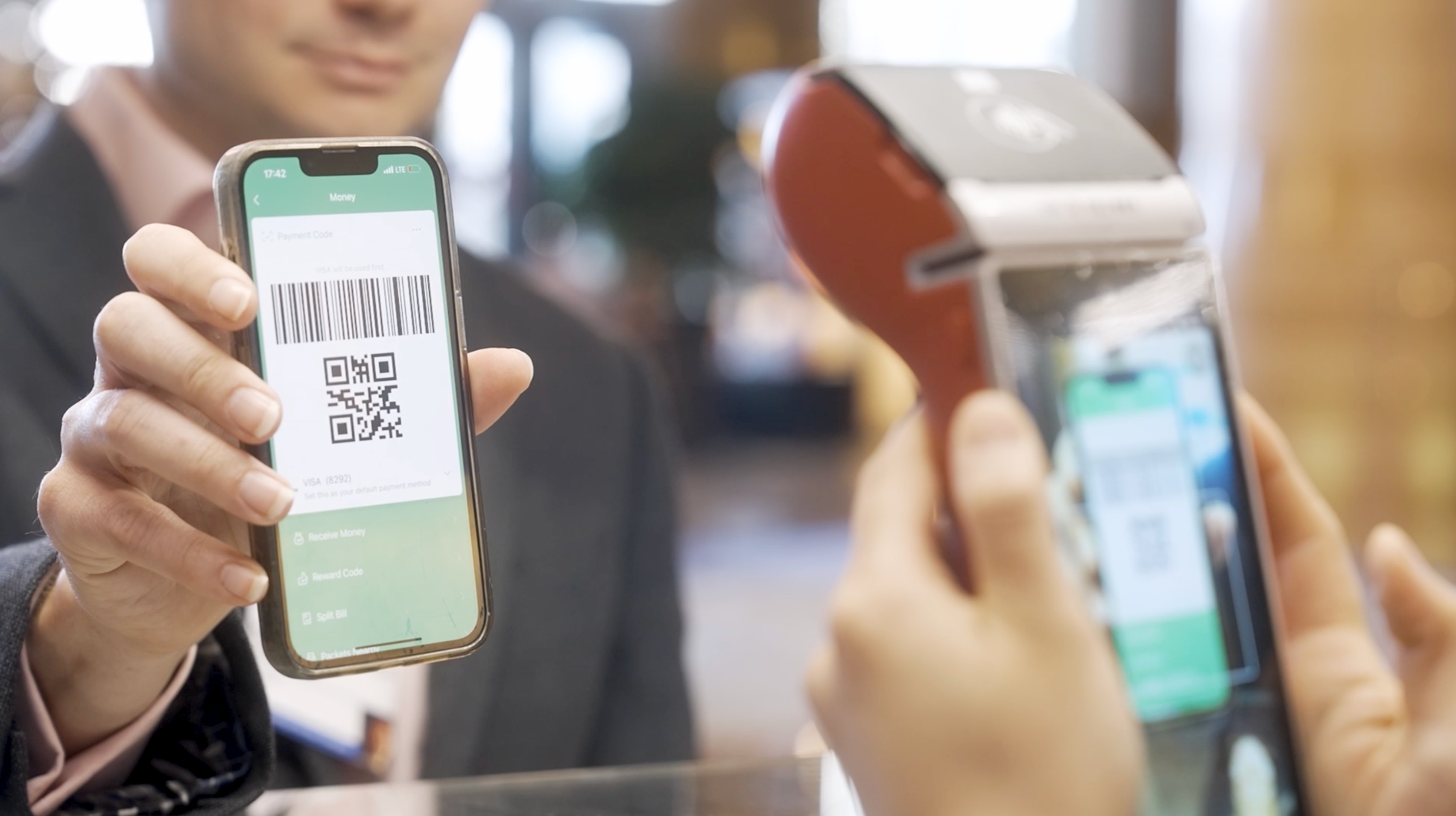
Interoperability could be the next step towards seamless cross-border payments Image: Tencent
- Despite advances in digital payments, users often lose access to their preferred payment methods when crossing borders, hindering global connectivity.
- Most major economies have strong domestic payment systems but often miss the piece connecting them, making interoperability the next step to seamless cross-border payments.
- No single company can solve cross-border payments alone; it requires cooperation among payment providers, wallet partners, merchants, card networks and regulators.
China is about to play host to two major international and regional convenings.
First, the World Economic Forum’s Annual Meeting of the New Champions, also known as “Summer Davos,” will take place this June. Meanwhile, APEC China 2026, a year-long hosting of the Asia-Pacific Economic Cooperation meetings, will conclude with its economic leaders’ meeting in November.
Both will likely touch on global trade, cross-border business and closer ties. Conversely, delegates crossing borders have probably found that paying for goods and services is not always such a unified task. However, there is a plan to ease this quandary and make cross-border purchasing a more seamless affair.
Why ‘technical regression’ is a challenge for cross-border payments
As technology has advanced, digital purchasing options have flourished worldwide. Yet with this progress comes a paradox: crossing a border often means leaving your preferred payment method behind.
When mobile-native Chinese travellers go overseas, they have to revert to using ATMs, bank cards and cash. Similarly, international tourists visiting China often find that familiar mobile wallets or home credit cards don’t work in the domestic market optimized around mobile ecosystems.
Ironically, despite advanced, accessible digital technology, we have a less unified experience now than we did when we all used cash and credit and debit cards.
In 2020, the Group of 20 launched a roadmap to make cross-border payments faster, cheaper and more transparent by the end of 2027. The industry has been working on the obvious pain points – opaque fees, slow settlement and high costs. However, beneath these inconveniences lies a deeper structural problem we can call “technical regression.”
The core issue lies in the lack of unified standards, technology and user experience. For example, QR code payments are common in China and Southeast Asian countries, while card payments and tap-to-pay are preferred in Europe and America.
Deposit methods, domestic know your customer standards and anti-money laundering (AML) protocols vary across regions.
When distinct regional wallet architectures attempt to interoperate, institutions must address new hurdles in fraud prevention, cross-border money laundering and international dispute resolution. These are frameworks that global card networks spent decades establishing but that do not yet exist for the era of digital wallets.
3 cross-border payment challenges and their solutions
Over the past few years, we have resolved three challenges to reduce payment friction and deliver seamless access.
1. Achieving over 100 million merchants' interoperability for Hong Kong consumers
In 2018, we pioneered interconnection between WeChat Pay HK, a distinct Hong Kong-regulated digital wallet for residents and the Chinese mainland payment solution Weixin Pay, allowing Hongkongers to pay on the Chinese mainland using their home currency.
Early on, the experience was inconsistent as large merchants worked but small shops and taxis often didn't. Our team spent months working through the payment chain, AML requirements and risk controls until the gaps closed.
Last year, we extended support for personal QR codes, meaning the Hong Kong wallet now works in the same places as the mainland wallet, enabling Hong Kong residents to travel, commute and consume across more than 130 cities completely unhindered.
Following the full resumption of cross-border travel, WeChat Pay HK's offline transactions in the Chinese mainland surged more than tenfold, with transactions made during China's National Day in 2025, climbing over 120% year-on-year.
2. Providing foreign visitors to China one app for seamless purchasing
During the pandemic, years of mobile payment growth had reduced the number of card-reading point of sale terminals across China. Foreign visitors, therefore, arrived after the pandemic expecting to pay by card and found it almost impossible.
In response, we opened up Weixin Pay's merchant network and cards from seven major international card networks, including Visa and Mastercard, can be linked to WeChat for payment across China.
Instead of juggling with different apps, international visitors can use WeChat alone to navigate China without wrestling with fragmented services and language barriers.
Ahead of APEC China 2026, we have further waived international card processing fees for first-time users for their first 90 consecutive days, up to RMB 1,000 per day; all users enjoy fee-free transactions on payments of RMB 200 or less, ensuring a visitor's first transaction feels as natural as paying at home.
3. Building a ‘unified gateway’ for easier cross-border payments
As some travellers don't want to download a new app, we upgraded "Pay with Your Home E-Wallet" services via China's unified cross-border QR code gateway. Tencent's cross-border payment platform TenPay Global has enabled over 40 international digital wallets and payment networks from more than 13 countries and regions, including PayPal, to make payments in China using their home wallets.
Acting as a “digital translator”, TenPay Global converts inbound foreign wallet transactions into standardized Weixin Pay transactions in real time, displaying exchange rates and deducted amounts in each user's local currency and language.
This infrastructure only works because it is built with both global standards and local roots in mind: regional wallet partners who know their users, merchants in every city whose QR codes serve as physical touchpoints and local regulators who help translate policy into practice.
How we can build a more interconnected and secure network for global payments
Most regions have already built their own fast-payment rails e.g. UPI in India, Pix in Brazil, FedNow in the United States. The missing piece is the interchange for them to operate as an interconnected network; that is what we’re building towards.
Weixin Pay already supports Chinese travellers across 78 markets and 6 million overseas merchants, integrating with national payment systems such as Malaysia’s PayNet, Thailand’s PromptPay and Singapore’s SGQR. To bridge the gap in regions where QR codes are less prevalent, we are also exploring near-field communications solutions.
The scale of what's at stake is significant. In 2025, China received 154.5 million inbound visitors, up 17.1%, with foreign tourists reaching 35.17 million (+30.5%) and total inbound spending hitting $131.1 billion (+39.2%).
Visa-free arrivals alone surged 49.5% to over 30 million. On the outbound side, Chinese travellers made 167.92 million overseas trips, spending over $250 billion.
As connectivity accelerates global money flows, it requires better mechanisms to protect users and merchants. Using large language models alongside deep learning and graph computing allows us to analyze complex transaction patterns daily.
We also use "ontology models" to map relationships among digital entities, identifying fraud networks and adapting to threats in real time, keeping our fraud rate at one in a million, dozens to nearly 100 times more secure than typical overseas payment rails.
No company can build global payment infrastructure alone. The Unified Gateway, our regional wallet partnerships and collaboration with regulators reflect that open cooperation is the only sustainable path.
As leaders gather at Summer Davos and APEC, this invisible infrastructure underpins every agenda item. Trade, travel, and remittances all depend on payments moving seamlessly across borders. True global inclusion requires that experience to be effortless and we're building toward that future.
Don't miss any update on this topic
Create a free account and access your personalized content collection with our latest publications and analyses.
License and Republishing
World Economic Forum articles may be republished in accordance with the Creative Commons Attribution-NonCommercial-NoDerivatives 4.0 International Public License, and in accordance with our Terms of Use.
The views expressed in this article are those of the author alone and not the World Economic Forum.
Stay up to date:
The Digital Economy
Related topics:


Forum Stories newsletter
Bringing you weekly curated insights and analysis on the global issues that matter.
More on BusinessSee all

Kiva Allgood and Kristine Renker
September 17, 2026