
Industrialization and global growth have generated wealth and accelerated progress, but have also driven ecological strain and imbalance.
Nature, society and well-being are treated as external to growth, while climate, biodiversity and human development are addressed separately.
Instead, the scale, innovation and institutional capacity of business and modern systems must be combined with a deeper recognition of the inseparability of human and planetary well-being.
The systems that powered industrialization and global growth have generated wealth and accelerated progress but also driven ecological strain and social imbalance. Today, these same systems are placing increasing pressure on the natural and social foundations that sustain prosperity.
This is not a failure of intent, but a misalignment – where system design no longer meets society’s evolving needs.
Nature, society and human well-being remain treated as external to growth. Climate, biodiversity, oceans and human development are addressed separately – each important, yet fragmented. The result is not a lack of effort, but a lack of coherence. It is here that catalytic capital plays a key role.
The importance of an Earth systems agenda
It is within this context that an integrated life system becomes increasingly relevant – thus the idea of an Earth systems agenda. It reflects an emerging aspiration: to recognize that the health of forests, oceans, economies and societies is an interconnected living system. Addressing these challenges in isolation will not be sufficient. What is required is a transition from sectoral responses to systemic design.
At the heart of this transition lies a deeper question: not only how we act, but how we think.
Sustainability does not begin with carbon metrics or financial instruments. It begins with an understanding of humanity’s place within the system. In many long-standing traditions, there is no separation between human life and the natural world. The principle of harmony – between people, society and nature – has guided decision-making across generations.
This perspective is not unfamiliar to family enterprises that have operated across time. The Tsao family’s journey, which began in the late 19th century, was shaped not only by commerce, but by an enduring sense of responsibility – to community, to continuity and to the broader systems that sustain life.
Over time, as the business expanded across regions and sectors, this orientation evolved, but its underlying ethos remained: that business exists within a larger system, not apart from it.
In contrast, much of the modern economic model has been built on separation – between shareholders and stakeholders, between the economy and ecology, and between short-term returns and long-term resilience. The scale, innovation and institutional capacity of modern systems must be combined with a deeper recognition of the inseparability of human and planetary well-being.
Business as a lever for transformation
This has important implications for the role of business.
Business is often positioned as part of the problem in the climate and nature debate. Yet it remains one of the most powerful levers for transformation. It shapes capital flows, influences markets and builds the economy's infrastructure. The question is not whether business should lead, but how it chooses to lead.
The next phase of economic evolution will require a shift – from creating value through extraction to creating value through regeneration.
This shift cannot be achieved through isolated initiatives. It requires rethinking how systems are designed – particularly how currently fragmented domains can be connected more coherently.
One way to understand this is by integrating green, blue and human systems.
Green systems – forests, land and biodiversity – are fundamental to climate stability and food security, while blue systems – oceans and freshwater ecosystems – regulate planetary health and sustain livelihoods at scale. Both are increasingly recognized as critical areas for investment.
Yet both remain largely disconnected from the human system.
How leaders think, how institutions make decisions and how capital is ultimately deployed determine outcomes. Without alignment at this level, even the most well-designed technological or financial solutions struggle to achieve lasting impact.
A regenerative economy, therefore, requires these systems to be linked more intentionally.
Forest restoration and ocean innovation must evolve into investable, scalable systems rather than remain as isolated projects. Capital must move beyond funding individual assets towards enabling ecosystems of innovation and stewardship.
At the same time, leadership must evolve – so that those deploying capital are guided not only by incentives, but by a broader understanding of value and responsibility.
In this context, the role of business also evolves – from operator within the system to integrator across systems.
Family enterprises are uniquely positioned in this regard. Operating across generations, they are shaped not only by performance metrics, but by continuity – by what must be sustained for those who follow. This orientation naturally extends time horizons and encourages a more holistic view of value creation.
How stewardship encourages longer-term thinking
Stewardship, therefore, is not an abstract idea. It is a lived practice.
It shifts the central question from “What can be created?” to “What must be preserved and regenerated?” It encourages longer-term thinking, deeper relationships and a recognition that value cannot be separated from the systems that enable it.
As global efforts continue to evolve, platforms are beginning to explore how these principles might be translated into practice. They reflect a growing recognition that climate and nature challenges cannot be addressed through isolated interventions alone, but require forms of collaboration that are more integrated, catalytic and cross-sectoral.
One example of this direction is GAEA, the World Economic Forum’s Global Accelerator for Earth Action. It reflects an effort to bring together catalytic actors – philanthropy, foundation and impact-driven capital - with private and public stakeholders around a more coherent approach to climate and nature action – one that connects leadership, capital and partnership-building in service of long-term systems transformation.
In this sense, its role is not simply to support individual initiatives, but to help create the conditions through which more catalytic and coordinated forms of action can emerge.
These enabling conditions operate on multiple levels at once. They include the development of credible data and measurement systems so that new solutions can be verified and compared; the absorption of early-stage risk that commercial capital cannot yet price; and the alignment of policy, market and leadership incentives so that they reinforce rather than undercut one another.
What distinguishes the catalytic approach from conventional efforts is its orientation towards a specific outcome: reaching the point at which a solution no longer requires continuous support because the market itself has been restructured to reward it. The goal is not to fund solutions indefinitely, but to build the conditions under which sustainability becomes the path of least resistance for investors, businesses and governments alike.

One illustration of such approach comes from Southeast Asia. The Southeast Asia Clean Energy Facility (SEACEF) used catalytic capital to absorb early-stage investment risk to accelerate and scale Indonesian clean energy projects – attracting commercial partners and catalyzing a return of more than 20 times its initial deployment within two years.
The potential scale of this shift is real. The annual gap between current climate and nature finance and what is needed stands at approximately $5-7 trillion – equivalent to the entire economic output of Germany, repeated every year. Evidence from early catalytic deployments suggests this gap will not close through volume alone.
It requires that the right combination of tools is applied at the right point in a system so that change can accelerate well beyond the initial investment. In India, the Self-Employed Women’s Association’s (SEWA) catalytic first-loss guarantee helped finance 600 solar pumps for women farmers in Gujarat – a proof of concept that prompted a major commercial bank to extend loans for 15,000 additional pumps, increasing farmer incomes by up to 30%. One targeted intervention unlocked a system-wide shift. Applied with the same logic across ocean, forest and energy systems, the same dynamic points toward transformation at a far greater scale.
Initiatives like GAEA signal an important direction – towards aligning capital with innovation, connecting leadership with implementation, and integrating diverse perspectives across sectors.
The emphasis must also shift towards execution, building tangible systems that connect leadership, capital and real-world outcomes. This includes developing investable models in forests and oceans, strengthening innovation ecosystems and mobilizing catalytic actors capable of operating across traditional boundaries.
Asia as a living laboratory for new catalytic models
Asia presents a particularly important context for this work.
It is a region characterized by rapid growth and complexity, where economic development, environmental pressures and cultural traditions intersect, making Asia well suited to developing and testing new catalytic models of this kind. It is also a region where multiple worldviews coexist – where modern systems operate alongside long-standing philosophies of balance and interdependence.
Rather than viewing Asia solely as a region of implementation, it can also be understood as a potential living laboratory – where new models of economic integration can be tested, refined and scaled.
The opportunity ahead is not to replace one system with another, but to evolve the system itself – to design an economy capable of sustaining both prosperity and the conditions that make that prosperity possible.
This transition will not be achieved through policy or capital alone. It requires a deeper shift in how value, leadership and responsibility are understood.
An economy that does not function as part of the life system will not endure.
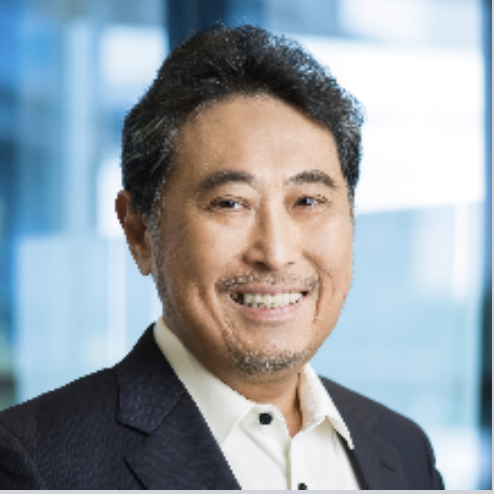
Fourth-generation business leader Chavalit Frederick Tsao is widely seen as someone with invaluable insights on how value is created, sustained and, over time, gradually eroded unless key measures are taken.