How women's sport could help to close the leadership gender gap
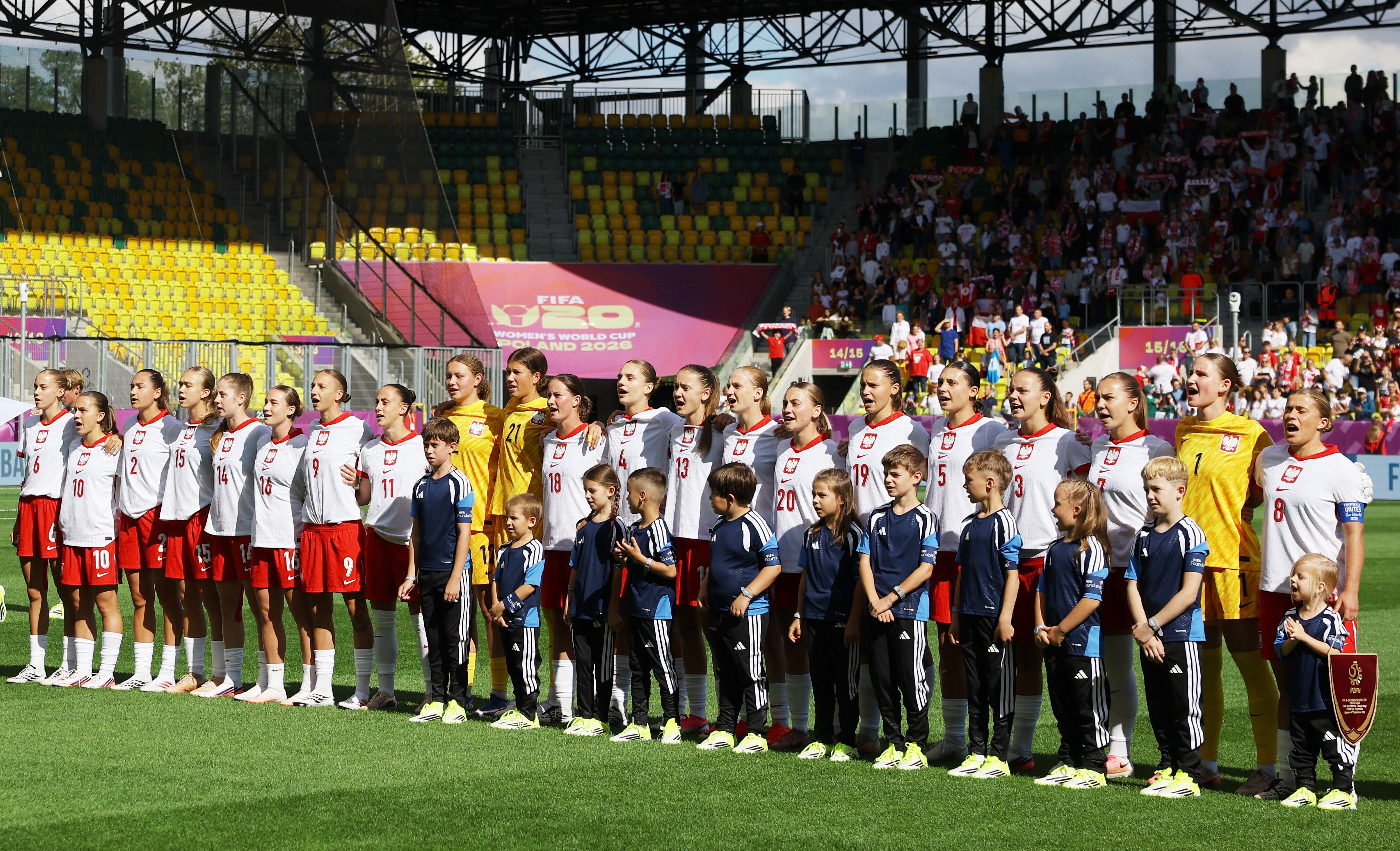
Creating more opportunities for girls to stay in sport for longer can help to close the leadership gender gap. Image: REUTERS/Kacper Pempel
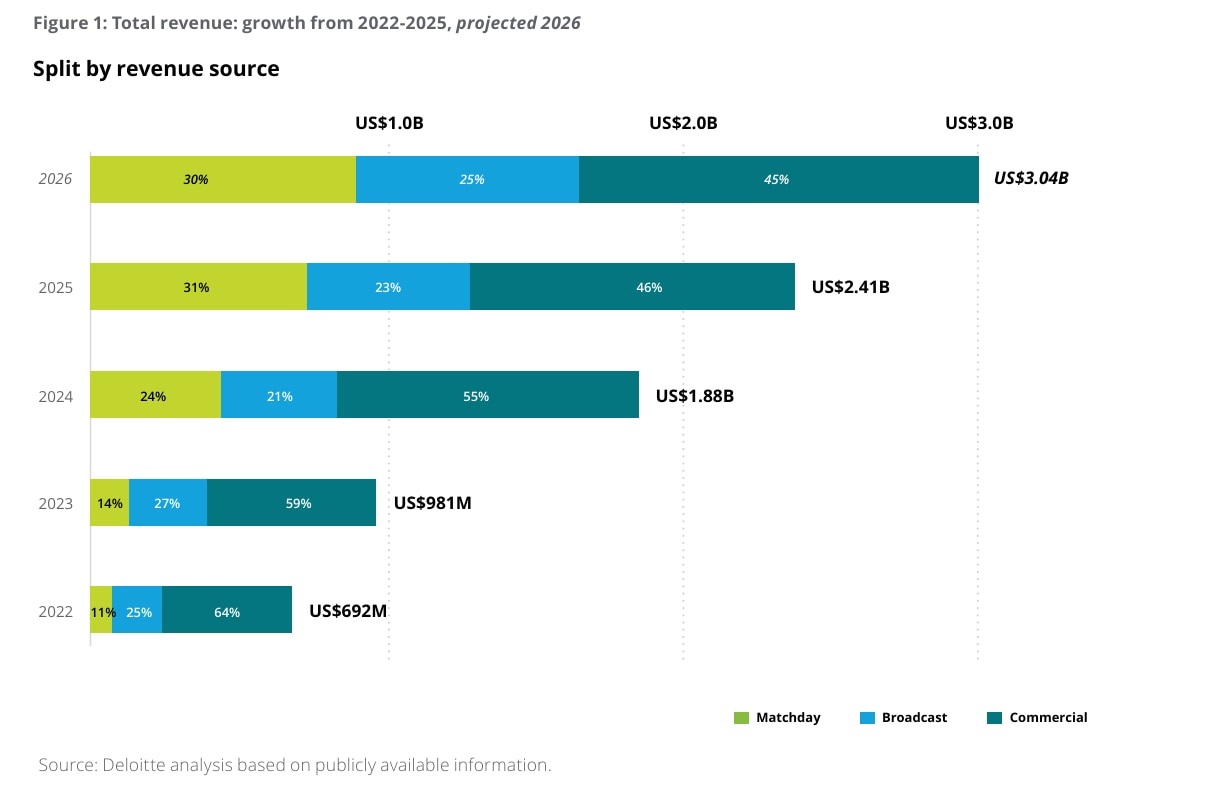
- Women's professional sport is growing, with the market set to reach $3 billion this year, according to Deloitte.
- It's good news for the leadership gender gap says Lara Abrash, Chair of Deloitte US, as women who play sport become leaders.
- The World Economic Forum's Global Gender Gap Report 2026 finds progress towards gender parity in the C-suite is slowing down.
- Here, Abrash explains how investing in women's sport can support the pipeline of future leaders.
When Lara Abrash was growing up in New York, with three older brothers, there were no girls' baseball teams in her hometown. So she played on the boys' team.
"The only way to play sport was to actually be on the boys' teams. I was the only girl. I joked that I played the position 'Left Out', but ultimately it was a great experience – and that was normal back then," says the Chair of Deloitte US.
Fast-forward a few decades to today and the inaugural season of the Women’s Professional Baseball League got underway in August. But at the grassroots level, investment in girls' sport still lags behind.
Abrash, who plays for and manages an over-25s women's softball team in her spare time, is an advocate for how sport can help to close the gender gap in leadership.
Minding the leadership gender gap

The World Economic Forum's latest Global Gender Gap Report finds it will still take 120 years to reach gender parity, three years less than the 2025 edition. Almost all of the 97 economies tracked continuously since 2006 have made improvements.
But there's still a long way to go – and progress towards closing gaps in workforce participation and top-level management positions is beginning to stagnate.
The higher up the career ladder you go, the fewer women there are – a phenomenon known as the 'drop to the top'. This year's report finds women’s representation from entry-level positions to the C-suite drops by half (46% to 23%), on average across 57 economies.
LinkedIn data shows women’s representation in top-level management roles (vice presidents, C-suite and board members) increased from 26.7% in 2015 to 29.4% by 2023, but has stayed roughly the same since.
So how can sport help?
Abrash's message is simple: "Girls who play become women who lead".
Deloitte's research has found that 85% of women surveyed said the skills they developed playing sport were crucial to their career success – rising to 91% for women in leadership roles.
"I myself have had that benefit," says Abrash. "And I see that with our clients, our peers. It's in government. It's in business. It's almost every facet of life.
"The more a girl can play a sport, the more she's going to gain some of these lessons that will help her later in life."

What are those leadership lessons?
"Managers manage outcomes, leaders lead people - and that's ultimately what sport teaches you to do.
"It teaches you to lead people, being a teammate to someone and helping them be their best version and being selfless. Giving them the ball, having them take the shot and kick the goal. That's ultimately what leaders end up doing.
"They are not the best person in the organization. They're the person who can untap everybody around them."
The state of women's sport in 2026
Women's sport is having "a moment", says Abrash, but more investment is needed to help girls stick at sport.
The women’s elite global sports market is set to reach $3 billion in 2026, Deloitte Global predicts - a 340% increase since 2022.
This mainstreaming of women's sport is one of the four trends shaping the growth of the $2.3 trillion sports economy, according to the Forum's Sports for People and Planet report.
Milan Cortina 2026 became the most gender-balanced Winter Olympics in history, with women making up 47% of athletes, up from 44.7% at Beijing 2022, competing across 50 of 116 events. Paris 2024 was the first Olympics to achieve full 50/50 parity on the field of play.
Abrash says pioneers like US tennis champion Billie Jean King have helped to push for parity both on and off the court and pitch.

When she won the US Open in 1972, King refused to play the following year unless women and men were paid equal prize money. So in 1973, the US Open became the first sporting event in the world to do so, with the other three tennis Grand Slams since following suit.
Despite the progress towards parity at the professional level, gaps still remain – and these are heightened at the grassroots level, with girls of 14 dropping out of sport at twice the rate of boys, due in part to underinvestment, as well as body confidence and a lack of women coaches as role models.
"The opportunities for girls to participate in sport is 1.3 million times fewer than men's sport," says Abrash.
"The ability for girls to just get started and stay is so much lower and there are so many barriers. If they're not going to even get into it and stay with it, then the opportunities to be a professional and take sport into life become even harder."
Levelling the playing field for the future
The business case for greater investment in sport is clear. A recent UK study found girls aged 11-18 play sport for 84 minutes less each week than boys. But increasing girls’ access to sport could boost the country's economy by $863 million (£640 million) through productivity gains and healthcare savings, reports the Guardian.
Abrash urges for sponsorship and social-purpose budgets to be redirected toward women's sport while momentum is high; greater investment directly in leagues so athletes can be paid sustainably; and for the pipeline to be fixed through better coaching and cultural support for girls.
Businesses, she suggests, should also look inward – actively identifying and developing the "athlete-leaders" already in their talent pools.

"If we get women's sports and the investment in it right, I think it will generate real business and money for society; we will have even greater women leaders in the future – and the thing that excites me the most is the girls themselves will look up and they'll say they did it.
"If they leverage the skills they build from playing sports for all those years, they're going to be better positioned to be successful in those [leadership] roles."
At current rates of progress, closing the global gender gap could take roughly another century. Sport won't fix that alone. But if Abrash is right, every girl who stays in the game is one step closer to the boardroom.
Quotes have been lightly edited throughout. Listen to the full interview in the Meet the Leader podcast.
License and Republishing
World Economic Forum articles may be republished in accordance with the Creative Commons Attribution-NonCommercial-NoDerivatives 4.0 International Public License, and in accordance with our Terms of Use.
The views expressed in this article are those of the author alone and not the World Economic Forum.

Forum Stories newsletter
Bringing you weekly curated insights and analysis on the global issues that matter.
More on Equity, Diversity and InclusionSee all