What China’s new Ecological and Environmental Code means for growth and competitiveness
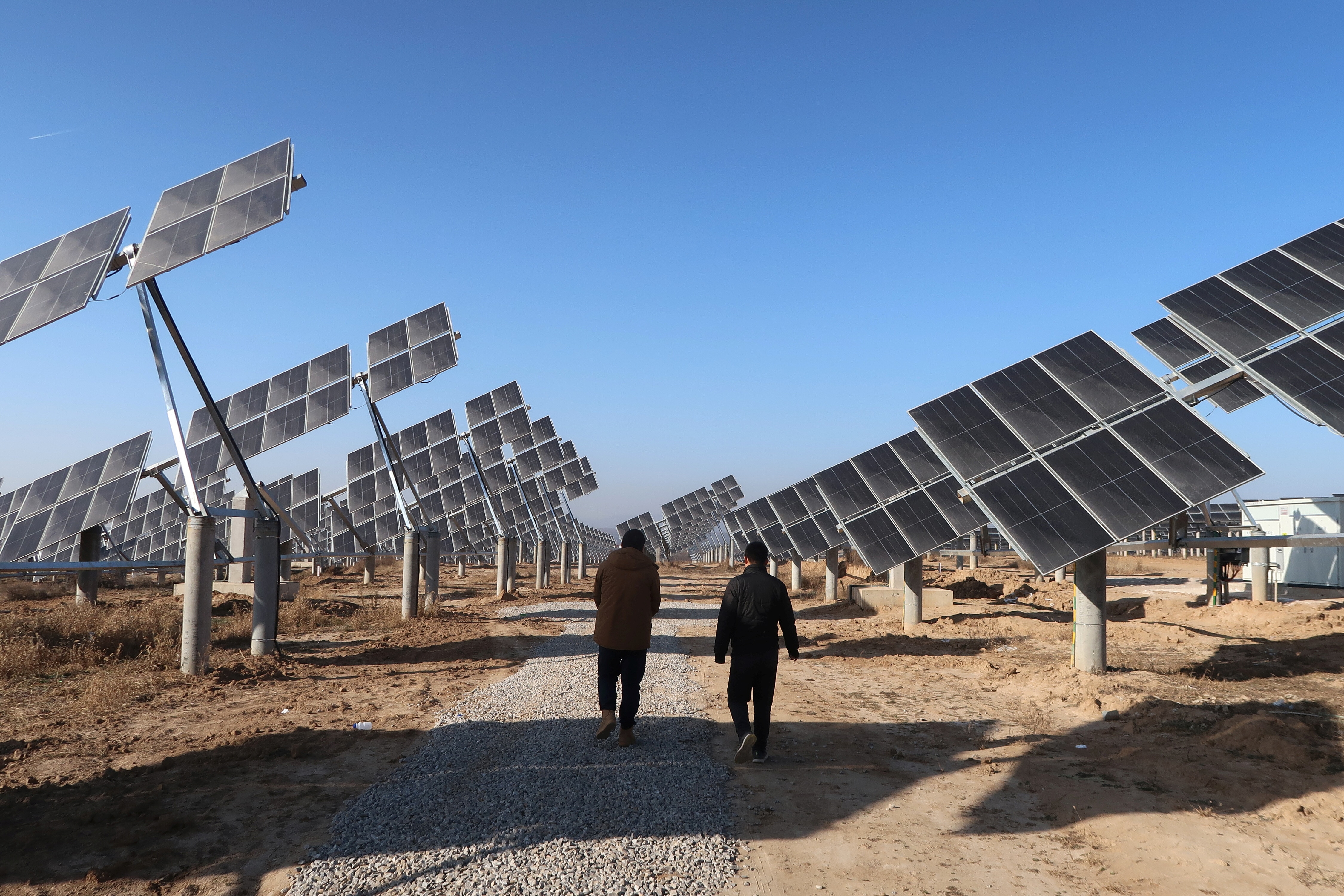
China's Ecological and Environmental Code embeds green considerations into its economic framework. Image: Reuters/Muyu Xu
Hashendra Wijesinha
Lead, Multilateral Engagement and Strategic Initiatives, Nature & Climate, World Economic Forum- China's Ecological and Environmental Code was enacted alongside its 15th Five-Year Plan, embedding green considerations into its economic framework.
- The Code signals a shift towards a holistic development model in which environmental stewardship is systematically integrated into growth and could also influence global markets.
- How we can understand the next phase of China’s economic trajectory is a key focus at the World Economic Forum’s Annual Meeting of the New Champions, also known as 'Summer Davos', in China from 23–25 June.
China has recently enacted the its Ecological and Environmental Code (the Code), marking a significant step in embedding environmental considerations within the country’s economic framework. It’s only the second national code since the Civil Code in 2020 and sits just under China’s constitution in legal hierarchy.
Introduced alongside China’s 15th Five-Year Plan in March 2026, the Code signals a shift towards a holistic development model in which environmental stewardship is systematically integrated into growth.
Beyond its domestic implications, the legislation may also influence global markets, where environmental performance is increasingly shaping economic competitiveness, regulatory approaches, and industrial policy.
What is China’s Ecological and Environmental Code?
Effective 15 August 2026, the Code establishes a unified, comprehensive legal framework governing climate, biodiversity and resource use. It consolidates and replaces 10 existing environmental laws, while integrating more than 100 regulations and 30 statutes into a single system. It also applies to all companies operating within China, including foreign-invested enterprises, joint ventures and domestic firms.
The Ecological and Environmental Code provides the basis of action to realize China’s vision of ‘Lucid water, Green mountains’ for current and future generations. While incorporating the nation’s Dual Carbon Goals – peaking carbon emissions before 2030 and achieving carbon neutrality by 2060 – it also references commitments to halt and reverse biodiversity loss by 2030.
The Code is a move away from fragmented, issue-specific regulations towards a centrally coordinated, integrated approach to environmental governance.
It also introduces stronger accountability mechanisms. Greater legal clarity around ecological damage, combined with expanded public interest litigation, may increase the materiality of environmental risks, moving them from primarily reputational concerns towards financial and legal exposure.
The Code is coming into effect as global demand for food, water, and energy is projected to rise sharply by 2050, and environmental risks dominating the long-term outlooks. As the world’s largest manufacturing economy and energy producer, and a contributor of approximately one-fifth of global gross domestic product, China’s development trajectory will play a pivotal role in shaping global trade and competitive dynamics.
Against this backdrop, and in a global context marked by geopolitical fragmentation, the Code could serve as a large-scale testbed for aligning public and private action. It may not only drive domestic policy evolution, but also influence broader approaches to sustainability, offering lessons for other economies seeking to balance growth with environmental stewardship.
What does the Code mean for business?
For business, the Code may function as both a compliance framework, and a market-shaping instrument. By integrating environmental considerations into regulatory frameworks, it provides clearer long-term signals for investment and industrial transformation, while shifting corporate incentives.
While the Code increases compliance pressure, it offers significant competitive advantages and market opportunities for companies with robust climate and nature strategies. This creates business opportunities in areas such as emissions reduction, resource efficiency and environmental monitoring, alongside green technologies and digital solutions that enable real-time tracking and optimization of environmental performance.
Increased restrictions in areas like landfill and waste management are also expected to drive growth in circular economy models, including recycling, waste-to-energy and industrial resource optimization.
At the same time, the recent expansion of Chinese carbon markets into hard-to-abate sectors including steel, aluminium and cement, combined with stricter disclosure expectations, is likely to increase the importance of carbon accounting, verification and sustainability assurance.
Environmental performance may become more directly linked to access capital allocation strategies, procurement opportunities and cost of financing, potentially attracting long-term capital providers and lowering the cost of capital.
China’s concentration of industrial capacity and innovation ecosystems may enable relatively rapid scaling of green technologies, circular business models and lower-emissions production systems, although outcomes will depend on implementation and enforcement.
The implications extend across supply chains. As the Code applies to all companies operating in China, sustainability considerations are likely to cascade upstream and downstream, accelerating the shift toward more integrated and traceable production systems.
In this context, environmental performance moves beyond compliance and becomes a core dimension of competitiveness, shaping how firms allocate capital, design products and manage risk.
Code aims to shape prosperity within planetary boundaries
China’s Ecological and Environmental Code represents a notable development in the evolution of economic governance, integrating environmental considerations more directly into legal and regulatory structures.
Its implications extend beyond domestic industry, with potential relevance for how large economies approach the alignment of sustainability objectives with long-term growth.
For businesses and policymakers alike, the message is clear: in the coming decades, the ability to compete may increasingly depend on how effectively environmental performance is embedded into economic strategy; not treated as a separate objective, but as a defining one.
Don't miss any update on this topic
Create a free account and access your personalized content collection with our latest publications and analyses.
License and Republishing
World Economic Forum articles may be republished in accordance with the Creative Commons Attribution-NonCommercial-NoDerivatives 4.0 International Public License, and in accordance with our Terms of Use.
The views expressed in this article are those of the author alone and not the World Economic Forum.
Stay up to date:
Circular Economy


Forum Stories newsletter
Bringing you weekly curated insights and analysis on the global issues that matter.