Energy tech and digital intelligence key to scaling progress on Paris climate goals
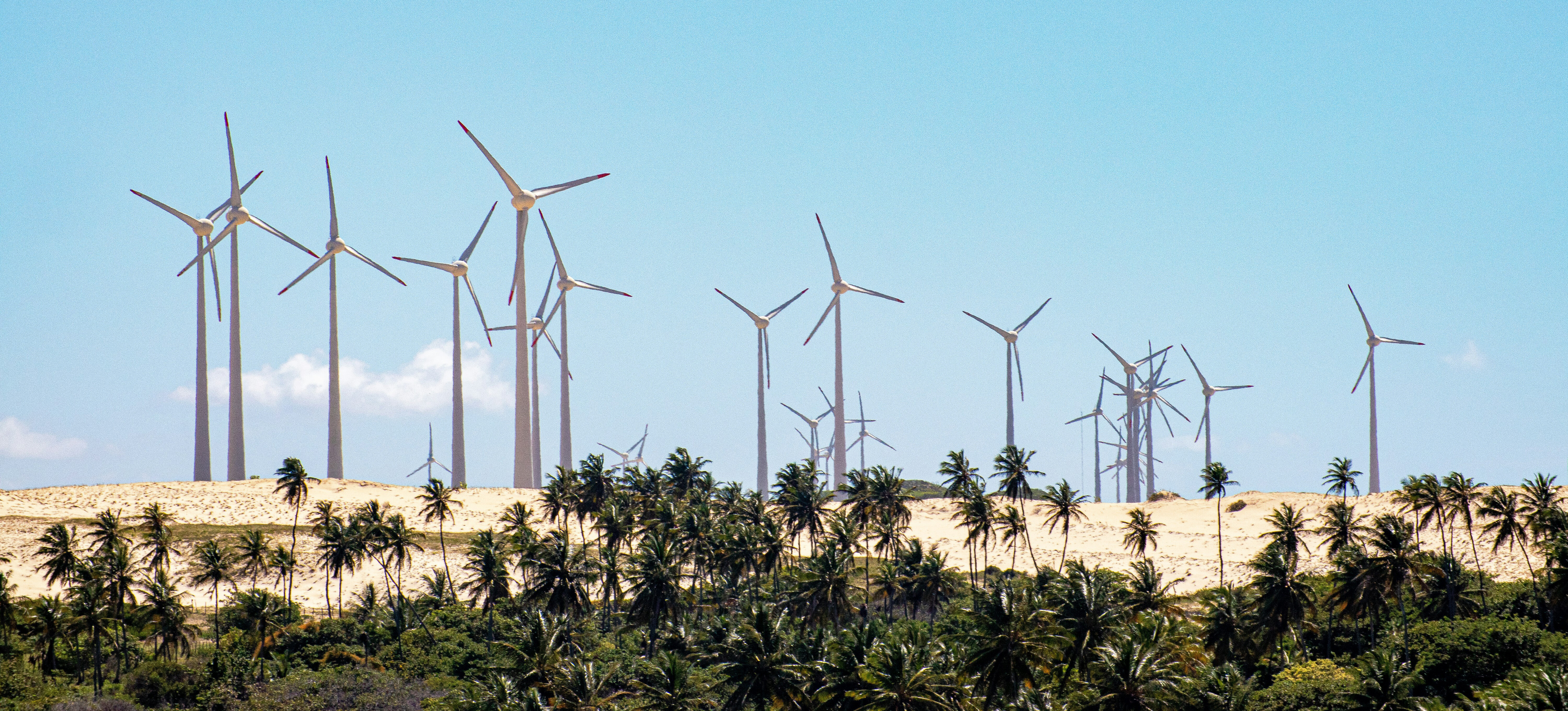
The COP30 climate conference will be held in Belem, Brazil. Image: Vitor Paladini/Unsplash
- Ten years on from the Paris Agreement, meeting the targets outlined in the UN climate treaty remains challenging.
- Digital intelligence will be key to decarbonization, as well as building agility and resilience into future energy systems.
- COP30 in Brazil presents an opportunity to drive alignment between ambition, digital capability and climate strategy.
Reflecting on the climate commitments of the Paris Agreement, it is easy to feel despondent. Some emissions have fallen -- in the EU by almost 40% since 1990. Investment in renewable power generation is twice that of fossil fuels. Yet, the world is likely to reach peak carbon emissions this year. The path to limit the increase in global temperature to a maximum of 1.5ºC is becoming an ever-steeper climb.
It was never going to be easy: as the 195 signatories confirmed their pledges in 2015, it was clear that challenges lay ahead. Today, we see reasons for positivity in accelerating electrification, which is becoming a driving force of the energy transition.
The will to decarbonize at scale is growing too, exemplified by the World Economic Forum’s CEO letter. Moreover, as energy tech leaders, we believe that digital intelligence holds the key to scaling progress, ensuring that as we decarbonize we are building agility and resilience into the systems of the future.
Renewables fastest way to generate new energy capacity
Evidence of this progress can be seen in the power sector, where renewables now represent the quickest and most cost-competitive way to generate new capacity.
In the UK and EU alone, renewable energy has increased by almost 50% since the Paris Agreement. This trend is accelerating elsewhere, with the growth of biomass generators in India and North America.
Renewable-powered grids are driving a proliferation of innovation, too. UK Power Networks is using industrial artificial intelligence (AI) to analyse 4 billion data points a day to help them manage the increasing complexity of a decarbonized grid.
Meanwhile, Highview Power is using wind energy combined with liquid air cryogenics to build storage capacity that will further underpin UK grid resilience. In Morocco, one of the world’s largest solar farms, the Noor power plant, has the capacity to power more than one million households.
Next, we must connect global grids, ramp up renewables and hard-wire demand-side flexibility. Building these capabilities is essential to scale a low-carbon electrification system.
Digital infrastructure vital for decarbonization
A critical obstacle to progress in low-carbon networks is that many countries need to enhance their underlying digital infrastructure. High-profile grid failures such as the Iberian Peninsula blackout have demonstrated the fragility of current systems.
They also showed that while innovation is under way, achieving net zero cannot be accomplished without substantial further investment. The good news is that governments and private partnerships are stepping up to provide those funds; climate finance will be a key focus at the upcoming UN climate conference negotiations in Brazil, known as COP30, as part of the $1.3 trillion Baku To Belem roadmap.
That will be just the beginning. Globally, estimates suggest that some $9.2 trillion will be needed each year to transition to net zero. Yet money is starting to flow. In the UK, National Grid has announced £60 billion over the next five years to digitalize infrastructure; In the EU, estimates suggest that up to €2.3 trillion will be invested over the next decade, with roughly half dedicated to modernizing transmission and distribution infrastructure to ensure grid resilience.
Still, such investments take time to mature – all the while the temperature is creeping up. It is therefore crucial that energy tech and digital capabilities are deployed together to accelerate impact.
From connecting networks to manage complexity, ensuring scalable electrification is a first step towards wider industrial decarbonization. And digital solutions provide the insight, visualization tools and intuitive analysis that teams need to meet supply commitments with agility and provide the certainty that their customers demand.
How digitalization can drive profitability
These advances are not just good for society and the planet – they drive direct value at the bottom line. A great example is Dominion Energy, a major power producer on the US East Coast. Dominion invested in a real-time digital network to bring renewable power capacity online at scale. With a latency of just eight seconds, their teams use industrial AI in the form of process simulation to model demand and match it to fluctuating renewable generation.
Dominion’s unified asset framework also enables proactive maintenance, anomaly detection and faster environmental reporting, all of which improve reliability and operational efficiency.
Last but not least, Dominion’s customers can view the company’s energy source and use this data as proof for their own net-zero commitments, for investors and auditors. As the burden of climate regulation increases, we anticipate that convergence of digitalization, electrification and profitability will intensify.
The Dominion example points to another insight – while some AI is energy-intensive, many forms of industrial tech can be energy-efficient to implement and can minimize emissions, including industrial AI.
We see this not just in the power sector, but also in manufacturing, where tyre producer Michelin has embraced a data-driven approach to energy management, achieving up to 16% reduction in energy use across its factories.
A ‘mutirão’ for industry at COP30 in Brazil
At COP30, negotiations will focus on the need to balance decarbonization efforts with the urgent requirements of economic growth and development.
The twin principles of energy tech – supporting wider-spread electrification and enabling industrial digitalization – will be crucial to achieving this balance, as will collective effort. The Brazilian Presidency’s COP30’s vision of “mutirão” – an Indigenous concept of communal collaboration for the common good, is as important for industry as it is for other stakeholders.
As the negotiation agenda becomes clear, some key principles can help drive measurable progress:
- Digitalization enables decarbonization at scale: Partnerships between nations, sectors and even competitors can help systems-level low-carbon operations. We are pleased to be building such digital ecosystems in many parts of the world today, as part of the World Economic Forum’s Transforming Industrial Clusters initiative – a ‘mutirão’ for industry in action.
- Combine the best of global and local: Leverage the best of global technologies to ensure speed and scalability. Adapt to local context to fit the business ecosystem needs and leverage existing strengths and success stories.
- Double down on deployment: We have 90% of the technologies we need today to solve the climate crisis, but deployment at speed continues to be a challenge. Industry must play a lead role in picking up the pace of electrification, digitalization and decarbonization.
Ten years after Paris, COP30 presents an opportunity to drive alignment between ambition, digital capability and climate strategy. We have the tools, the insight and the will to drive change. This is why we welcome the Brazilian presidency’s call for this to be a COP for Impact, and we stand ready to get to work and drive action on climate.
Don't miss any update on this topic
Create a free account and access your personalized content collection with our latest publications and analyses.
License and Republishing
World Economic Forum articles may be republished in accordance with the Creative Commons Attribution-NonCommercial-NoDerivatives 4.0 International Public License, and in accordance with our Terms of Use.
The views expressed in this article are those of the author alone and not the World Economic Forum.
Stay up to date:
The Digital Economy
Related topics:


Forum Stories newsletter
Bringing you weekly curated insights and analysis on the global issues that matter.
More on Energy TransitionSee all

Per Kristian Hong, Guillaume De Lescluze, Memia Fendri and Hendrik Gaens
September 7, 2026