5 technologies reshaping water security at industrial scale
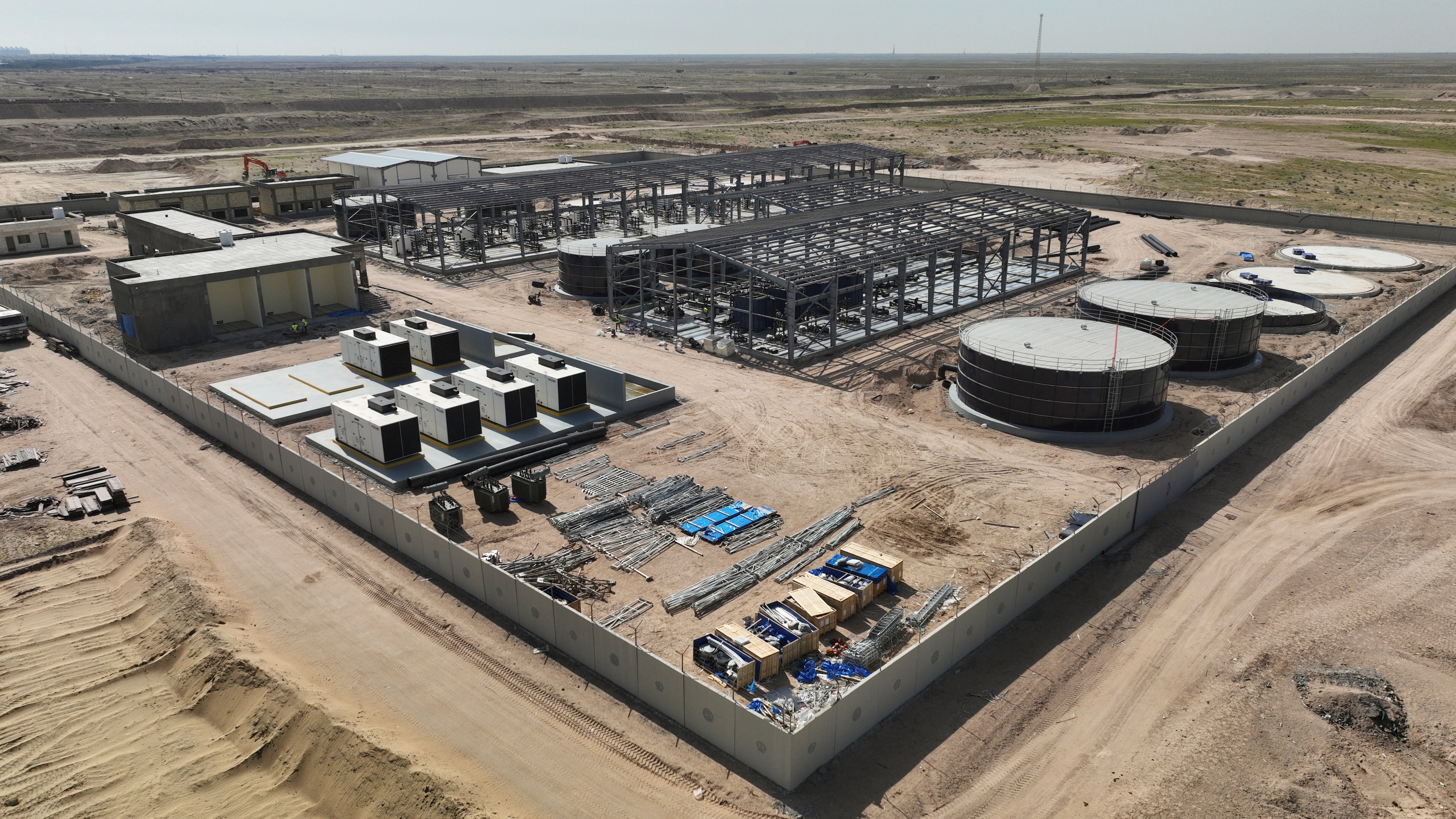
A water desalination station in Basra, Iraq. Image: Reuters/Mohammed Aty
- Water supply volatility is leading to growing competition among agriculture, tech and other industries.
- A set of technologies that augment or stabilize existing supply can help fill this breach with 'manufactured water'.
- From desalination to air-to-water, these five solutions are operational and scalable.
For decades, organizations have treated water like a fixed input: Forecast demand and assume supply will hold.
But as global freshwater demand is projected to outstrip supply by 40% by 2030, water supply volatility is turning into a competitiveness factor for industrial corridors, data hubs, global agriculture and any region betting on growth while heat and variability rise.
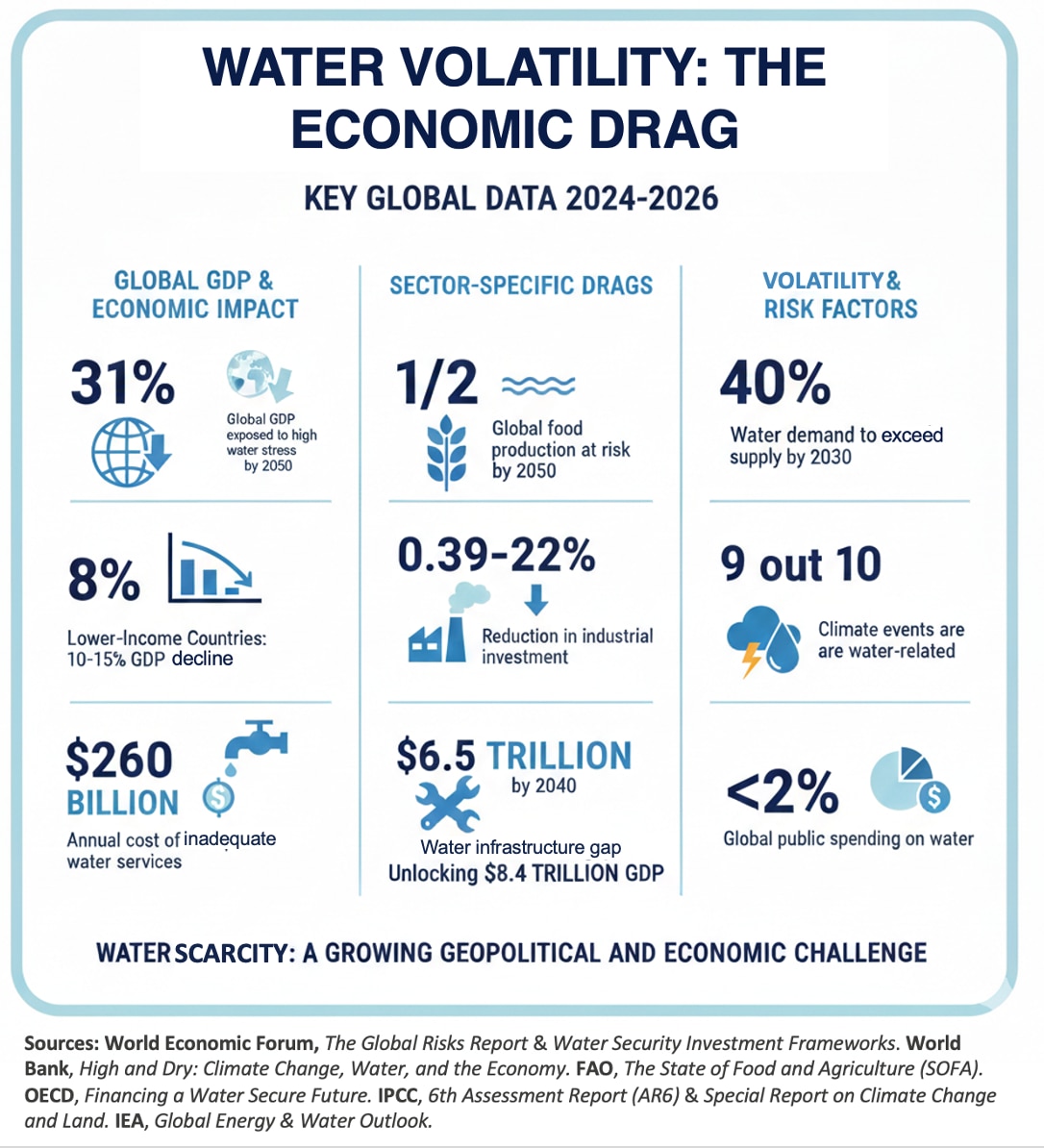
This has contributed to growing interest in “manufactured water” from approaches that aim to augment or stabilize supply either by harvesting from new sources or upgrading quality from existing ones. These approaches can, in some contexts, improve reliability and quality; however, their deployment depends on local conditions, including energy availability, cost, regulatory frameworks and environmental trade-offs.
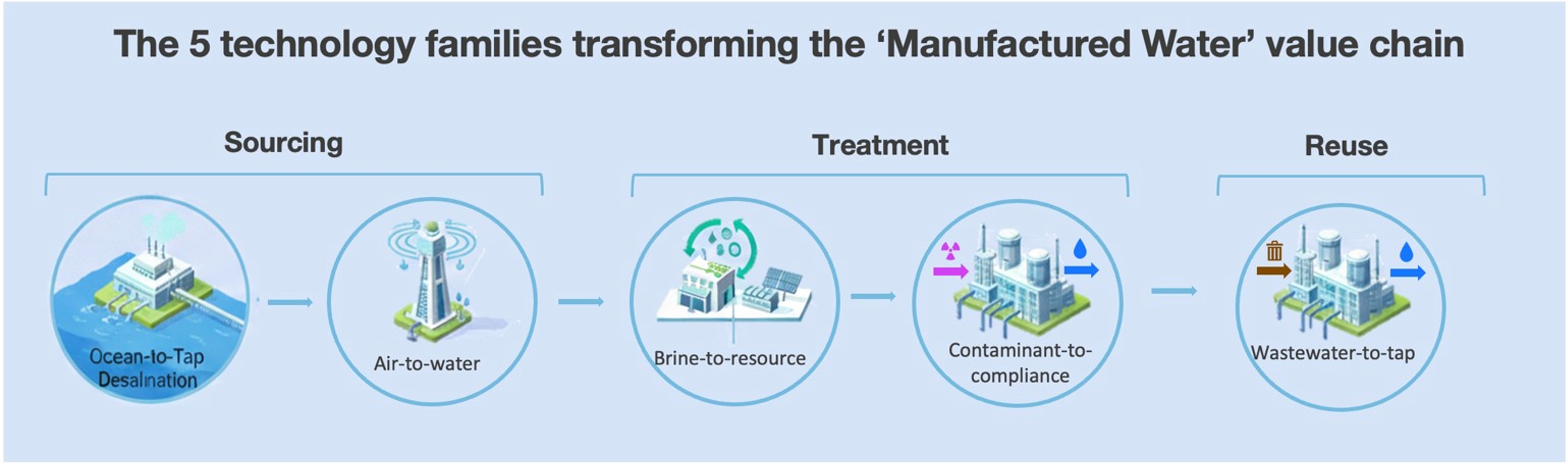
Translating it into deployment reality means five technology families, some more mature than others, but all with growing activation across industry and infrastructure.
1. Ocean-to-tap desalination
Desalination has long shifted from a niche, context-specific solution to financeable infrastructure, becoming a default water supply option for coastal growth corridors from the Persian Gulf to Chile and Peru. The technology has also moved inland: The Kay Bailey Hutchison Desalination Plant in El Paso demonstrates that brackish groundwater aquifers can be a viable urban supply source even in the heart of the Chihuahuan Desert. For agricultural use, desalination can also work where higher-value crops justify the water cost.
Technical feasibility is therefore less the constraint than the conditions under which desalination can be deployed sustainably. The technology remains energy-intensive, requiring several kilowatt-hours per cubic metre produced, which generates meaningful carbon emissions wherever grids run on fossil fuels. Brine discharge poses a parallel challenge, as concentrated saline waste can damage marine ecosystems if not properly managed. These constraints are pushing innovation in system design, including novel architectures that rethink the physics of pressure and pumping (such as Norway’s Flocean, pioneering a deep-sea desalination approach that exploits ambient ocean pressure).
Desalination will keep expanding, but the durable projects will be those that structurally control energy costs and environmental liabilities over time.
2. Wastewater-to-tap potable reuse
Treating wastewater to drinking standard turns a disposal problem into a local, self-replenishing water source. The appealing economic logic of cities being capable of producing water from existing supply pushed cities like Windhoek, in Namibia, to pilot direct potable reuse since 1968.
The challenge now is no longer whether the technology works, but whether people trust it enough. Programmes that invest in continuous testing, open reporting and sustained community engagement to overcome that hesitation get traction. A second frontier is how fast and affordably this capacity can be built and run at scale (companies like Ireland's Vortech are working on making the underlying aeration treatment equipment cheaper and simpler to install). Ultimately, success depends as much on governance and public trust as on engineering: These systems prove themselves over years of reliable operation, and only if the infrastructure behind them can grow without becoming prohibitively expensive.
3. Air-to-water
Air-to-water gets attention because it feels like magic, but in practice there are two routes. The first is condensation, or the cooling of air below its dew point and treatment of resulting condensed water, which is strongest in warm, humid conditions, but energy-intensive as air dries. The second is sorbent-based capture, done via "sorbents", or “dry sponge” materials that grabs water from air, later releasing it as water is heated. Sorption-based water harvesting is promising exactly because it promises to tackle the scaling challenges of condensation, with higher water uptake even at lower air humidity and condensation temperatures. Air-to-water can also offer better economics where trucking water is the alternative, but scaling depends on honest, comparable performance across humidity and temperature ranges.
4. Contaminant-to-compliance treatment
Like wastewater, sometimes "new water" already exists, but is rendered unusable by industrial pollutants like agricultural and "forever” chemicals that conventional treatment cannot break down. Destruction instead of filtration is where the tech field is moving: Instead of capturing contaminants and creating a disposal problem, newer approaches chemically destroy them on contact, leaving no residue to manage. This matters enormously for adoption since the residue question has historically been the sticking point that stalls scale. Canada-based Xatoms showcases this approach by using AI to discover light-activated materials that decompose contaminants rather than concentrate them. Economically, this can be among the fastest routes to usable capacity, provided that destruction is verifiable and consistent enough to satisfy regulators.
5. Brine-to-resource
Desalination and water reuse inevitably produce concentrated waste streams – brine, mineral residues, chemical byproducts – that unmanaged become a hard ceiling on how far these technologies can scale. The more interesting development is that these concentrates carry recoverable minerals, including lithium and other critical materials now in high demand for batteries and clean energy infrastructure, which changes the economic logic of the whole system. Gradiant (USA) has demonstrated significant lithium recovery from brine. What separates the projects that scale from the ones that stall is how early in project design this gets addressed; facilities that treat concentrate management as a first-class variable tend to unlock permitting, financing and cost stability.
Water security via engineered processes won’t be won by a single breakthrough. It will be won by portfolios that can prove dependable output, verified quality and responsible by-product handling in ways that are comparable across sites – so decisions can travel from one location to the next.
Don't miss any update on this topic
Create a free account and access your personalized content collection with our latest publications and analyses.
License and Republishing
World Economic Forum articles may be republished in accordance with the Creative Commons Attribution-NonCommercial-NoDerivatives 4.0 International Public License, and in accordance with our Terms of Use.
The views expressed in this article are those of the author alone and not the World Economic Forum.
Stay up to date:
Water
Related topics:


Forum Stories newsletter
Bringing you weekly curated insights and analysis on the global issues that matter.
More on Climate Action and Waste Reduction See all

Kate Whiting
July 29, 2026


