Why cyber resilience is a foundation for global trade
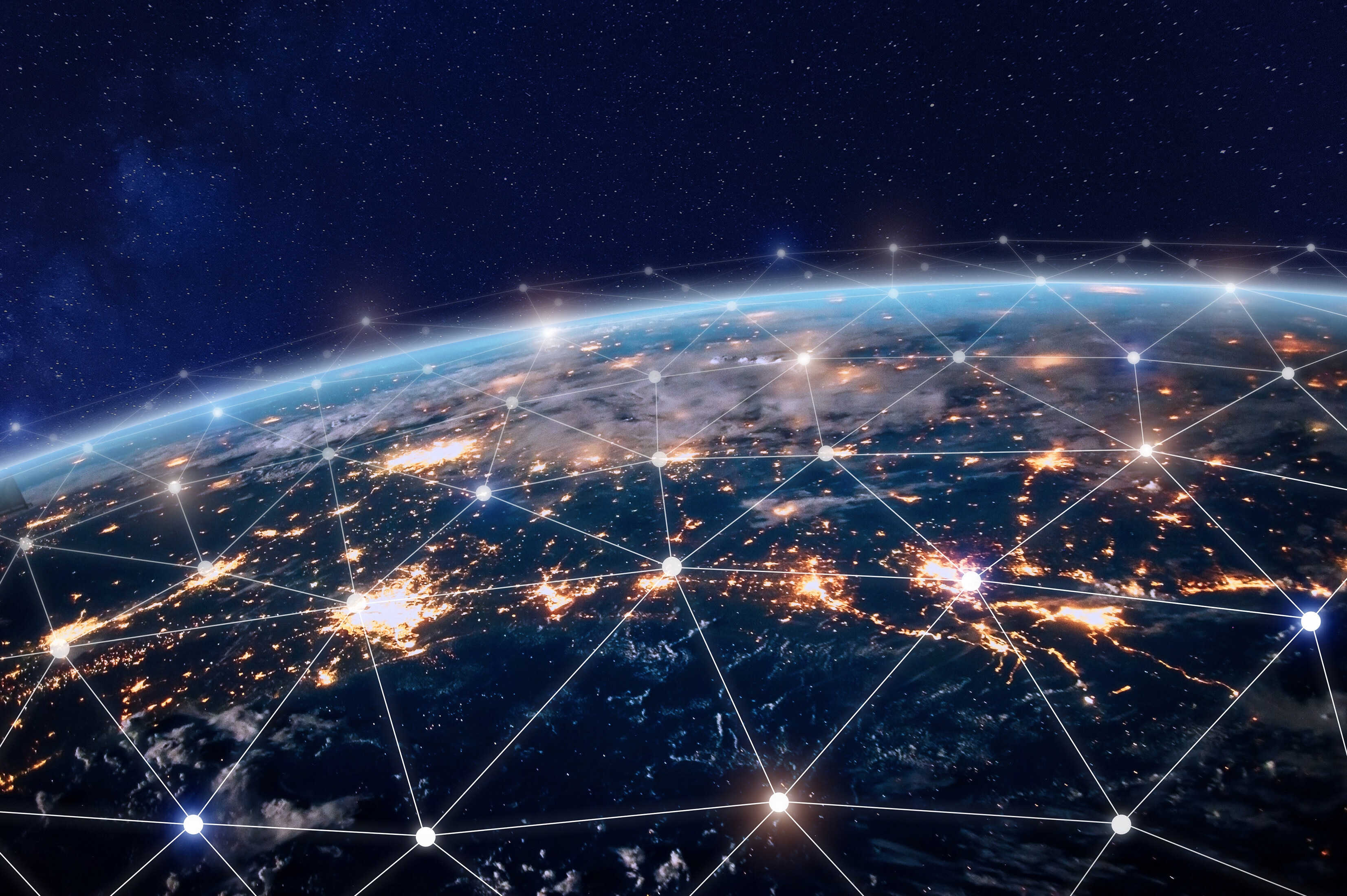
Digital trade already accounts for roughly a quarter of global trade – which means that cyber resilience has never been more important. Image: Getty Images/iStockphoto
Apisada Suwansukroj
Lead, Programming and Communications, Centre for Cybersecurity, World Economic Forum- Digital trade already accounts for roughly a quarter of global trade – and a 1% rise in digital connectivity is linked to a 1.5% increase in international trade.
- AI is shrinking cyberattack timelines from weeks to days, while critical digital infrastructure has become more concentrated and interdependent than ever.
- Cyber resilience is no longer a technical risk management issue – it is becoming a defining condition for economic stability and global trade.
Digital trade is increasingly shaping the global economy, accounting for roughly a quarter of global trade. As digital connectivity expands, trade costs decline significantly, accelerating the flow of goods, services and capital across borders. On average, a 1% increase in domestic digital connectivity is linked to a 1.5% rise in international trade.
While global trade and digital connectivity are mutually reinforcing each other, they are also creating new systemic vulnerabilities.
The geopolitical environment underpinning that connectivity is becoming increasingly fragmented. For digital trade, this opens up new risks. Threat actors are leveraging moments of instability and hyperconnectivity to deploy cyberattacks.
Governments are responding with digital sovereignty policies aimed at strengthening national resilience and reducing strategic dependencies which, subsequently, translate into divergent cyber regulations and data localization requirements.
Technology is changing digital trade
Compounding these tensions, AI is accelerating the speed and sophistication of cyber threats, while critical digital infrastructure – from cloud services to financial platforms – has become more concentrated and interdependent than ever before. Together, these dynamics are elevating cybersecurity from a technical risk management issue into a systemic economic and geopolitical challenge.
The future of global trade will increasingly depend on secure connectivity in a fragmented digital world. As cyber resilience becomes foundational to trade resilience, leaders must prepare for a new reality in which cyber threats, geopolitical tensions and fragmented technology ecosystems increasingly reinforce one another.
5 shifts underway where tech meets trade
At the World Economic Forum’s Annual Meeting on Cybersecurity 2026, the session Securing Connectivity Amidst Trade Tensions, leaders from government, finance and global logistics explored this trend. Here are some of the key takeaways.
1. The hidden infrastructure behind global trade is under growing strain
Modern trade depends on an invisible physical architecture of digital systems such as hyperscalers, undersea cables, logistics networks, payment platforms and cloud infrastructure that enable goods, services and capital to move across borders in real time. That infrastructure is now facing mounting pressure from geopolitical tensions and cyber threats.
Global logistics operators are increasingly navigating disruptions that extend beyond isolated incidents. Regional conflicts are creating cascading operational consequences, including closed airspaces, rerouted cargo flows and concentrated transport bottlenecks. At the same time, cyber adversaries are becoming more coordinated, transnational and AI-enabled, increasingly combining cyber and physical disruption. This convergence is creating a new category of systemic risk.
The challenge is particularly acute because many industries now rely on highly concentrated digital infrastructure. Financial institutions, for example, depend heavily on hyperscalers, third-party providers and interconnected networks to sustain global trade and payments. A disruption affecting one critical node can quickly propagate across markets and supply chains.
As a result, operational resilience is becoming just as important as prevention. Financial institutions are increasingly focused on identifying critical functions, understanding underlying data flows and developing “minimum viable” recovery capabilities that allow essential operations to continue even during destructive cyber incidents.
2. Fragmentation is complicating cyber resilience
While digital systems operate globally, regulation increasingly does not. Countries are pursuing different strategies for cyber resilience, data governance and digital sovereignty – often for legitimate national security, public policy objectives and economic reasons. Yet the cumulative effect is creating a patchwork environment that is becoming increasingly difficult for multinational organizations to navigate.
For businesses operating across jurisdictions, this fragmentation introduces significant operational complexity. Different incident reporting timelines, divergent resilience requirements and incompatible regulatory expectations can complicate cyber response efforts precisely when speed and coordination matter most.
The challenge extends beyond compliance. Regulatory fragmentation can weaken resilience itself by making it harder to implement unified security architectures across global operations.
This tension is becoming even more pronounced as geopolitical competition shapes technology ecosystems. The gradual bifurcation of technology stacks across regions is forcing companies to support multiple infrastructures, standards and operational models simultaneously. While such fragmentation may advance certain security or sovereignty objectives, it also increases costs, operational burdens and cyber complexity across the global economy. What’s at stake is not only cybersecurity, but the future efficiency and openness of the digital economy itself.
3. AI is accelerating both resilience and disruption
The rapid rise of AI is intensifying these pressures. Adversaries are increasingly using AI to accelerate, scale and automate attacks at unprecedented speed. Exploit timelines that once took weeks are shrinking to days and in some cases minutes. The growing convergence of AI with cyber-physical operations is also increasing the likelihood of more coordinated and disruptive attacks.
At the same time, organizations are increasingly relying on AI to defend themselves.
In the context of the trade ecosystem, security teams are already struggling to manage the scale and complexity of modern threat environments.
AI is becoming essential for identifying anomalies, prioritizing alerts and detecting vulnerabilities before systems are deployed. Humans alone can no longer process the volume and velocity of emerging threats. This creates a strategic paradox: AI is simultaneously amplifying systemic cyber risk while becoming indispensable for resilience.
Managing this will require more than technology adoption. It will depend on governance, trust and the ability to maintain meaningful human oversight as security operations become increasingly automated.
4. Resilience can no longer be built in isolation
As trade, technology and critical infrastructure become more interconnected, resilience increasingly depends on ecosystem-wide coordination. Public-private collaboration, intelligence sharing and trusted regulatory cooperation are becoming foundational requirements for sustaining secure digital trade.
This is particularly important for supply chains and smaller organizations that often lack the resources to manage sophisticated cyber risks independently. Large organizations are increasingly adopting more rigorous third-party risk management practices, including continuous monitoring, independent audits and supplier diversification strategies to build intrinsic resilience across ecosystems.
At the international level, the growing importance of plurilateral cooperation and regulator-to-regulator collaboration are more pragmatic alternatives to full global harmonization.
Emerging trade agreements and digital economy partnerships are beginning to incorporate cyber resilience, incident reporting coordination and shared governance frameworks as foundational elements of economic cooperation. The objective is not complete uniformity. Rather, it is interoperability, creating enough alignment and trust between systems to sustain secure global connectivity in a fragmented world.
5. Cyber resilience is becoming economic strategy
The global economy is entering a period where geopolitical fragmentation, technological competition and systemic cyber risk are becoming increasingly intertwined. In this environment, cybersecurity can no longer be treated as a supporting function operating at the margins of trade and economic policy. It is becoming a defining condition for economic stability, operational continuity and strategic advantage.
The organizations and economies that adapt most successfully will not necessarily be those that eliminate disruption altogether, but those capable of absorbing shocks, recovering quickly and sustaining trust across increasingly complex digital ecosystems. Economic competitiveness will increasingly be shaped not only by access to markets and supply chains, but by the ability to sustain trusted, interoperable and resilient digital infrastructure across borders.
Securing connectivity in the years ahead will therefore require more than stronger defences. It will require a new model of resilience built on coordination, interoperability and collective adaptation at the speed of geopolitical and technological change.
Don't miss any update on this topic
Create a free account and access your personalized content collection with our latest publications and analyses.
License and Republishing
World Economic Forum articles may be republished in accordance with the Creative Commons Attribution-NonCommercial-NoDerivatives 4.0 International Public License, and in accordance with our Terms of Use.
The views expressed in this article are those of the author alone and not the World Economic Forum.
Stay up to date:
Cybersecurity
Related topics:


Forum Stories newsletter
Bringing you weekly curated insights and analysis on the global issues that matter.
More on Trade and InvestmentSee all

Charlotte Edmond
August 28, 2026


