How leading organizations are redesigning workplace inclusion
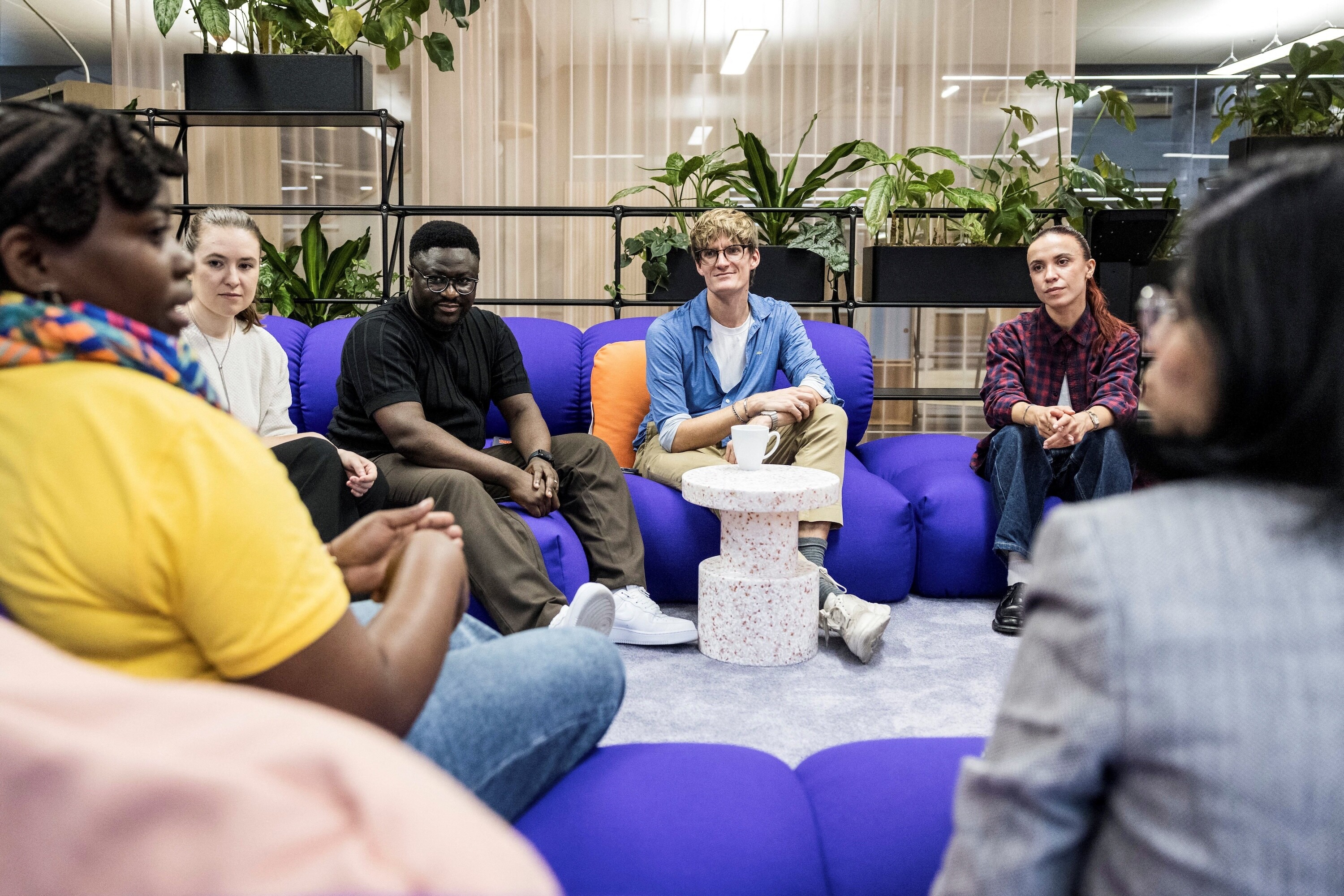
Top organizations are updating their workplace inclusion strategies to adjust for new business realities. Image: REUTERS/Nadja Wohlleben
- No underrepresented group has fully equal access to workplace opportunities, according to a survey of 10,000 business leaders.
- In response to this, leading organizations are building fairness into hiring, promotion and evaluation systems.
- Organizational inclusion approaches are becoming broader, more pragmatic and more integrated into business strategy.
Across industries and regions, employers are facing a common set of challenges: labour shortages, ageing workforces, persistent skills gaps and increasing competition for talent. At the same time, executives report that opportunity remains unevenly distributed.
According to the World Economic Forum’s Executive Opinion Survey of more than 10,000 business leaders across 110 economies, no underrepresented group is perceived to have fully equal access to workplace opportunities.
Some organizations, though, are making measurable progress.
What distinguishes them is not necessarily larger budgets or more ambitious commitments. Rather, they are treating inclusion as an organizational design challenge by focusing on how to build fairness and equality of opportunity directly into the systems that shape everyday decisions.
Organizations are increasingly asking themselves how to build systems that consistently enable the best talent to succeed.
Why systems matter more than programmes
Organizations operate through systems: hiring and procurement processes, performance evaluations, promotion criteria, workforce planning mechanisms and leadership decisions. When these systems are transparent and criteria are clear and consistently applied, they help organizations make better decisions.
This is why many leading organizations are moving towards what might be called "fairness that works" – embedding fairness directly into how decisions are made. Sustainable progress is often achieved not by relying on individual intentions alone, but by designing processes that make fair outcomes more likely by default.
Rather than depending solely on awareness or individual goodwill, organizations are redesigning processes to improve consistency, transparency and accountability. Structured hiring criteria, clearer performance expectations, standardized evaluation frameworks and stronger governance mechanisms help level the playing field and ensure that talent is recognized and developed more effectively.
The result may not only be greater fairness, but stronger organizational performance, improved trust and more resilient talent pipelines.
Many of the initiatives recognized through the WEF’s Future of Inclusion Lighthouse programme demonstrate that inclusion strategies can be powerful catalysts for this kind of systemic change.
Evolving strategies to deliver workplace inclusion
Inclusion is becoming broader, more practical and increasingly central to organizational performance.
As talent becomes scarcer, organizations are expanding where they look for talent and who they create opportunities for. They are developing new pathways for people who remain underrepresented in the workforce and in leadership. That includes those returning from career breaks, people from lower socioeconomic backgrounds, people with disabilities, neurodivergent talent and experienced workers later in their careers. Expanding access is increasingly seen not only as a social objective, but as a way to strengthen talent pipelines, unlock potential and build workforce resilience.
At the same time, data and AI are becoming strategic capabilities for advancing inclusion. Organizations are moving beyond broad diversity metrics to use more granular data to identify barriers across hiring, promotion, pay, retention and employee experience – and to turn insight into action. AI offers new opportunities to improve consistency, accessibility and fairness at scale, but its impact will depend on high-quality data, strong governance and meaningful human oversight.
This reflects a broader evolution in how inclusion is understood. Attention is expanding beyond traditional categories to factors such as socioeconomic background, neurodiversity, age and caregiving responsibilities. The focus is less on categories and more on removing the barriers that prevent people from accessing opportunity and contributing at their full potential.
The direction is clear: inclusion is becoming a practical capability – one that expands access to talent, strengthens decision-making and helps organizations build more resilient and effective workforces.
The future belongs to adaptive organizations
Perhaps the clearest message emerging from business leaders and younger generations alike is that the conversation is evolving.
A recent survey of the WEF’s Chief Diversity and Inclusion Officers (CDIOs) community suggested that the most effective path forward is seen as neither maintaining existing approaches unchanged nor starting from scratch. Instead, CDIOs are adapting and refining strategies to fit a more complex global environment.
A similar pattern appears among younger generations. Across 144 economies, nearly two-thirds of respondents in the World Economic Forum's Global Shapers Survey said inclusion efforts should evolve rather than be replaced.
The organizations making the greatest progress appear to share a common characteristic: they treat inclusion not as a standalone agenda, but as part of how the organization operates. They understand that lasting progress comes from initiatives that deliver measurable impact while helping create fairer systems and more equitable access to opportunity.
The 2027 Future of Inclusion Lighthouses programme is currently open for submissions. Whether you are embedding inclusion into how your organization operates, driving broader organizational transformation, or advancing inclusion through AI, we want to hear about the efforts that are making a difference, the impact they are having, and the lessons that could help inspire and inform businesses around the world. You can submit your corporate effort here by 30 October, 2026.
Don't miss any update on this topic
Create a free account and access your personalized content collection with our latest publications and analyses.
License and Republishing
World Economic Forum articles may be republished in accordance with the Creative Commons Attribution-NonCommercial-NoDerivatives 4.0 International Public License, and in accordance with our Terms of Use.
The views expressed in this article are those of the author alone and not the World Economic Forum.
Stay up to date:
Parity and Inclusion
Related topics:


Forum Stories newsletter
Bringing you weekly curated insights and analysis on the global issues that matter.
More on Equity, Diversity and InclusionSee all

Aarushi Singhania and Sharmishtha Biswas
October 1, 2026