UNICEF says majority of children exposed to climate hazards, and other climate and nature news
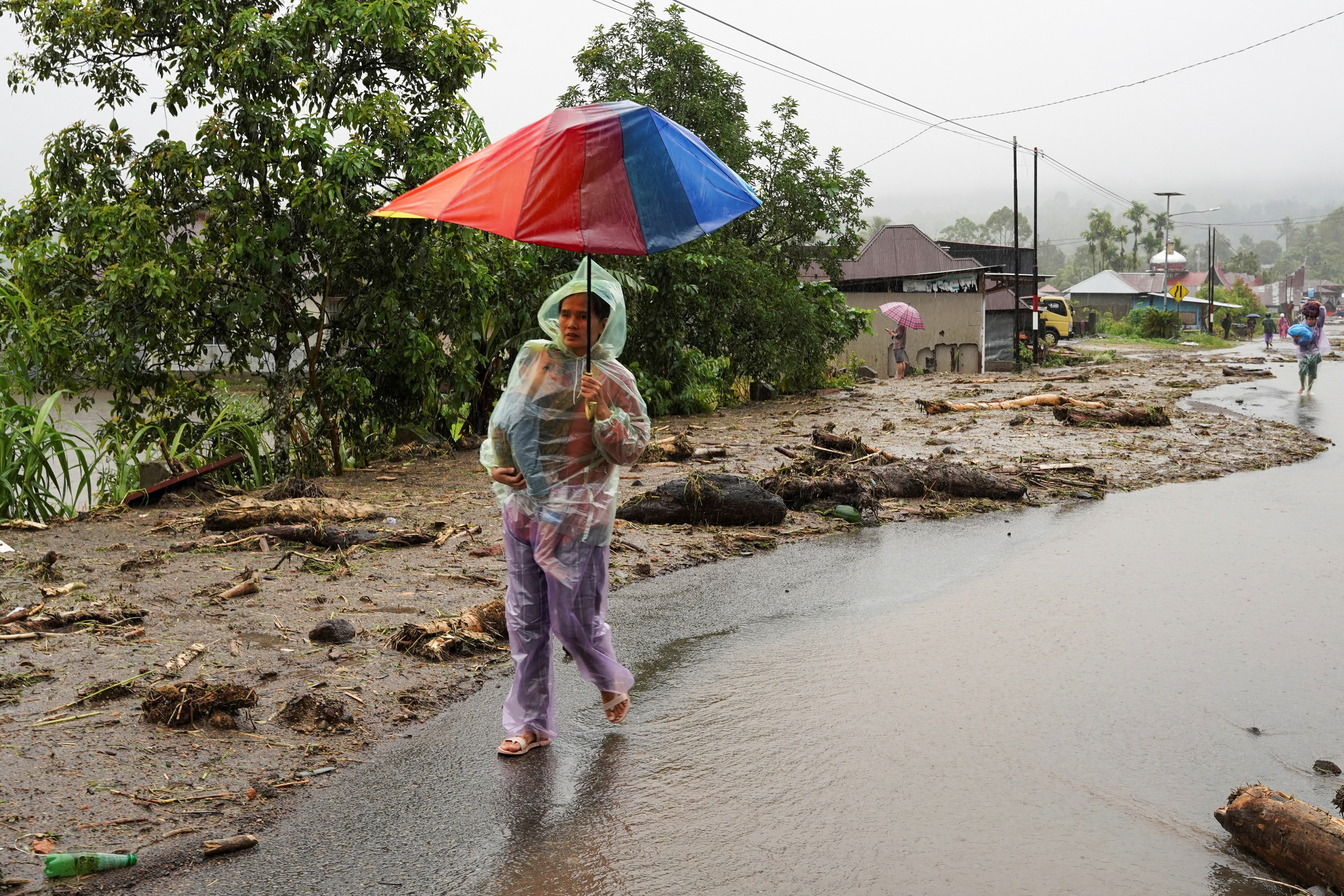
Almost half of all children are exposed to at least three climate hazards like flooding. Image: REUTERS/ Rafdi Rahmadi
- This round-up contains the key nature and climate news from the past month.
- Top news: Children 'disproportionately affected' by climate hazards – UNICEF; Poll reveals level of US public concern about climate crisis; Mangrove forests are making a comeback.
1. Almost all children at risk from at least one climate hazard – UNICEF
Children are "disproportionately affected" by climate hazards, according to a new report from UNICEF. The Children's Climate Risk Report 2026 reveals where children are most at risk to climate-related shocks – and gives practical guidance on how governments can respond.
The report finds that almost all children are now exposed to at least one of the following climate hazards:
- Coastal floods
- Drought
- Extreme heat
- Fire
- Heatwaves
- Riverine floods
- Sand and dust storms
- Tropical storms
Almost half – 1.1 billion children – are exposed to at least three of the above, while over 4 million children face up to six climate hazards, "threatening their health, education, and survival," says the report.
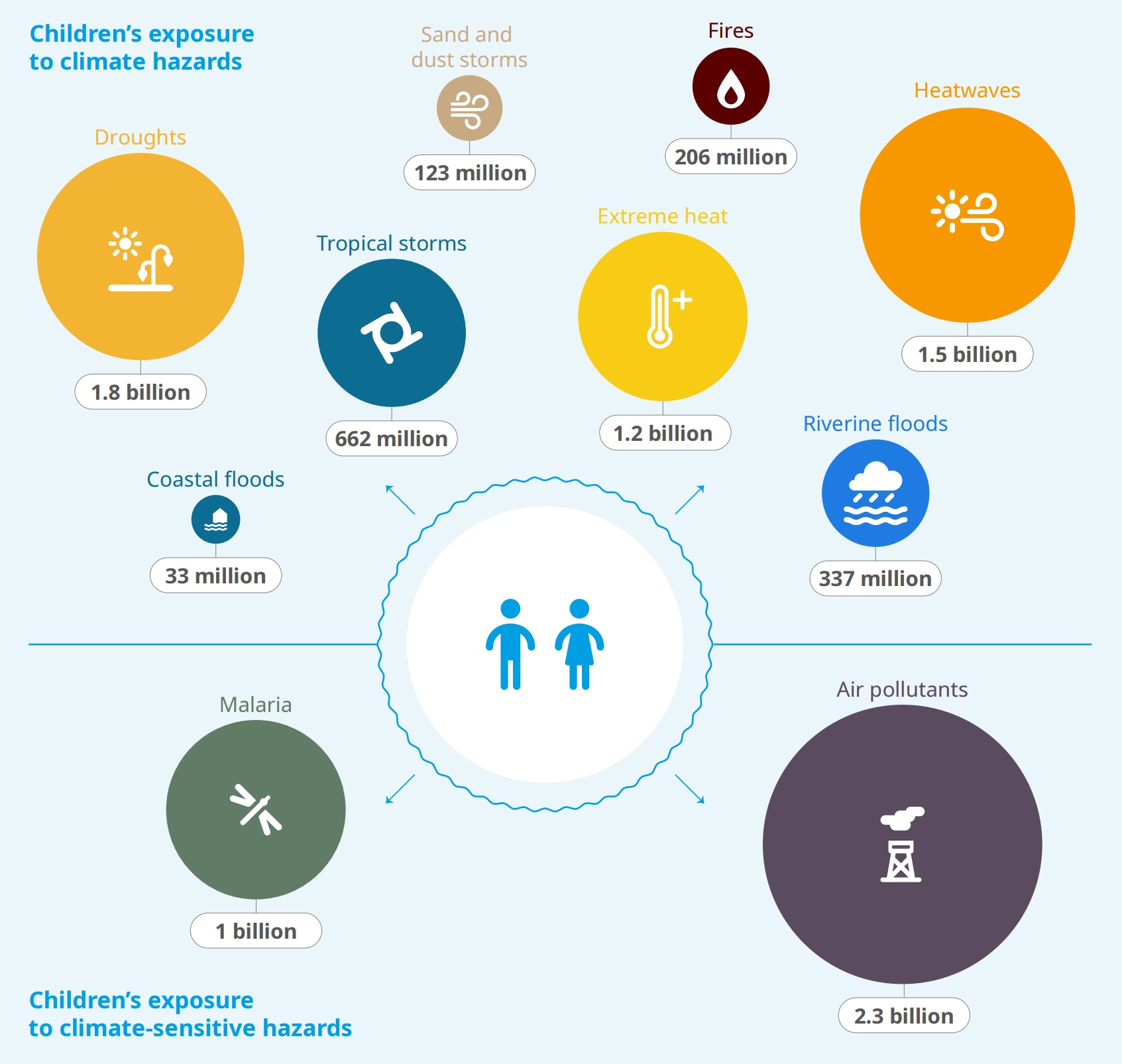
It is the "dangerous cascade of multiple, overlapping hazards" that poses the biggest threat to children, it says. Droughts devastate crops, exacerbating food insecurity; dried-out vegetation then fuels wildfires, increasing air pollution; while later in the year, flash floods on vulnerable land destroy homes and schools, leading to displacement and disease spread. For children in particular, this can lead to a vicious cycle which impacts their future prospects.
For instance, in 2024, 242 million children in 85 countries saw their schooling disrupted by climate hazards and it's estimated that 28 million children will be malnourished by 2050 as a result of the climate-related food crisis.
The younger generations are being exposed to extreme climate events that older generations haven't had to tackle, says the Intergovernmental Panel on Climate Change (IPCC). It points out that children born around 2010 are expected to experience four times the number of climate hazards by 2100 – and that's in a 1.5°C warming scenario. With 3°C global warming, the IPCC anticipates a five-fold increase in exposure.
As a result of their findings, UNICEF is calling on governments and stakeholders to urgently action the following three steps:
- Reduce emissions across all sectors, in line with Paris Agreement goals, and rapidly achieve a just transition to renewable energy, "ensuring the best interests of the child are a primary consideration".
- Prioritize children – and child-critical services – in national climate adaptation plans.
- Invest in climate education and ensure children's needs and perspectives are reflected in local and global decision-making on climate policy.
2. Two-thirds of Americans worried climate crisis will harm future generations, poll finds
While less than a fifth of Americans hear about the climate crisis in the media each week, Yale University's latest climate poll finds that the American public remains concerned about – and focused on – global warming.
Of the more than 34,000 respondents across the US, only 15% didn't believe global warming is happening and 63% admitted they were worried about it. They are particularly concerned when it comes to children, with over two-thirds (68%) saying global warming would harm future generations and three-quarters believing schools should be teaching about the issue.
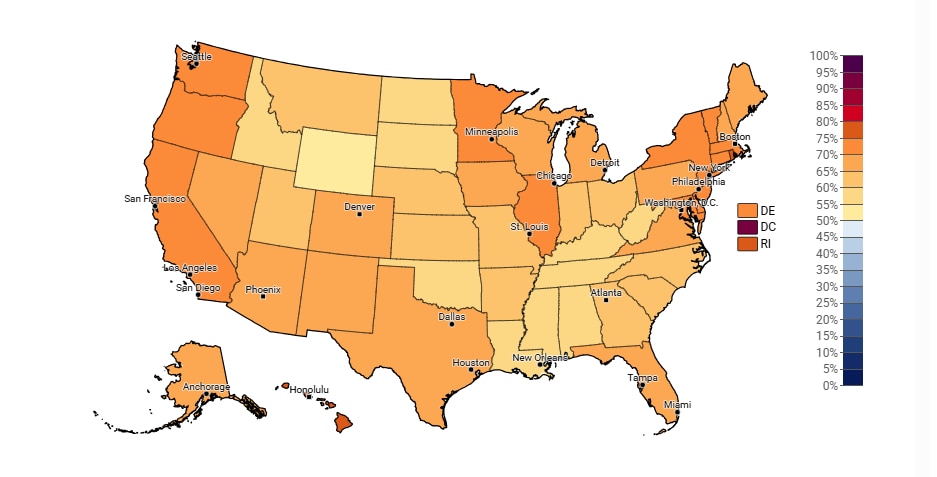
In a year which saw the US President vow to "have no windmills built", it's also notable that three-quarters of US citizens support solar and wind power projects and two-thirds want to see a clean energy transition by 2050.
“The 2024 election was not a referendum on climate change – Americans believe in climate change, worry about climate change and support action on climate change,” Yale University's Anthony Leiserowitz told The Guardian.
3. News in brief: Other top nature and climate stories
Australia has joined global warnings about the El Niño weather pattern that has formed in the tropical Pacific. The country's weather bureau said it could become the strongest in 70 years. The extreme weather event is likely to bring excessive rains to the Americas and hot, dry conditions across Asia, impacting an already-strained crop cycle, reports Reuters.
Scientists have identified more than 5,800 square miles of potentially climate-resilient ocean, reports the New York Times. Using AI, they have been able to detect areas across 72 countries where "cool currents, reduced exposure to sunlight and locations outside cyclone paths mean corals are more likely to survive".
Coastal mangrove forests are making a comeback. These threatened ecosystems, which play a vital role in storing carbon and protecting people from storms, are showing signs of recovery worldwide, a new study shows. “This highlights their strong resilience and their potential as a powerful nature-based solution for climate mitigation and coastal protection,” said lead author of the study, Zhen Zhang.
Further positive climate news comes from Formula 1, which announced last week it achieved a 35% reduction in the sport's carbon footprint in 2025 – compared to 2018 figures. This means the motor racing series is currently on track to meet its goal of net-zero carbon by 2030, Reuters reports.
Water supplies in Mumbai, India have been reduced or cut for construction and industrial use amid the driest June the city has experienced in 12 years. The seven nearby lakes Mumbai depends on for its water supply are at 10% capacity, leaving the city of 13 million people with just 40 days' worth of water available.
Too much rain has pushed a critically endangered orangutan species closer to extinction, finds a new study. It's thought that 58 of fewer than 800 Tapanuli orangutans in Sumatra were killed by extreme rain and landslides on the Indonesian island last November.
UK rivers are at risk of "hydroclimatic whiplash" – rapid swings between wet and dry conditions caused by climate change – according to a new study by the University of East Anglia. Almost 700 rivers were analyzed in terms of how they might respond to both 2°C and 4°C global warming scenarios, with the study suggesting region-specific strategies to combat the two-pronged challenge.
4. More on the nature and climate crisis from Forum Stories
With alarm bells already sounding about this year's El Niño event, Robert Muggah of Brazilian think tank, the Igarapé Institute, argues that governments and aid agencies should be preparing for what could be "a major systemic shock". In this article, he says that while scientists do not yet know for certain how strong the weather event will be, what is clear is the direction of risk and the need for countries and businesses to "treat adaptation as strategy, not philanthropy".
Japan's soaring temperatures have led the country to coin a new term – 'kokushobi', or 'brutally hot' – for days that tip over 40°C. The government is promoting 'heat acclimatization' strategies to help the population adjust to the new climate it finds itself in. As well as encouraging warm baths and light exercise to improve the body's ability to sweat efficiently, heatstroke prevention measures are now mandatory in Japanese workplaces. These adaptations offer valuable lessons for other countries, says the Forum's Naoko Tochibayashi.
The ocean can deliver carbon emissions reductions and support global food security if we embrace a regenerative blue economy, says the director of Ocean Resilience and Climate Alliance. Alasdair Harris outlines six factors that are hindering and accelerating the regenerative transition, from fracturing multilateralism and a financing gap on the one hand, to greater access to technology and an increase in blended finance on the other.
While work continues to pursue both a circular economy and a global plastics treaty, far less attention has focused on how plastic pollution affects biodiversity and the services that underpin economies. A new report developed by the World Economic Forum’s Global Plastic Action Partnership (GPAP), with support from the Government of Canada, tackles this gap providing one of the most detailed multi-country evidence bases on plastic pollution and biodiversity to date.
License and Republishing
World Economic Forum articles may be republished in accordance with the Creative Commons Attribution-NonCommercial-NoDerivatives 4.0 International Public License, and in accordance with our Terms of Use.
The views expressed in this article are those of the author alone and not the World Economic Forum.

Forum Stories newsletter
Bringing you weekly curated insights and analysis on the global issues that matter.
More on Nature and BiodiversitySee all

Rebecca Geldard
September 21, 2026


