Forum Stories
Thought leadership, analysis and solutions on the world's biggest challenges.
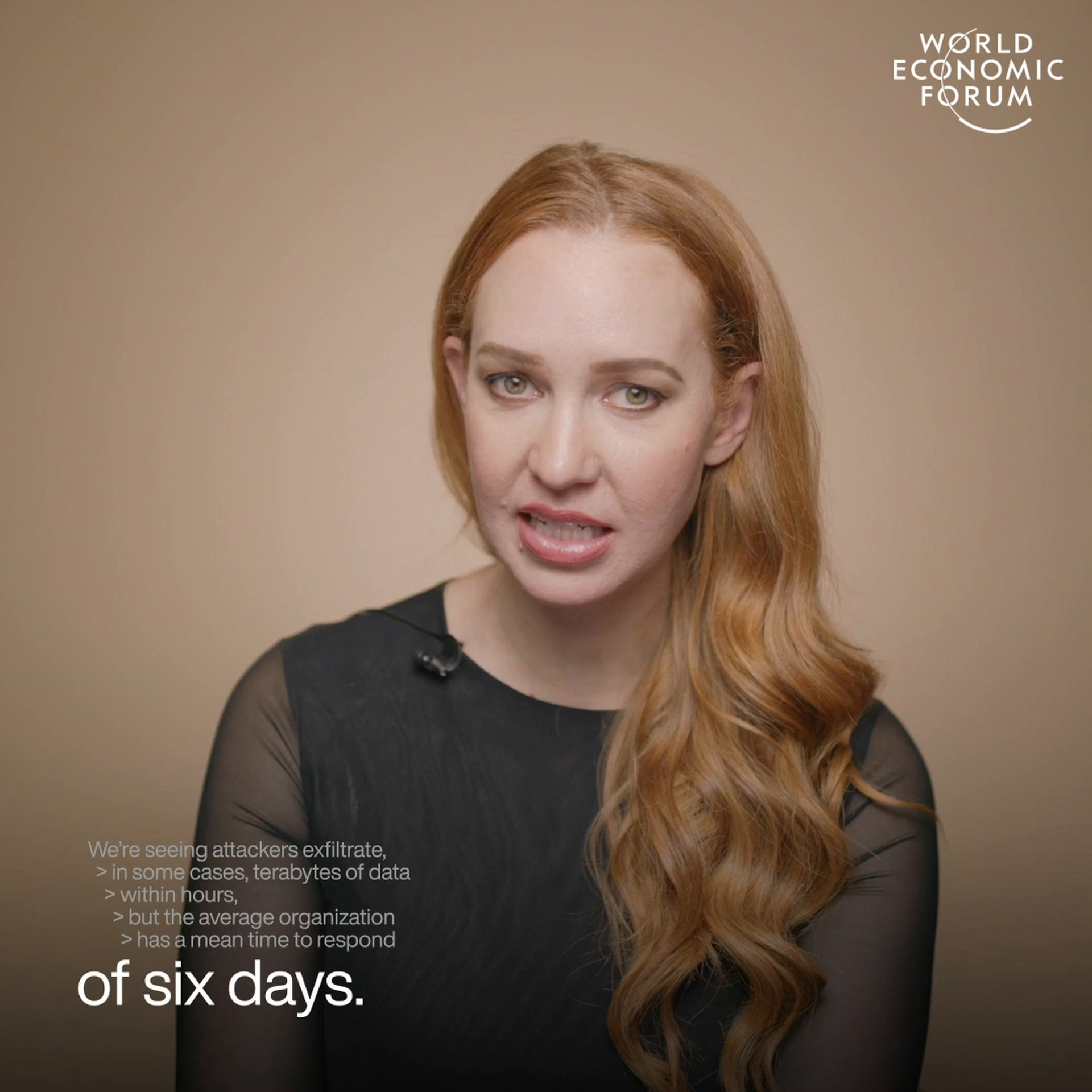
Cybersecurity at an inflection point

Rather than asking whether a company is resilient, boards must ask what measures are in place to be considered “resilient enough”. Here's how to proceed.


Prioritising cybersecurity and fostering global public-private action to tackle systemic challenges.
More about the Centre
Leading Voices
Understand the perspectives of leaders and change-makers in business, politics and civil society.


Our fate is in our hands… it is our responsibility and our freedom to shape it
Special Address by Friedrich Merz, Federal Chancellor of Germany
Friedrich Merz
Federal Chancellor of Germany, Federal Chancellery of Germany


You need to make mistakes to grow up, you need to lose games to win
Davos Kick-off for FIFA World Cup 2026
Alessandro Del Piero
Professional Football Player (1991-2014), International Federation of Association Football (FIFA)

Morocco stands at the crossroads of Europe, the Atlantic, and Africa
Conversation with Aziz Akhannouch, Head of Government, Kingdom of Morocco
Aziz Akhannouch
Head of Government, Kingdom of Morocco, Office of the Head of Government of Morocco


We should not underestimate our individual power to do good
Watch the Crystal Awards 2025
Diane von Furstenberg
Founder and Co-Chairwoman, Diane Von Furstenberg Studio

This is a positive note that emerging markets did well in the last few years
Emerging Economies amid Shocks
Gita Gopinath
Gregory and Ania Coffey Professor of Economics, Harvard University

All the ingredients for US will be the continuation of its strength
The Global Economic Outlook
Laurence D. Fink
Chair and CEO, BlackRock; Co-Chair, World Economic Forum, BlackRock


It is important that countries that are leading the race understand the risks and manage it
Watch the session The Dawn of Artificial General Intelligence
Yoshua Bengio
President and Scientific Advisor; Full Professor; Founder and Scientific Advisor, University of Montreal


Accessibility is key to the digital revolution
Centre for the Fourth Industrial Revolution
Satya Nadella
Chairman and Chief Executive Officer, Microsoft

Gender equality is the best chance against global challenges
Arts and Culture
Michelle Yeoh
Actress, Producer, United Nations Development Programme Goodwill Ambassador

Reassessing poverty with new patterns of trade
Centre for Regions, Trade and Geopolitics
Christine Lagarde
President, European Central Bank

Address climate, food, healthcare to eradicate poverty
Centre for Nature and Climate
Ajay S. Banga
President, World Bank Group

A re-shift of economy for equitable development and climate goals
Centre for the New Economy and Society
Jesper Brodin
Management Board Member, Ingka Group I IKEA

Stewarding the planet’s future for our future generations
Centre for Nature and Climate
Kristalina Georgieva
Managing Director, International Monetary Fund (IMF)

Thinking globalisation differently to ensure inclusion
Centre for Regions, Trade and Geopolitics
Ngozi Okonjo-Iweala
Director-General, World Trade Organization (WTO)
Editors' picks

Catalytic Blue Finance: Building the Financial Architecture for Scaling Ocean Investment


Accelerating net-zero climate action, regenerating food, water and ocean systems, and promoting circular economies.
More about the Centre

Impact economy

Governments and businesses are increasingly putting women's health higher on the agenda, and public-private collaboration will be key to making progress.


Providing a platform for leaders to shape inclusive, equitable economies and societies for all.
More about the Centre

More from other Centres
 Centre for Advanced Manufacturing and Supply Chains
Enabling more resilient, sustainable and inclusive manufacturing ecosystems and supply chains.

 Centre for AI Excellence
Driving innovation through the power of AI, data, and intelligence to improve industries, economies, and societies.

 Centre for Energy and Materials
Driving initiatives and coalitions to ensure that the energy transition is sustainable, secure, and equitable.

 Centre for Financial and Monetary Systems
Creating a financial system that allocates capital to support planet, people, and communities.

 Centre for Frontier Technologies and Innovation
Empowering leaders to unlock the potential of frontier technologies and accelerate their inclusive and sustainable adoption.

 Centre for Health and Healthcare
Identifying and scaling up solutions for more resilient, efficient, and equitable healthcare systems.

 Centre for Regions, Trade and Geopolitics
Helping stakeholders navigate global and regional priorities in a complex geopolitical and geo-economic landscape.

 Centre for Urban Transformation
Advancing public-private collaboration in cities for resilient, future-ready communities and economies.


Forum Stories newsletter
Bringing you weekly curated insights and analysis on the global issues that matter.
Bringing you weekly curated insights and analysis on the global issues that matter.